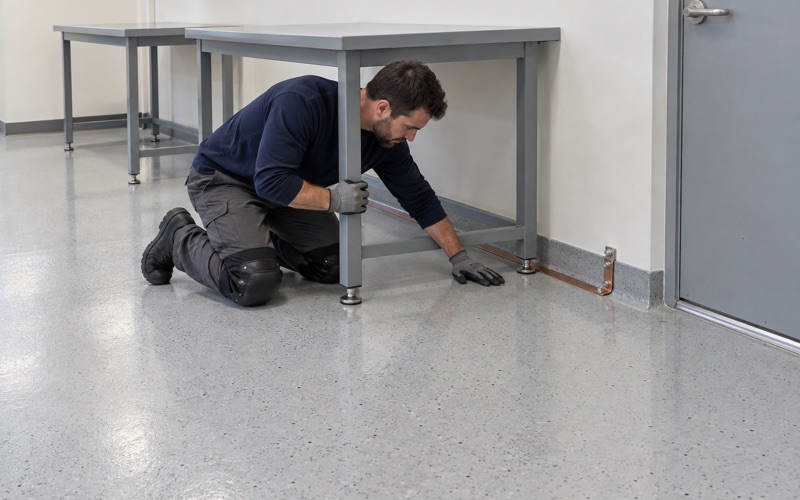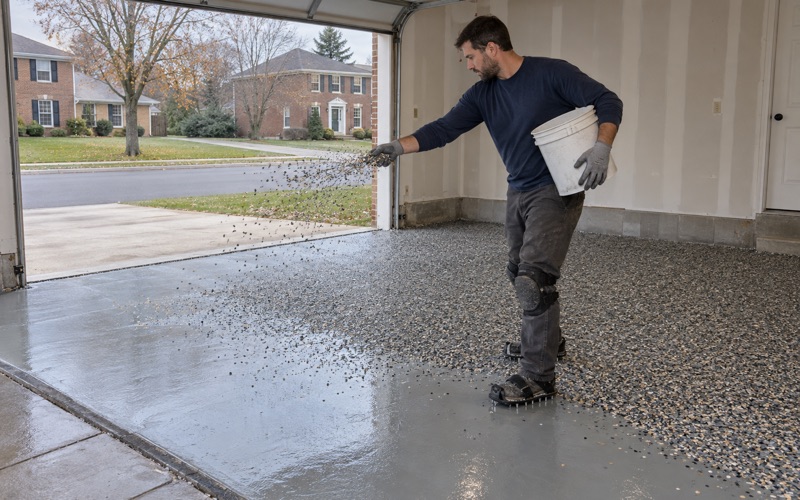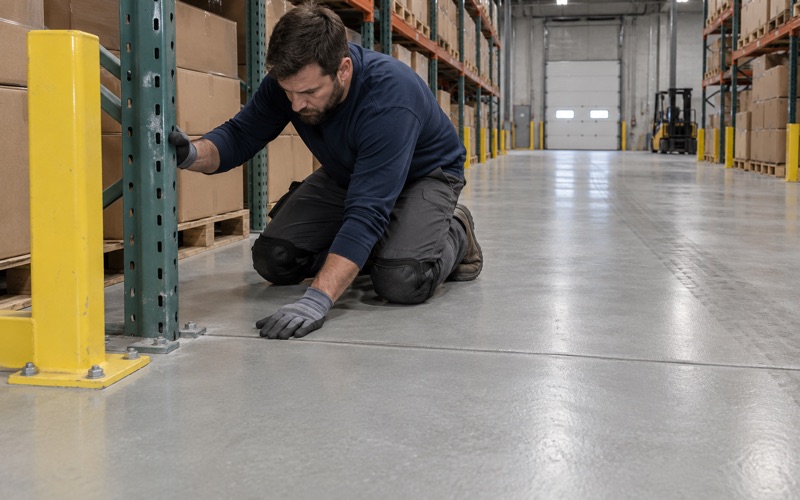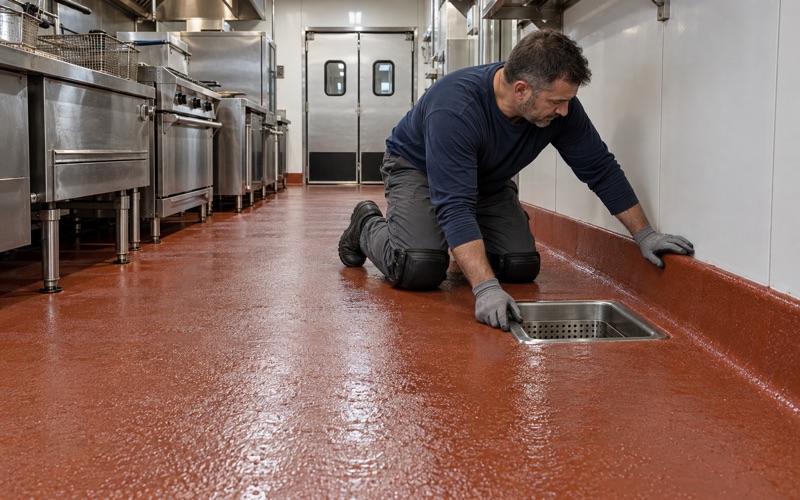
Mount Prospect Epoxy Flooring has spent more than 20 years installing epoxy flooring in Wood Dale and the rest of our service area, and the floors we are asked about most here are working floors. A shop slab that takes fluid every day and carries rolling equipment all shift needs a coating chosen for that job first, with color and gloss decided afterward.
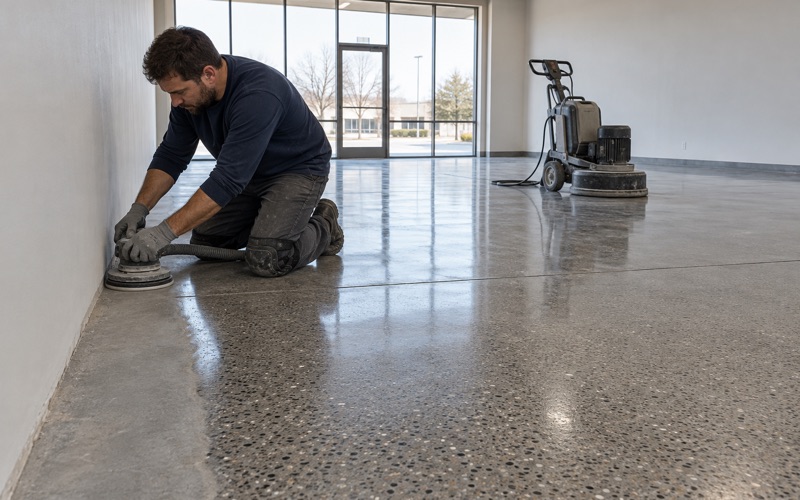
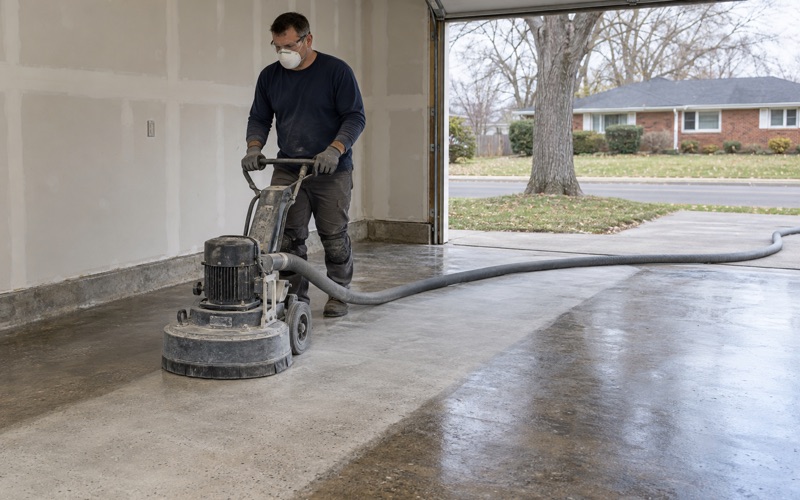
Our scope starts with what the slab already is. We map cracks, spalls and any old coating before we price anything, and we tell an owner plainly when a section needs repair or replacement before resin goes on it. Then every floor is opened mechanically, with a diamond grinder or a shot blaster, so the coating has a real profile to bite into. We do not acid etch.
The proposal you get names the product line, the number of coats and the finished thickness. That gives a plant manager or a homeowner something concrete to check the finished floor against, and it is the same document whether the job is a two-car garage or a production bay.
An Engine-Dress Plant on Mittel Drive
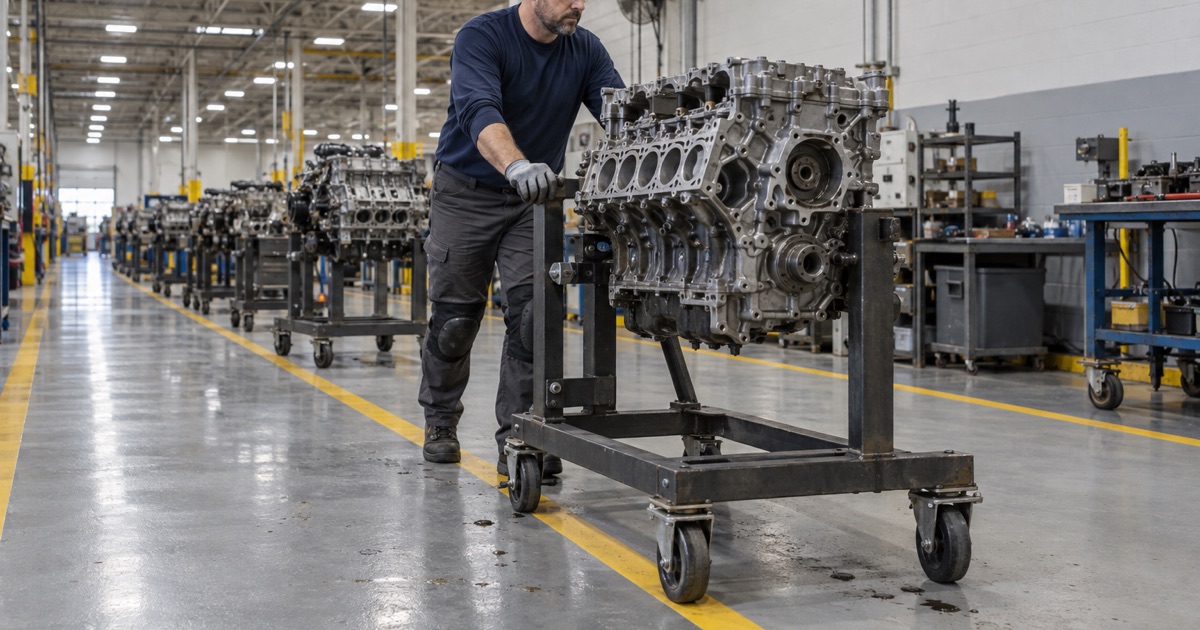
Power Solutions International operates an engine plant at 201 Mittel Drive, in Addison Township, DuPage County. The company lists it as a 261,000-square-foot engine dress trim operations facility, ISO 9001-2015 certified, offering full customization for each customer’s specific application. Power Solutions also appears on the city’s 2025 principal-employer list, with 244 listed.
Engine dress, in general terms, is the stage where an engine is fitted with the components a particular machine needs, so the same base engine leaves the floor set up differently for each application. PSI places its dynamometer testing at a separate center in Burr Ridge, so the Wood Dale building is the dressing floor, not a test floor. We have not seen that floor and we do not work for PSI, but the kind of work done there tells you what any floor like it is judged on.
What an engine-dress floor is specified for
A floor under this kind of work is not picked for looks. It is specified for three things: resistance to the fluids that leave every engine, cleanup that takes minutes rather than a shift, and a surface that survives casters rolling over the same lines hundreds of times a week. Those three requirements shape every choice below, from primer to topcoat.
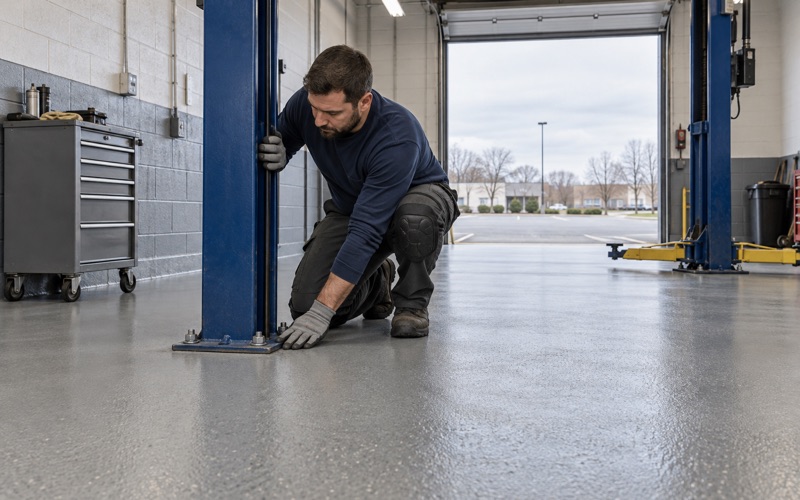
Light color is a practical choice on a floor like this, not a decorative one. A pale gray or tan coating shows a fresh drip immediately, which helps a crew spot a leaking fitting before the engine leaves the station, and it reflects light back into the work area.
Questions we ask about a floor like this
When a shop owner calls us about a floor that sees engine work, the first questions are practical. Which fluids reach the slab, and how often? What rolls across it, on what size and type of wheel, and along which routes? How is the floor cleaned now, with what chemicals, and how long can any one area be taken out of service?
The answers decide the resin, the thickness, the texture and the phasing. Two shops with the same square footage can need very different systems, which is why we price from a walk-through and test results rather than from a figure per square foot.
Looking for epoxy-flooring closer to Bensenville? See Bensenville Epoxy-Flooring.
Every Engine Drips: Oil, Coolant and Fuel on the Shop Floor
Oil, coolant and fuel drips are part of normal work on engines, not a sign of a sloppy shop. Each fluid behaves differently on concrete, and a coating that handles one well can still struggle with another, so we look at the full list before we pick a system.
Bare concrete is a sponge
Uncoated concrete wicks motor oil into its pores, where it stains, softens the surface paste and keeps weeping back up for years. Glycol coolant leaves a slick film that is hard to see and easy to slip on. Fuel evaporates quickly but carries solvents that attack weaker coatings. A sealed resin floor keeps all three on top of the slab where they can be wiped up.
Concrete that has already soaked up oil
Many shop floors we are asked to coat have years of drips already in them. Oil in the pores keeps a coating from bonding, so contaminated areas get cleaned and degreased, then ground until the profile reaches sound concrete. Where oil has gone deep, we spot-test before coating and may cut out and patch the worst areas rather than trust a primer to seal over them.
This is also where the diamond grinder earns its place over an acid etch. Acid does nothing to oil and can leave residue in the slab, while grinding removes the stained surface and leaves a profile the epoxy can grip.
Choosing the resin
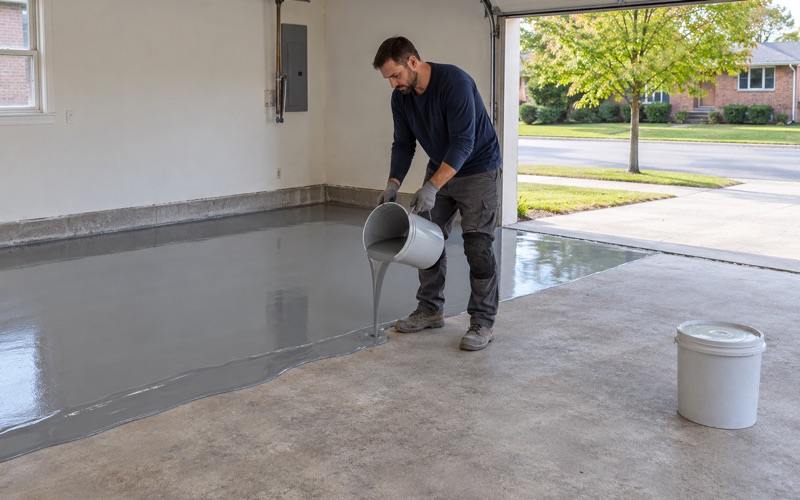
For most shop floors we build on a 100% solids epoxy body coat, which goes on thick, carries no solvent to flash off and resists oil and coolant well. Where fuel, heat or harsher chemicals are routine, we look at urethane cement instead, or a polyaspartic or polyurea topcoat over the epoxy, because those chemistries hold up better to solvent exposure and to the scuffing that dulls a plain epoxy surface. Every product we select falls inside the Illinois VOC limits for floor and industrial coatings, which bind whoever applies them.
Traction when the floor is wet
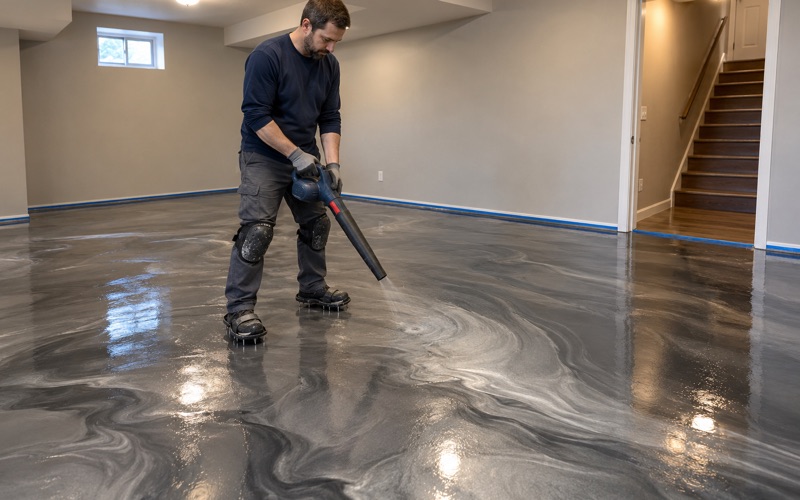
A smooth, glossy epoxy with coolant on it is a hazard. On shop floors we broadcast quartz aggregate into the body coat and lock it in with the topcoat, which gives boots grip without making the surface so rough that a rag snags on it. We set the texture with the owner, because the right answer depends on how much fluid hits the floor and how often it gets mopped.
Engine Stands, Casters and Cleanup Between Units
In a typical plant that dresses engines, stands and carts move along the same routes all day: in from receiving, through the work stations, out to shipping. That repetition is what wears a floor, more than any single heavy load.
Caster paths and thickness
Small hard casters concentrate weight on a tiny contact patch, and when they roll the same line hundreds of times, a thin coating polishes through and then starts to chip at the edges. We size the system for those lanes, using a thicker build where stands travel and paying close attention to joints and transitions, where a caster drops and strikes. Where carts turn or park, we extend that heavier build so the wear lane does not end at a weak edge.
Joints, cracks and old coating
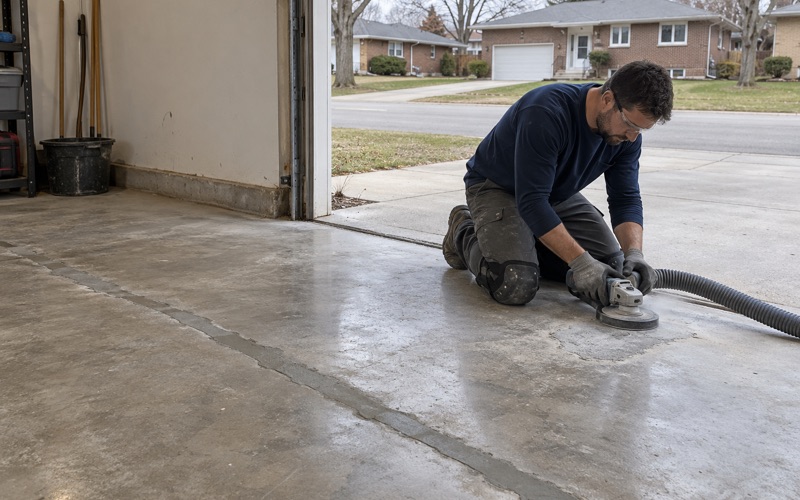
A caster that drops into an open joint fifty times a day will break the coating at that edge. We fill or rebuild joints and patch spalls before coating, so wheels cross a level surface instead of a lip. Old coatings that have lost their bond come off completely; we do not bury a failing layer under a new one.
A floor that wipes instead of soaks
Between units, a crew needs to clear spills fast so the next engine starts on a clean floor. On a sealed surface, absorbent and a squeegee do the work that a scrubber and degreaser would do on bare concrete. We choose the topcoat and texture so the floor cleans in one pass, and we explain which cleaners and degreasers the system tolerates before the job is finished.
Marking lanes and recoating where they wear
On floors with set traffic routes, we can build lane striping and walkway markings into the coating system, with a contrasting color laid in before the topcoat so the lines do not peel up under casters. Marked lanes also show where wear will concentrate.
That matters for maintenance. When the lanes eventually dull, a properly prepared floor can usually take a fresh topcoat over the worn paths without stripping the whole system, provided the coating underneath is still bonded. We would rather plan for that recoat at the start than pretend any floor under daily engine traffic stays new forever.
Smaller Shops Along Mittel and Thorndale, and How We Schedule the Work
The Mittel Drive area is one of several industrial pockets in the city, and businesses along Mittel Boulevard and the Thorndale Avenue corridor run similar floors. Wood Dale’s Thorndale Corridor TIF District, set up in 2015, covers about 603 acres of improved land south of Thorndale Avenue between Wood Dale Road and Route 83. A fleet garage or machine shop there deals with the same drips and the same wheels in a smaller room, and the coating choices above scale down cleanly.
Working around the shift
Most of these buildings cannot stop for a week. We phase shop and warehouse floors around production, coating one bay or section at a time and using overnight and weekend windows when a line has to keep running. Grinding dust is captured by vacuums at the machine rather than swept or rinsed toward a floor drain or out the door, which matters in a building where people keep working next to the job.
Moisture and cure
Before a price is final we test the slab for moisture, typically with ASTM F2170 in-situ relative humidity probes or ASTM F1869 calcium chloride testing, because vapor pushing up through concrete is a common reason coatings let go. If the readings call for it, a moisture-mitigation primer goes into the scope. We also explain what the coating warranty excludes before the job is sold, and moisture is the first item on that list. Cure times follow slab temperature and dew point, so we tell a shop honestly when a floor will be ready for stands and carts.
Permits and contractor registration
Wood Dale requires contractors in the building trades to be registered with the Community Development Department before a permit is issued, with a certificate of insurance carrying $2,000,000 in public liability coverage that names the City of Wood Dale as certificate holder. We check the current registration, bond and insurance requirements before a job is booked, and we ask Community Development whether a particular coating job needs a permit instead of assuming the answer either way. Getting that settled early keeps the work from stalling halfway through a shutdown window.
- 20+ Years on Concrete
- Moisture Tested Before Pricing
- Written Itemized Proposals