Mount Prospect Epoxy Flooring brings more than 20 years of epoxy flooring in Winfield and across the region to commercial conversions, where the slab under a new tenant usually carried something very different before. Our work on a reused building starts with what the old use left in the concrete, not with a color chart. A coating chosen before that question is answered is a guess, and a guess on a commercial floor tends to fail in the busiest part of the room.
That order matters most when a building changes hands and changes purpose at the same time. A buyer planning a dining room, a taproom, an office suite or a shop wants a finish date, and the floor is often the last trade on the schedule. We would rather spend the first visit grinding a test patch and reading moisture than quoting a system the slab cannot hold.
What follows is how we approach one specific kind of job: a vehicle bay being turned into a space people will eat, work or shop in. Every step below is something we would do on any such slab, and we say so plainly when the testing points toward repair before any coating.
A 1973 firehouse in Winfield Town Center, now for sale
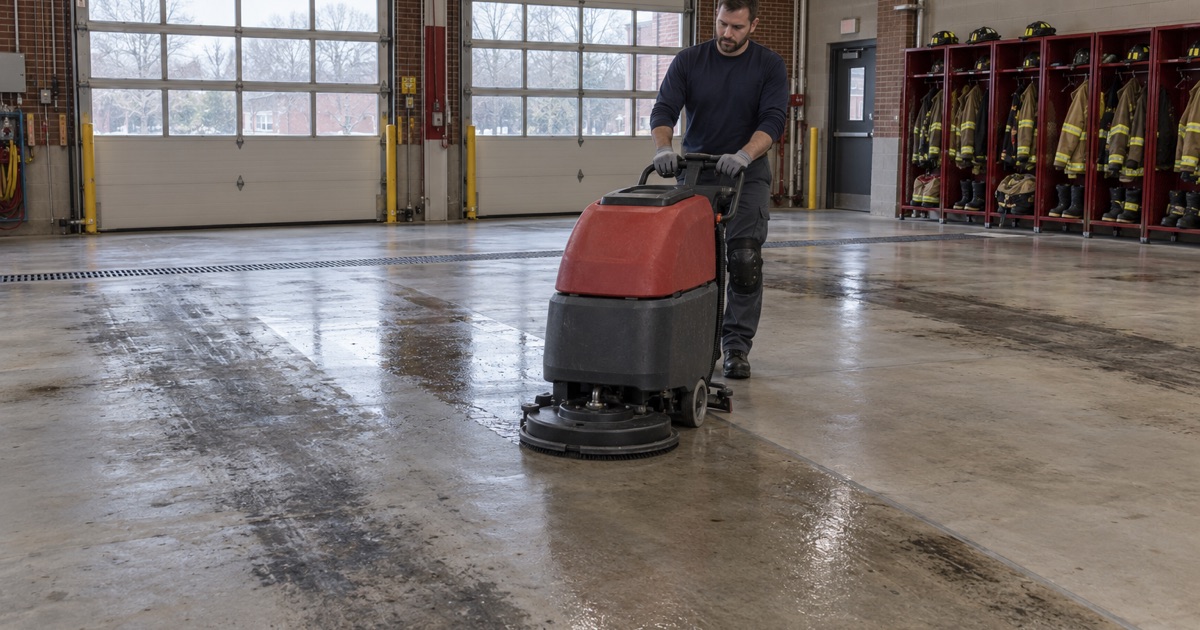
The clearest example of this kind of project in the village right now is the former Winfield Fire Protection District headquarters at 27W530 High Lake Road. The station was built in 1973, sits inside the village in Winfield Township, DuPage County, and is in the heart of Winfield Town Center, close to the Metra station and the Winfield Riverwalk. The district has operated from a new headquarters since May 2025, and the old High Lake Road station is listed for sale at $1,750,000.
What the listing proposes
The sale listing markets the property for conversion, naming a restaurant, a microbrewery, office space or retail as possible uses. No buyer or new use has been announced, and we have no relationship with the district, the seller, the brokers or any buyer. We use the building here because it shows a question every owner of a converted bay faces, not because we have worked on it.
Why the old use matters
The district has said the old station held five vehicles, and that crews squeezed in a sixth, while the new one holds nine. For decades, then, a working fleet was parked, started, washed and serviced on that concrete. Whatever condition the bays are in today has not been inspected or published, and we make no claim about it. What we can say is what a vehicle bay of that kind typically puts into a slab, and what has to be checked before a floor goes down for a new tenant.
Who answers which question
A conversion here touches several separate authorities. Building and zoning questions go to the Village of Winfield Building and Safety office at 27W465 Jewell Road, and we ask that department whether a coating needs a permit rather than assuming the answer. Fire code questions go to the Winfield Fire Protection District, which is a special district and not a village department, and food-service rooms fall under DuPage County Health Department plan review.
Looking for epoxy-flooring closer to Brookfield? See Brookfield Epoxy-Flooring.
What a vehicle bay leaves in a slab
Concrete is porous, and an apparatus floor collects what drips onto it. Engine oil, hydraulic fluid, diesel residue, coolant and tire marks are the usual suspects in any long-used vehicle bay, along with wash-down detergents and any sealer or paint applied over the years. None of that is a finding about this particular station; it is the list we test for on every bay slab we see.
Contamination you cannot see
Oil does not stay on the surface. It wicks into the top of the slab, and a bay that looks clean after a pressure wash can still hold enough in the pores to stop an epoxy from bonding. Trade guidance on reused slabs is blunt about this: putting a coating over concrete contaminated with grease, oil, paint or wax guarantees a failure. The failure usually shows up as peeling in the exact lanes where vehicles stood longest.
Old coatings, patches and wear
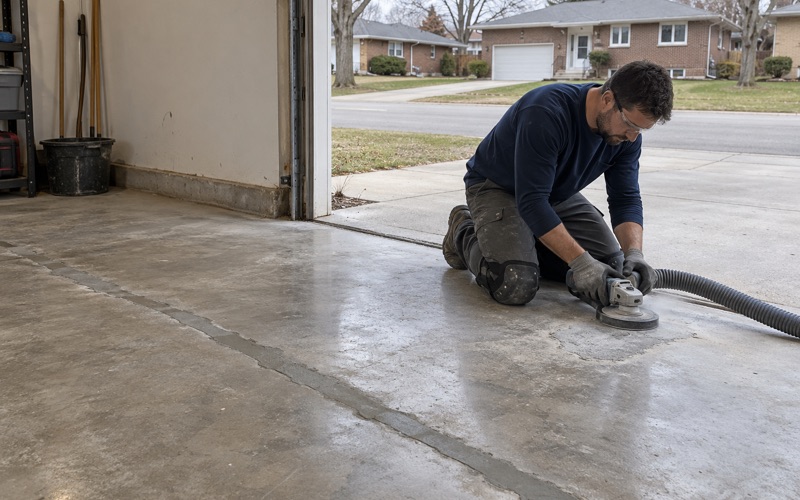
A floor that has been in service since the early 1970s has probably been painted, sealed or patched at least once, and those layers have to be identified before anything new goes over them. We map cracks, spalls, saw cuts and prior coatings first. Trench drains, floor drains and the slope toward them also matter, because a restaurant or brewery may want to keep them while an office tenant may want them filled and leveled.
Heavy loads and point damage
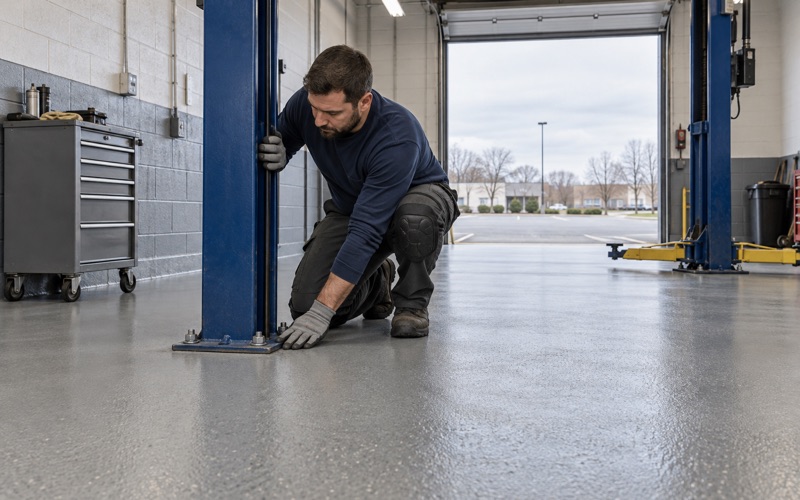
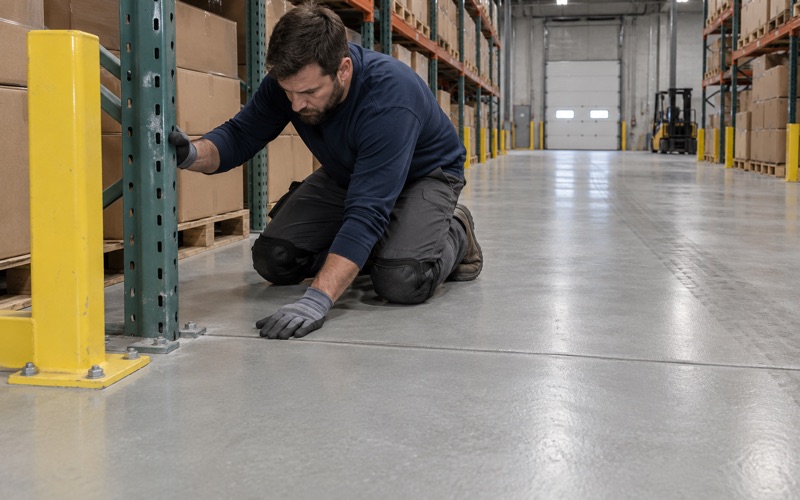
Fire apparatus are heavy, and years of parking in the same positions can leave chipped joint edges and worn areas a coating will not hide. Some of that is cosmetic and some is structural, and the two call for different answers. When a section needs repair or replacement before it should be coated, we say so in writing rather than burying it under a thicker coat.
Test before you choose: degreasing, profiling and a pull test
On a slab with a history like this one, testing comes before the product decision. The sequence below is what we would propose for any converted bay, and the results decide which systems are even on the table.
Degrease, then look again
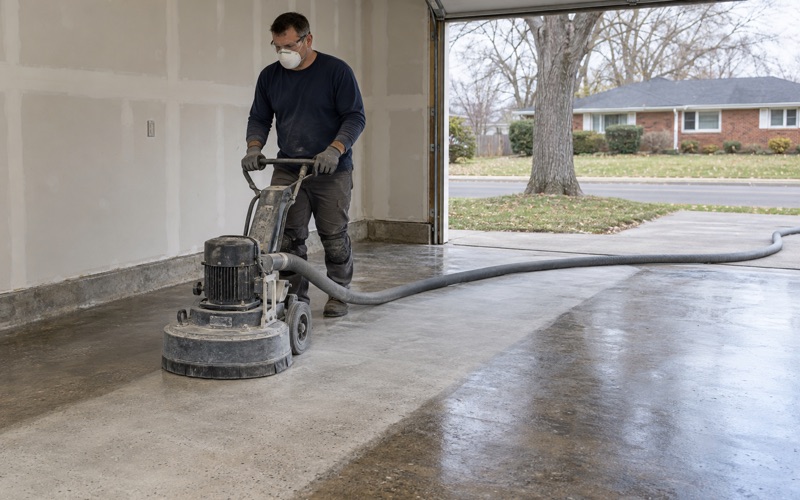
Stained areas are cleaned with a concrete degreaser and rinsed, and the floor is allowed to dry before we judge it. Oil that keeps surfacing after cleaning tells us the contamination runs deeper, which can mean repeated cleaning, grinding below the stained layer, or cutting out and replacing a section. Rinse water from that step is handled as waste, and grinding dust is vacuumed at the machine rather than washed toward a floor drain.
Open the surface mechanically
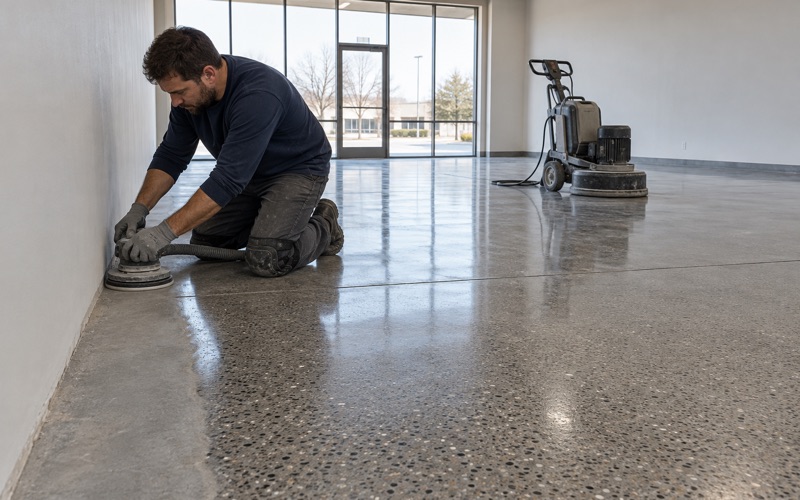
We open every slab with a diamond grinder or a shot blaster and never with an acid etch, because acid does nothing to lift oil and leaves no reliable profile. The target is an ICRI concrete surface profile matched to the system, typically CSP 2 to 3 for a thin coat and higher for a thick broadcast or urethane cement build. Grinding a test area in each bay also shows us whether the contamination is only in the top layer.
Moisture readings and a pull test
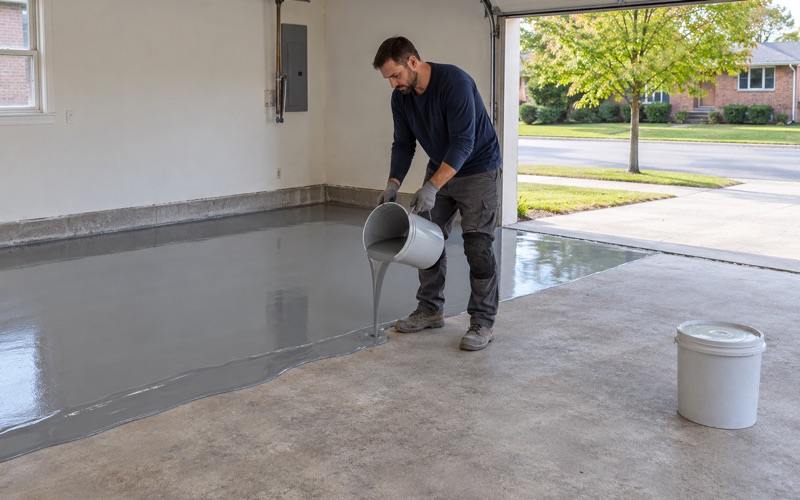
Moisture testing is part of the scope before the price is final. We use ASTM F2170 in-situ relative humidity probes or ASTM F1869 calcium chloride tests, and a plastic sheet test under ASTM D4263 as a quick screen. On a prepared test patch, a pull-off adhesion test tells us whether a primer is holding to clean concrete or to something still in the pores, and a high moisture reading points toward a moisture-mitigation primer.
What the test results decide
Clean, dry concrete that bonds well opens the full menu of systems. Marginal adhesion or high moisture narrows it, and sometimes the honest answer for one bay is new concrete. We also explain what a coating warranty excludes before the job is sold, and moisture is the first exclusion on that list, so the owner knows what the test numbers mean for the guarantee.
Restaurant, brewery, office or retail: the next use picks the floor
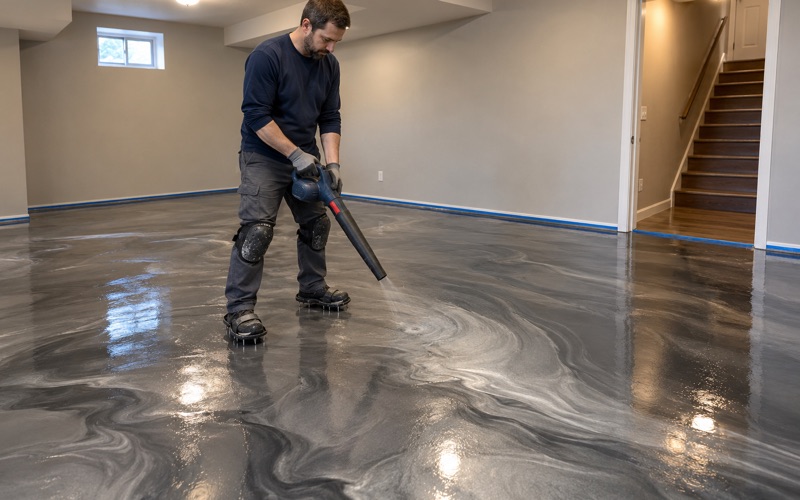
Once the slab is known, the floor is chosen for the tenant who will actually use it. The four uses named in the listing want quite different things from the same concrete, and a written proposal from us names the product line, the coat count and the finished thickness so the result can be checked against the quote.
A restaurant kitchen or microbrewery
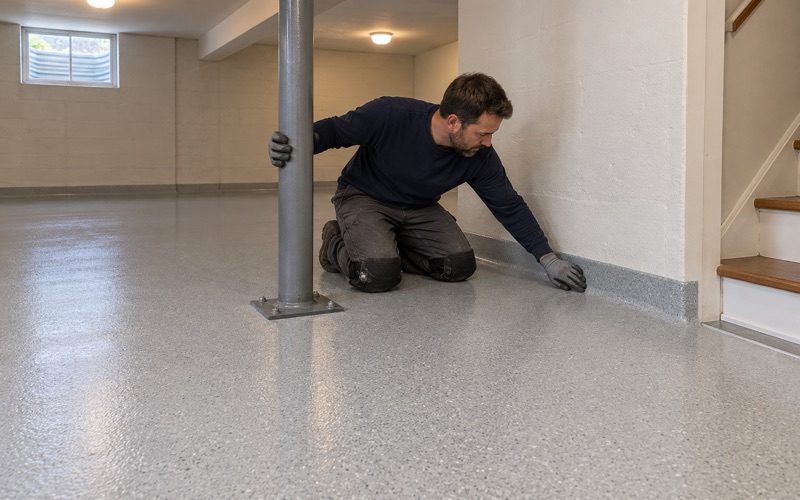
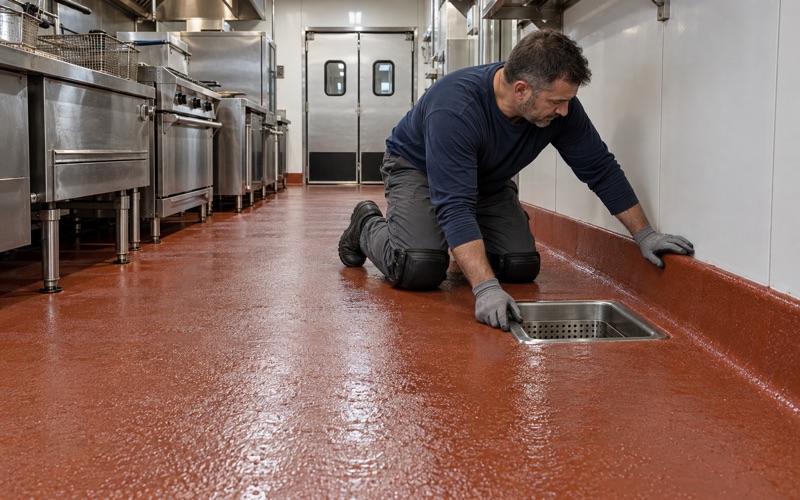
A commercial kitchen or brewhouse sees hot water, cleaning chemicals, sugars, grease and constant wet traffic. Urethane cement is the usual answer for those rooms because it tolerates thermal shock from hot washdown far better than standard epoxy. Food-service floors are also shaped by the FDA Food Code, which calls for coved floor and wall junctures under 6-201.13 and allows a slip-resistant surface under the 6-201.11 exception, so a quartz aggregate broadcast is common. Those rooms go through county plan review, and we build the floor around what that review requires.
A dining room or taproom
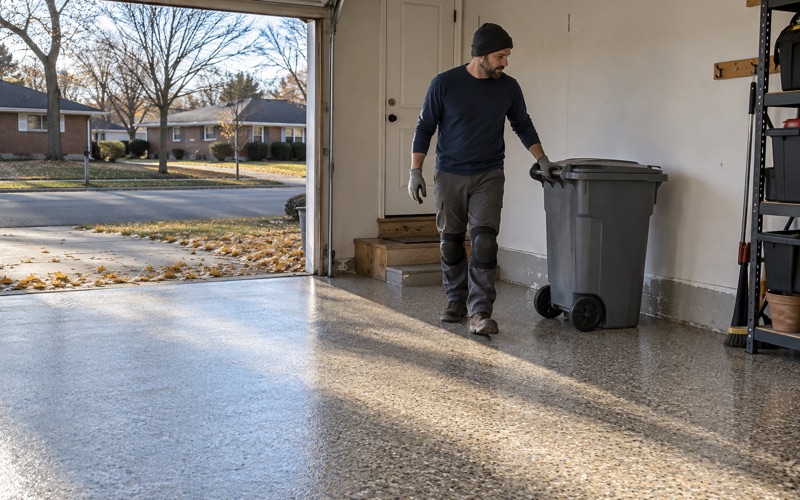
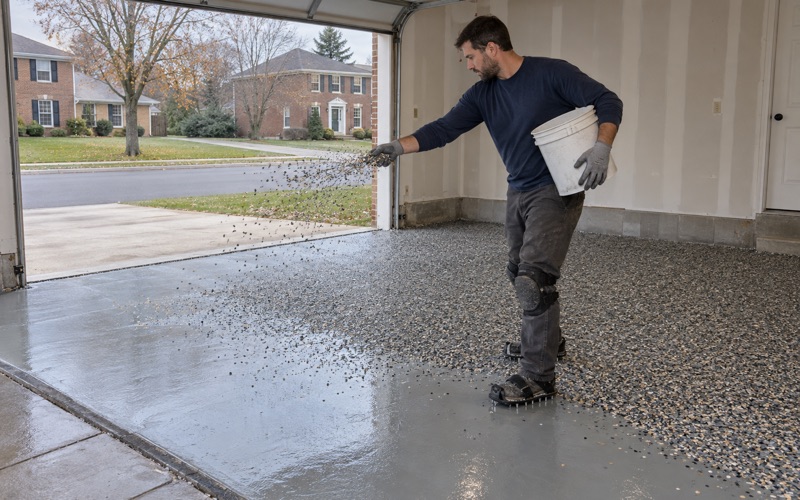
The front of a restaurant or brewery has a different job. It needs to look finished, clean easily and handle chairs, stools and spilled drinks without becoming slick. A 100% solids epoxy with a vinyl flake or quartz broadcast and a polyaspartic topcoat suits many dining spaces, and a polished concrete look with a lithium silicate densifier can work where the original slab grinds up clean enough to show.
Office and retail space
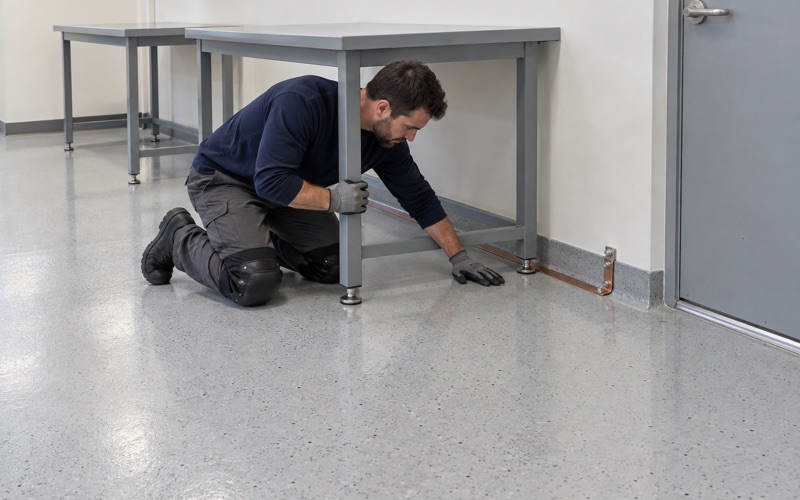
Office and shop floors carry lighter loads but more foot traffic and more attention to appearance. A thinner epoxy system with a durable topcoat is often enough, and some tenants plan to cover part of the slab with carpet tile or another finish, which changes what the concrete underneath needs. If a tenant brings in server rooms or electronics work, we can discuss static-dissipative flooring and its resistance range.
Timing the floor inside a public-to-private build-out
A firehouse conversion is not a garage refresh, and the floor usually goes down late, after walls, plumbing and electrical work are in, so it is not damaged by other trades. Cure times follow slab temperature and the dew point spread at the slab surface, not a calendar date, and we plan around them. Where a tenant needs to open on a fixed date, we phase the work in sections and schedule overnight or weekend windows so other trades can keep moving.
Paperwork before grinding
Illinois has no state flooring license, so before booking a job we check the village’s own registration, bond and insurance requirements. Products are selected inside the Illinois VOC limits for floor and industrial coatings under 35 Ill. Adm. Code Part 223, which bind the person applying them. A commercial owner should also expect a clear written scope covering every bay, every drain and every transition to another flooring material.
What we will not promise
A coating is not waterproofing, and we never sell one as flood protection. It is also not radon reduction, which in Illinois is licensed mitigation work. We hold no fire-service credential, and nothing on this page should be read as an endorsement from the fire district or any party to the sale. What we offer a buyer of a converted bay is a tested slab, a named system and a floor matched to the room it is becoming.
- 20+ Years on Concrete
- Moisture Tested Before Pricing
- Written Itemized Proposals