Mount Prospect Epoxy Flooring brings more than 20 years of epoxy-flooring work to Western Springs, and the jobs we think hardest about here are the ones where the floor has to clean up completely. A coating that looks good but holds a film of cleaner, wax or sugar is a liability in any room where people walk from one surface onto another that has to stay slick in a specific way. That is the problem this page is about.
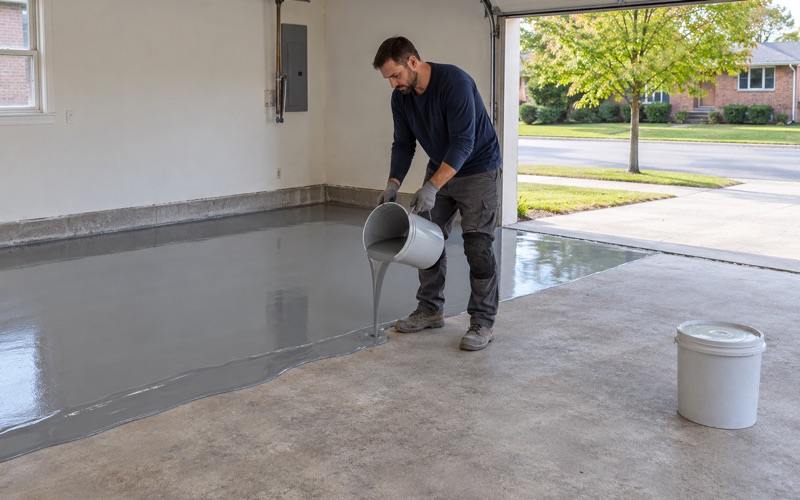
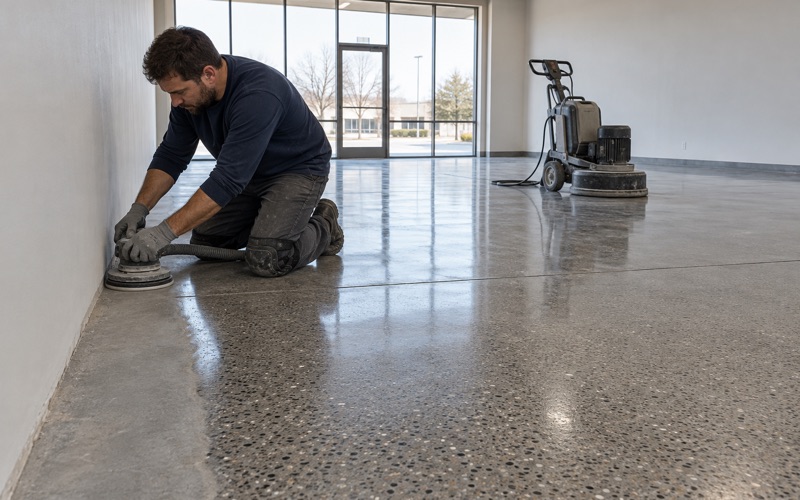
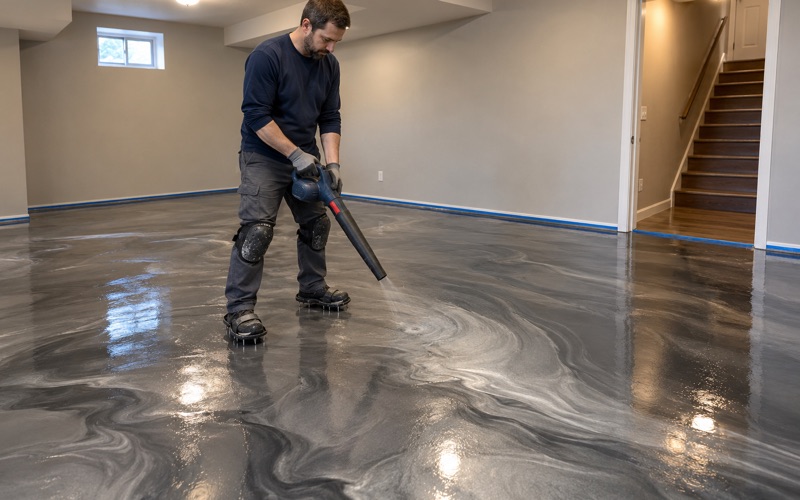
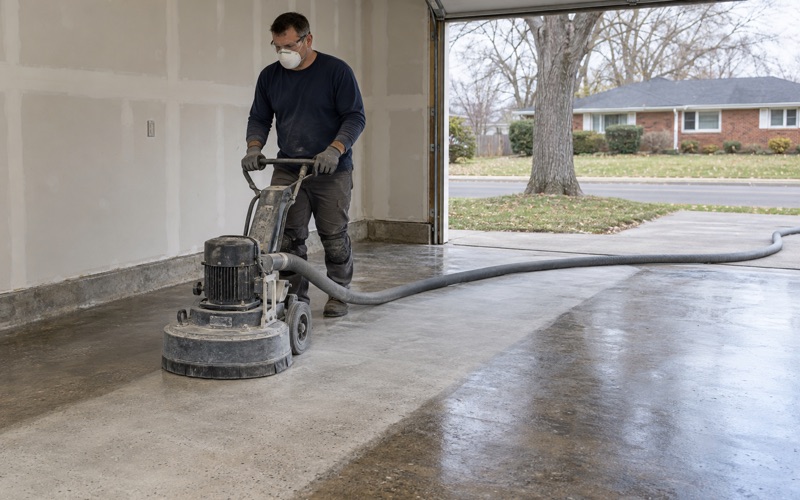
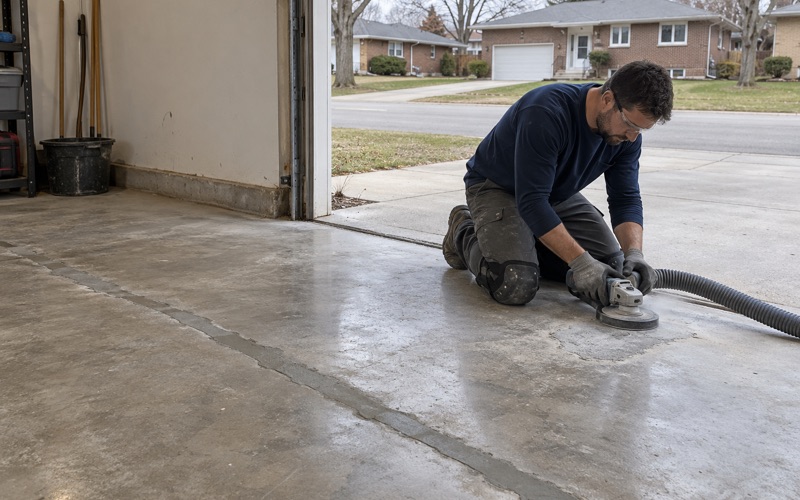
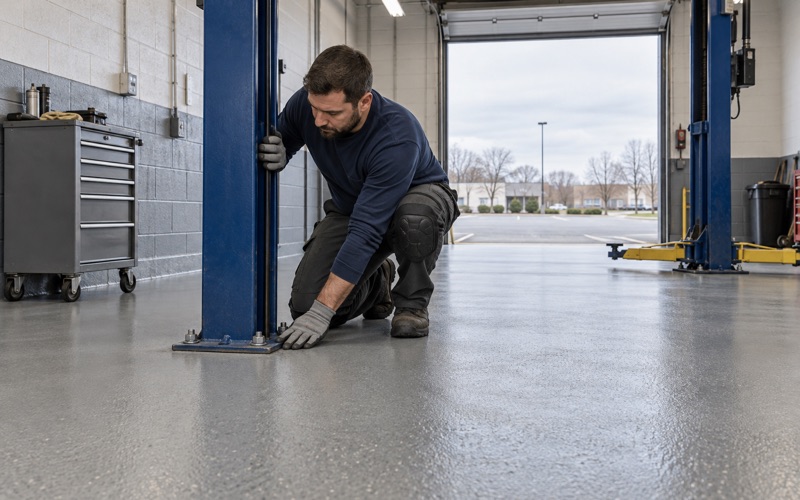
Most of what we coat in the village is ordinary: basements, attached and detached garages, shop floors, kitchens and the back rooms of downtown businesses. The method does not change with the room. We open the slab with a diamond grinder or a shot blaster rather than an acid etch, test it for moisture before the price is final, and put the product line, coat count and finished thickness in writing so the floor can be measured against the quote.
What changes is the finish we pick and how we tell you to look after it. A floor that sits next to a bowling approach, a dance floor or a sport court needs a surface that sheds residue rather than collecting it, and a cleaning routine that leaves nothing behind.
Four Lanes Under a 1911 Club House
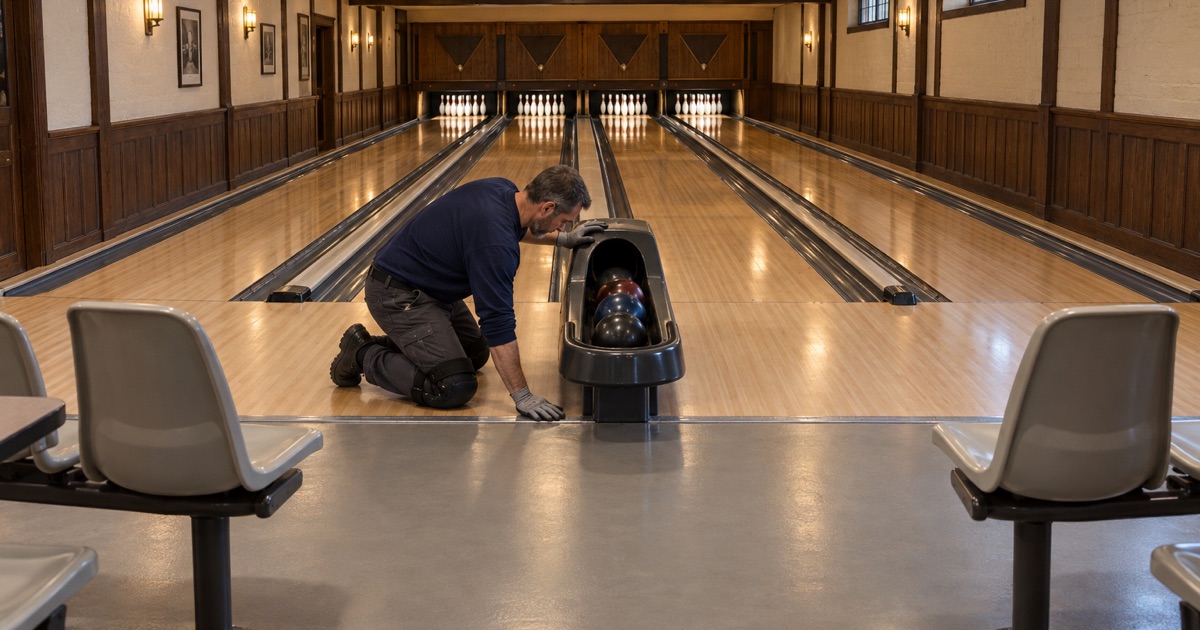
Western Springs has kept a bowling alley in a club house basement for more than a century. The story is a useful way to explain why the floor around a playing surface is its own design problem.
How the Village Club got its lanes
The Village Club of Western Springs began with a 1910 letter from “Hib” Cattell proposing a social club. Nearly 100 residents subscribed $100 each, enough to buy a 100-foot lot at the corner of Lawn and Chestnut, and by 1911 the club house was built. According to the Western Springs Historical Society, it had a two-lane bowling alley in the basement, expanded to four lanes in 1945 and equipped with automatic pinspotters in 1959.
The building at 4221 Lawn Avenue still keeps its original English Tudor design and stands just west of the Thomas Ford Library. The club’s own site lists four classic bowling alleys for casual play or leagues, along with a golf simulator and a second-floor lounge with a bar, fireplace and meeting room. It describes more than 115 years of bringing neighbors together.
What we know and what we do not
We have not worked at the club, and we have not seen the lanes, the approaches or the floor around them. Nothing on this page describes their condition or material. We use the club as the clearest local example of a room type that most people never think about as a flooring decision.
Where resin belongs and where it does not
A bowling lane and its approach are specialized surfaces with their own makers and their own care. Epoxy is not one of them, and we do not coat lanes or approaches. Our work starts where the approach ends: the settee area, the walkway behind it, the shoe-change benches, the bar and snack counter, and the stairs and corridors people use to get there.
Looking for epoxy-flooring closer to Lyons? See Epoxy-Flooring Services in Lyons.
Why the Floor Beside the Lanes Reaches the Approach
On a bowling approach, a bowler needs to slide on the last step. Anything that changes how a shoe sole meets that surface changes the slide, and much of what changes it is carried in from the floor a few feet away.
What lane-equipment makers warn about
Kegel, a lane-equipment maker, puts it directly: wax from tiles and residues from carpets and carpet treatments can stick to shoes and can easily be tracked onto the approach. Jayhawk adds that if tile floors in a bowling center have been waxed, or carpet has been cleaned and then scotchbrited, both the wax and the scotchbrite can be tracked onto the approaches. The trade treats the floor and carpet in the bowlers’ area as part of approach care.
That is a finish-and-maintenance question as much as a material one. A floor that needs a sacrificial wax coat to look good is, by its nature, a floor that sends wax somewhere.
Choosing a finish that does not need wax
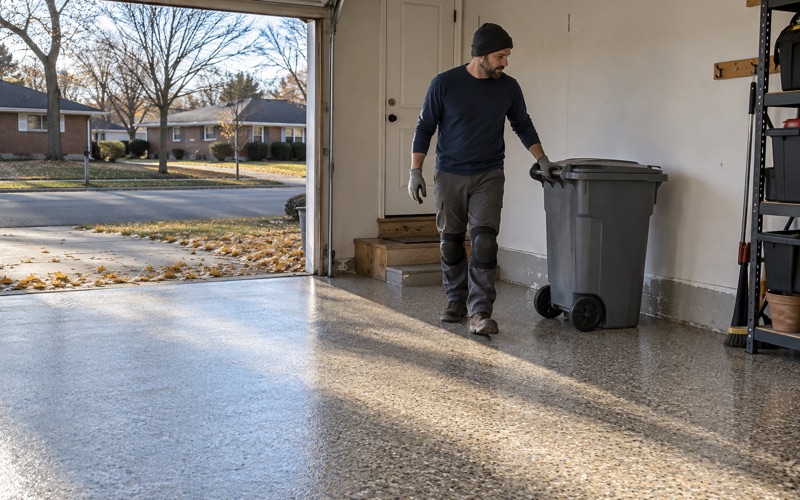
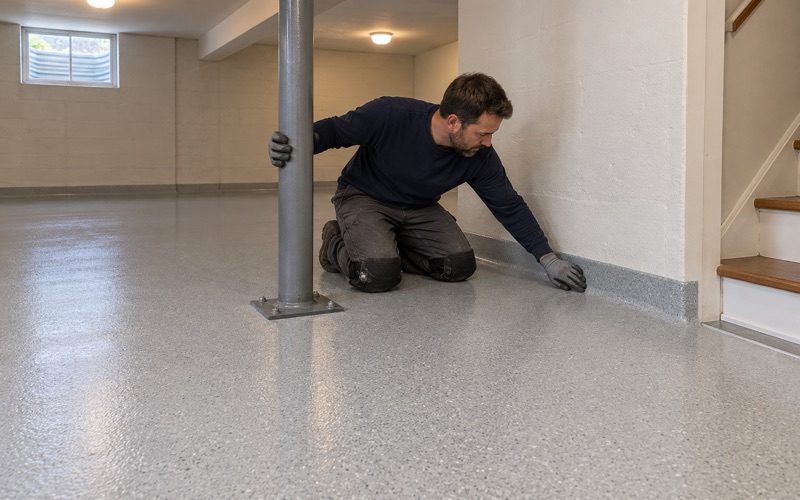
A properly built resin system does not need a wax layer at all. We would typically build a basement floor of this kind with a 100% solids epoxy body coat and a polyaspartic or polyurea topcoat, which carries its own gloss and abrasion resistance. Vinyl flake or quartz aggregate broadcast can tune the texture so street shoes have grip on the walkway while the surface still mops clean.
We keep the texture modest near a playing surface. Too coarse a broadcast holds grit and soil in the profile, and that soil also leaves on soles.
What else rides in on a shoe
Bowling shoes are meant to stay indoors, but people walk in from the street, the parking area and the stairs in whatever they wore outside. In salt season that includes rock salt and calcium chloride residue, which dries to a white film on any floor. We pick topcoats that resist deicer staining and plan a walk-off zone at the stair foot, so the first stretch of floor collects what the outdoors brings in before it reaches the area behind the lanes.
Cleaning chemistry that leaves nothing behind
The second half of the job is what goes into the mop bucket. Many floor cleaners are built to leave a gloss film or a fragrance, and that film is exactly the residue the trade warns about. We give every client a written care sheet naming a neutral cleaner, a dilution and a rinse step, and we tell them plainly which products to keep off a coated floor beside lanes.
Spills in the Bowlers’ Area
Jayhawk’s advice is simple: spills in the bowler’s area or on the approaches will cause bowlers to stick, and keeping food and drinks away from the bowler’s area is a good idea. In practice, people carry drinks from the bar and snacks from the counter, and the floor has to cope.
Sugar, syrup and acid on a slab
Soda, beer and juice leave sugar behind when the water evaporates, and sugar is what turns a clean floor tacky. A bakery flooring case study notes that oil, sugars and syrups, plus natural food acids such as lactic, citric and acetic acids, can eat away at inferior surfaces such as concrete, grouting in tiles or joins in vinyl floors. Bare or lightly sealed concrete soaks a spill in; a seamless resin floor keeps it on top where a damp mop can reach it.
Seamless edges and coved bases
Spills run to the edges. Where a floor meets a wall, a bench base or a counter kick, we can carry the coating up as a cove so there is no joint to fill with syrup and grit. That is the same detail food-service floors use, and it costs far less to build in at the start than to retrofit later.
Slip resistance where drinks are carried
A walkway between a bar and the lanes should not be glassy when wet. We set the broadcast density on that path so a dropped drink does not turn it into a hazard, then keep the finish smoother in the zone nearest the approach. The goal is two floors that read as one: grip where people carry glasses, and a clean, low-texture surface where they step up to bowl.
A Volunteer-Led Club and the Off-Season Window
The Village Club describes itself as volunteer-led and runs a “Building Our Future, Together” campaign listing a new fence, a rebuilt deck and significant interior upgrades, including a newly renovated bar. That is a good picture of how many community buildings decide on work: by committee, around a calendar, with money raised in stages.
Scheduling around leagues and events
Any room with league nights and private rentals cannot close for a week without notice. We phase work around the calendar, using overnight and weekend windows where the building cannot stop, and we plan the quieter stretch of the year for the main coat and cure. Cure follows slab temperature and dew point rather than the calendar, so a basement room that stays cool may need a longer window than the label suggests.
Testing a basement slab before quoting
Basement slabs are where moisture problems hide. Before the price is final we test with ASTM F2170 in-situ relative humidity probes or ASTM F1869 calcium chloride kits, depending on the slab. If readings are high, we name a moisture-mitigation primer in the proposal and explain what the coating warranty excludes, starting with moisture, before anyone signs.
We also map cracks, spalls and any old coatings first. If a section of slab needs repair or replacement before it should be coated, we say so rather than coating over it.
The same thinking at home
The village is overwhelmingly owner-occupied: 95.6 percent of occupied units, so the person choosing a floor is almost always the person who lives over it. Plenty of those basements hold a bar, a game table or a home gym, and the residue lesson carries straight over. A coated rec-room floor that is mopped with a film-forming cleaner will feel tacky under socks and slippers within a season. We hand homeowners the same care sheet we would give a club, and we explain that a coating is never waterproofing: on a basement that has taken water, the drain, the valve and the drying come first.
Permits, registration and the paperwork
We ask the Village of Western Springs Community Development department, at 708-246-1800, whether a coating job needs a permit rather than assuming either answer. Illinois has no state flooring license, so we check the village’s own registration, bond and insurance rules before a job is booked. Products are chosen inside the Illinois VOC limits for floor coatings, grinding dust is vacuumed at the machine instead of rinsed toward a drain, and residential jobs over the state threshold get a written contract and the Illinois consumer-rights pamphlet before any grinding starts.
- 20+ Years on Concrete
- Moisture Tested Before Pricing
- Written Itemized Proposals