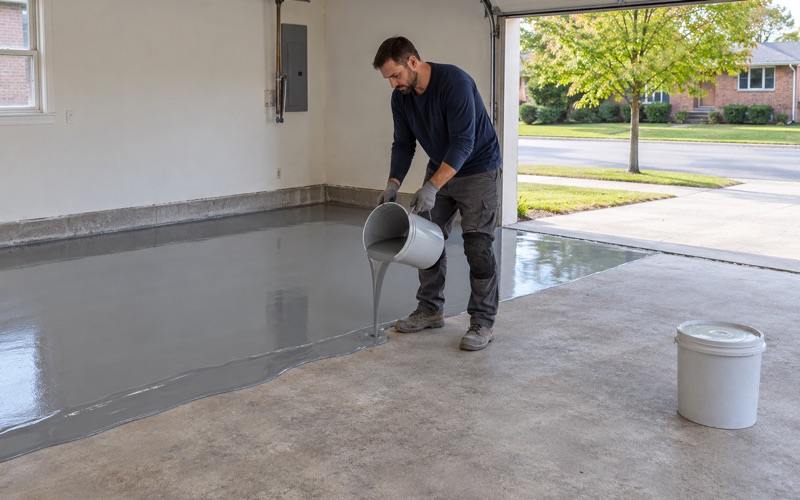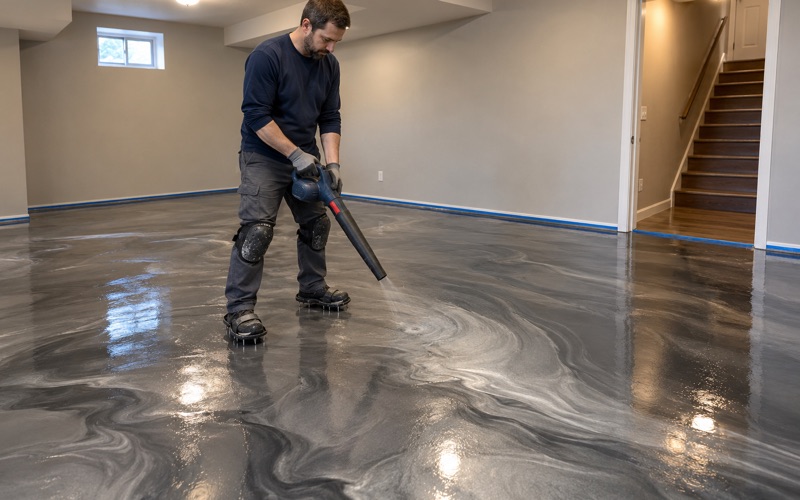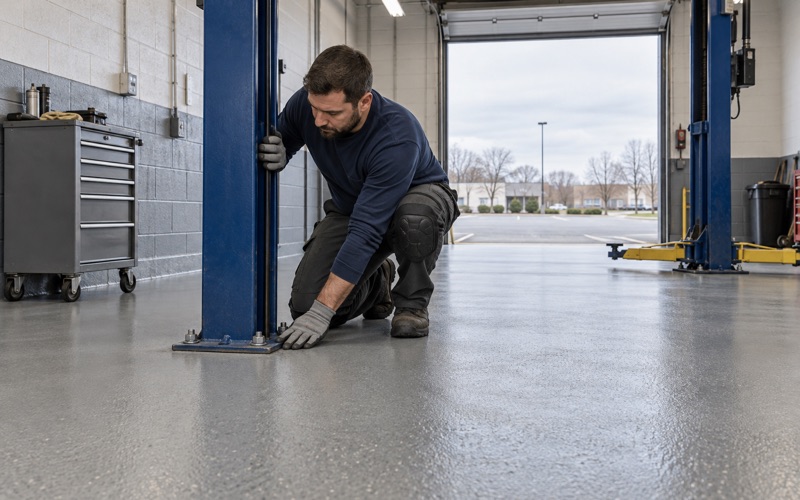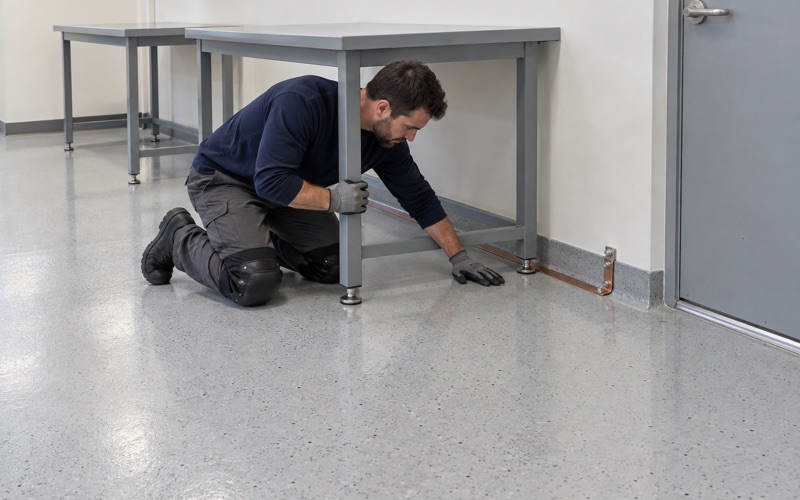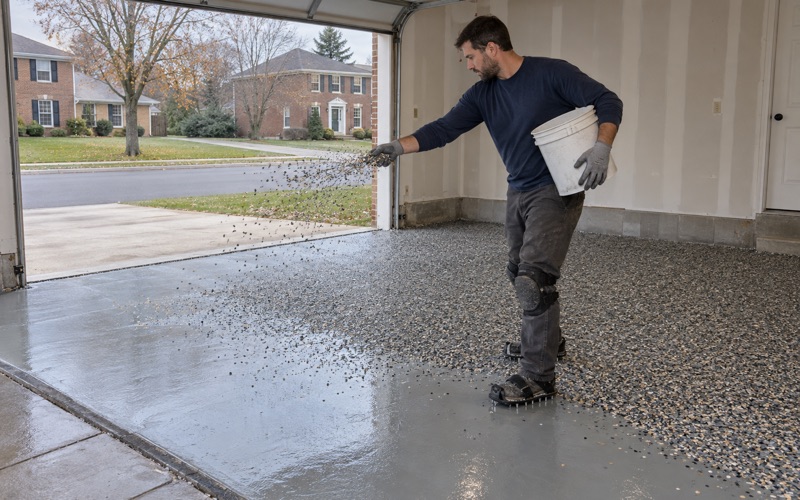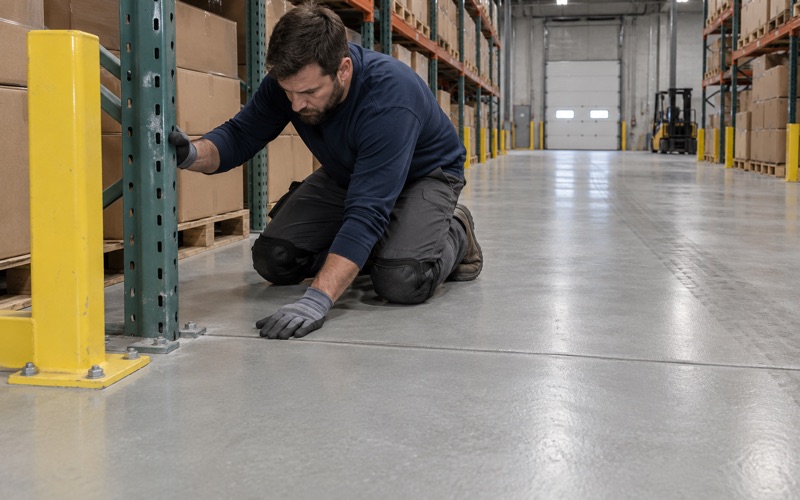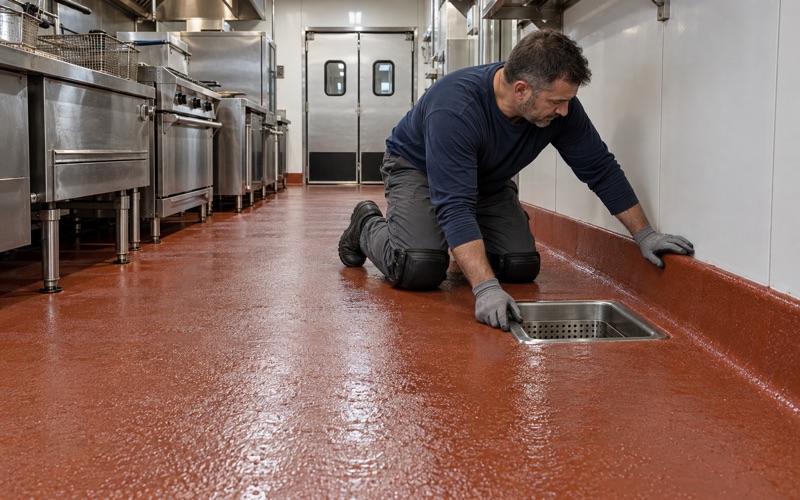
Mount Prospect Epoxy Flooring has spent more than 20 years on epoxy flooring in Summit and across the surrounding suburbs, and the floors that teach us the most are the ones that take chemicals every working day. A teaching lab, a mixing room or a workshop where solvents and reagents get handled is a harder test than any garage. This page is about those floors: what spills on them, where they fail, and how a seamless resin system is put down so it lasts.
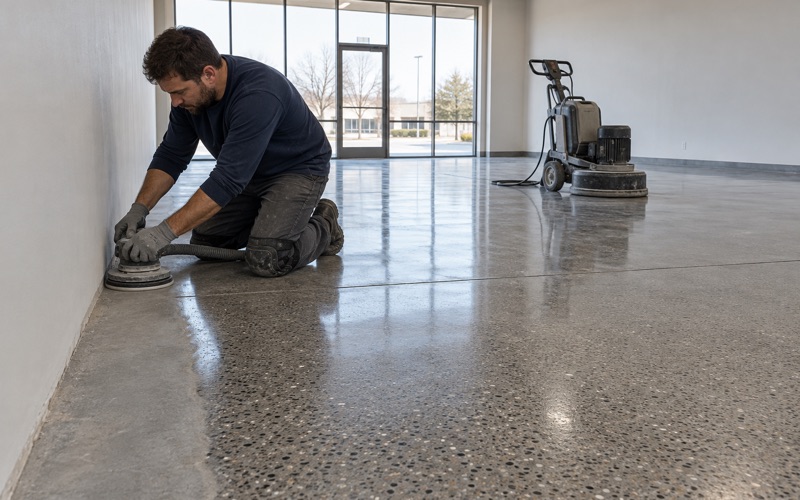
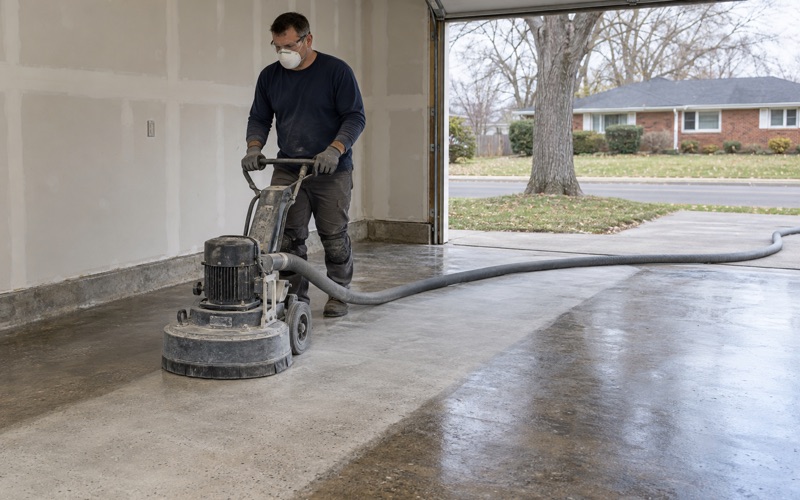
We start every job the same way. The slab is opened with a diamond grinder or a shot blaster, never an acid etch, because a chemical-resistant coating is only as good as its grip on the concrete underneath. The written proposal then names the product line, the number of coats and the finished thickness, so whoever signs off on the work can hold the finished floor up against the quote.
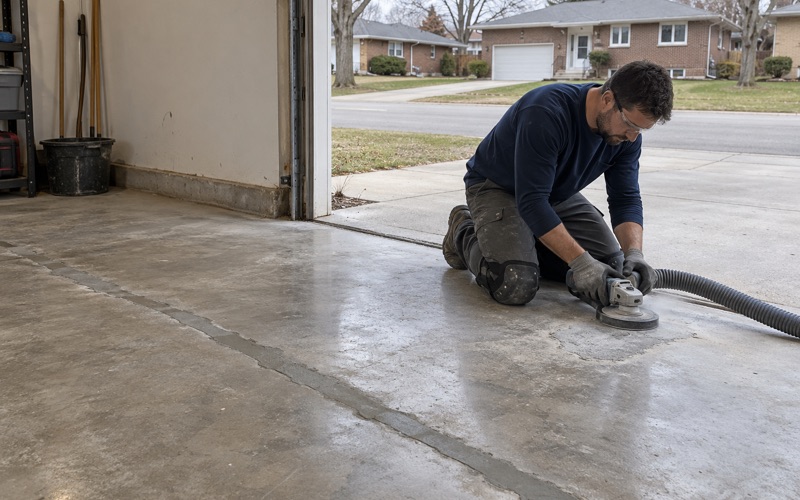
Before any of that, we map the cracks, spalls and old coatings and tell you plainly if the slab needs repair or replacement first. A lab floor that goes down over a failing substrate fails with it, and no topcoat fixes that.
Argo’s Science Wing and What Lands on a Lab Floor
A school that built labs on purpose
Argo Community High School sits at 7329 W. 63rd Street, inside the Village of Summit in Lyons Township. According to the project manager’s own listing, the school converted about 18,000 square feet of existing space into dedicated labs for chemistry, physics, general science and forensics, delivered in two phases. That listing says the whole renovation was completed in 42 days. It does not say what flooring went into those rooms, and we have not seen it, so nothing here describes Argo’s floors or claims any work there.
What the project does show is the kind of space Summit already has: rooms built for students to measure, mix, heat and pour. That is the use we want to talk through, because it is the same use any school or private lab brings to us when it asks about a floor.
Acids, reagents and plain water
A chemistry room sees dilute acids, bases, salt solutions and indicator dyes, usually in small amounts and often with a rinse right behind them. A forensics lab adds stains, powders and cleaning agents, and every science room gets water from sinks, eyewash stations and mop buckets. Most of these spills are minor on their own. The trouble is that they happen hundreds of times a year in the same few spots, near the benches and the sinks.
Spill frequency matters as much as spill strength. Coating manufacturers rate their products separately for short-term exposure, a splash rinsed off the same day, and long-term exposure, repeated splashes to one spot. A lab floor lives in the second category even when every single spill gets wiped up, so we choose a system rated for repeated contact rather than one that only survives the occasional accident.
Carts, stools and cleaning
Teaching labs also take rolling carts, stool legs and scrubbing machines. A floor that resists chemicals but scuffs, dents or turns slick when wet still fails the room. We specify texture that holds a sure footing when a beaker of water hits the floor, but stays smooth enough for custodial staff to clean quickly at the end of a period.
Looking for epoxy-flooring closer to Round Lake? See Epoxy-Flooring Services in Round Lake.
Why Tile Seams Are Where Lab Floors Fail
Liquid finds the joint
Many older classrooms and labs were finished in vinyl composition tile, and VCT looks fine until a spill sits on it. Stonhard, a resinous flooring manufacturer, puts the problem directly: “In floors with seams or grout lines, these liquids penetrate below the surface to break down adhesives, stain substrates, and cause deterioration.” The tile face may resist the chemical while the adhesive underneath does not.
Once the adhesive softens, tiles lift at the corners, curl and start to break. The seam then holds even more liquid, and the damage spreads outward from the sink or bench where it started. By the time a tile pops loose, the concrete beneath it is often stained and contaminated, which is something we have to grind out before any new floor can bond.
Porous coatings trap contamination too
Seams are not the only weak point. Trade guidance on lab floors says VCT and lightly coated concrete both tend to fall short because joints and porous surfaces trap contaminants. A thin, single-coat paint over bare concrete wears through at the traffic lanes and leaves open pores right where spills land most often.
That is why we do not offer a quick roll-on coating for a lab. A floor that will see reagents needs build, a closed surface and a continuous film from wall to wall, not a cosmetic layer over a slab that is still soaking things up.
Reading the slab before we price it
On a lab conversion we look hard at what is under the old tile. Adhesive residue, stained concrete and patched trenches from old plumbing all change the prep, and some of it may need a urethane cement or a repair mortar before a resin system goes on. A moisture test is part of our scope before the price is final, using ASTM F1869 calcium chloride testing, ASTM F2170 in-situ relative humidity probes, or both, because vapor coming up through a slab will lift a seamless floor just as surely as a spill lifts a tile.
Seamless Resin and an Integral Cove Base
One continuous surface
A seamless resinous floor answers the tile problem by removing the seam. The same trade guidance lists the advantages plainly: no grout lines or seams for chemicals to penetrate, a non-porous surface that resists absorption, and an integral cove base that keeps chemicals from reaching wall joints. A spill stays on top, where it can be wiped up, instead of working down into the substrate.
For lab use we typically build the floor from a 100% solids epoxy body coat, often with a quartz aggregate broadcast for texture and strength, sealed under a chemical-resistant topcoat. Where a room handles harsher solvents or heat, we look at urethane cement or a novolac-type epoxy for the wear layer. The proposal names exactly which, so the system can be checked against the room’s actual chemical list.
Running the floor up the wall
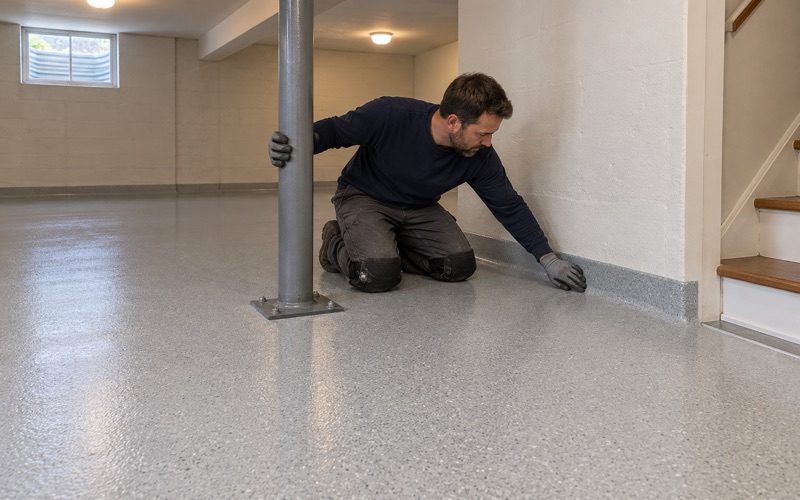
The integral cove base is the detail that separates a lab floor from a garage floor. Instead of a rubber or vinyl base glued to the wall, the resin itself curves up the wall several inches, so there is no joint at the floor line for water and chemicals to slip behind. It also leaves no corner for dirt to pack into, which helps custodial crews keep the room clean.
We form the cove with a trowel-applied resin mortar over a primed substrate, then coat it with the same system as the floor. Cove work around casework, sink cabinets and floor-mounted equipment is slow and careful, and it is a large share of the labor on any lab job, so we price it as its own line.
Epoxy or welded vinyl sheet
The usual alternative to resin in a school lab is a seamless homogeneous welded vinyl sheet, heat-welded at its seams and coved up the wall. Trade sources generally credit epoxy with tougher chemical resistance and welded sheet with a little more give underfoot. We explain that tradeoff honestly when a school or lab owner is still deciding, and if a resin floor is the wrong answer for the room, we say so.
Fitting the Work Inside a School Break
The calendar is fixed, the cure is not
Schools in Summit plan interior work around the academic year, and the summer break is the one stretch long enough for a full lab floor. Old tile has to come up, the slab has to be ground, tested and repaired, and every coat has to cure before furniture and casework go back. The room must be back in service, fully cured, before students return on the first day.
Our cure schedule follows slab temperature and the dew point spread at the slab surface, not a calendar date. A building that is closed for summer may also have its cooling turned down or off, and humid July air in a closed room can push the slab close to dew point and invite amine blush on a fresh epoxy coat. We plan dehumidification and air handling with the facilities staff before the first coat goes down, so the system cures on schedule.
Phasing rooms and keeping dust contained
Larger lab wings are rarely done in one pass. We phase rooms so some stay usable for summer programs or storage while others are being ground and coated, and we work evenings or weekends when a building cannot shut down. Grinding dust is vacuumed at the machine rather than rinsed toward a floor drain, which matters doubly in a lab where the old floor may carry chemical residue.
Products are selected inside the Illinois VOC limits for floor and industrial coatings, which bind whoever applies them, not only the manufacturer. In an occupied school, low-odor systems also make it easier to keep offices and adjacent rooms running while we work.
Permits and paperwork in Summit
Summit’s Building and Public Works department sits at the Strzelczyk Municipal Center, 7321 W. 59th Street. We ask that department whether a given floor coating needs a permit rather than assuming either answer, and because Illinois has no state flooring license, we check the village’s own registration, bond and insurance requirements before booking. If you manage a lab, a school or a shop floor in Summit that takes chemicals every day, we will walk the room, test the slab and give you a written scope that says exactly what goes down and how thick.
- 20+ Years on Concrete
- Moisture Tested Before Pricing
- Written Itemized Proposals