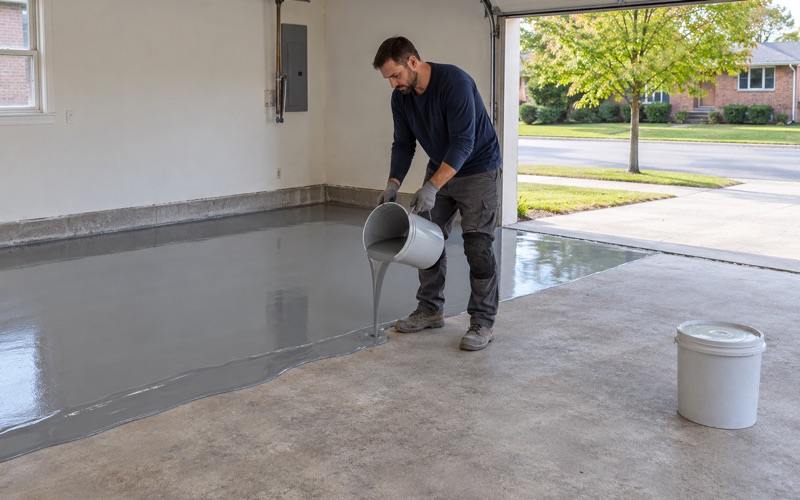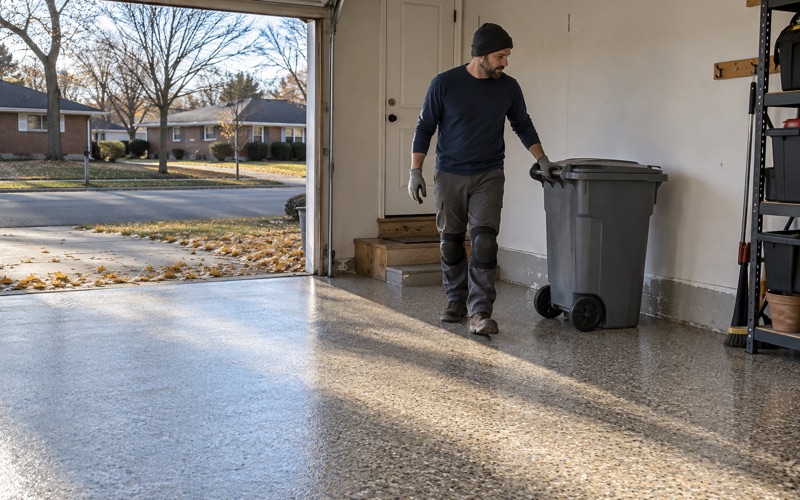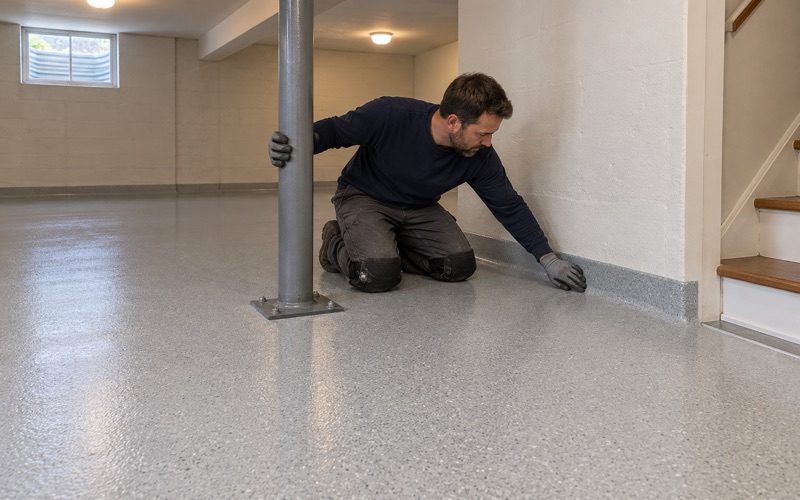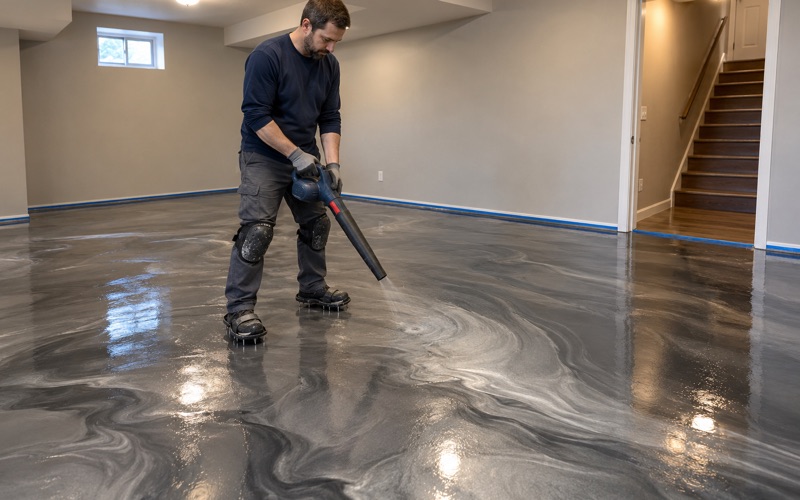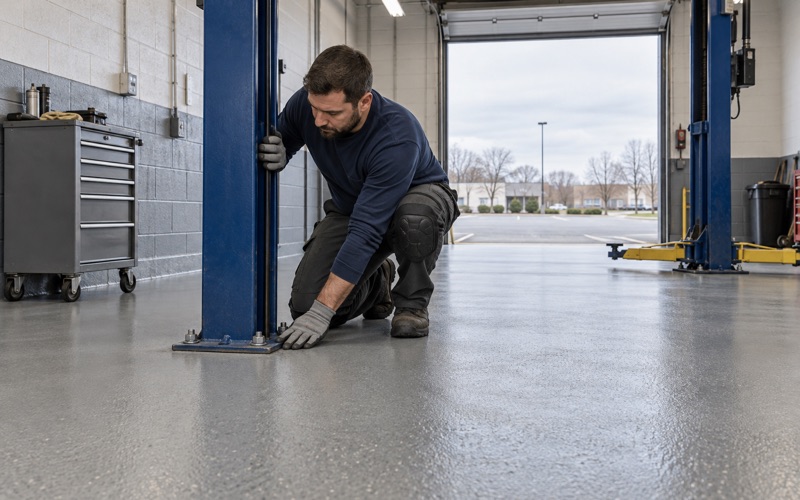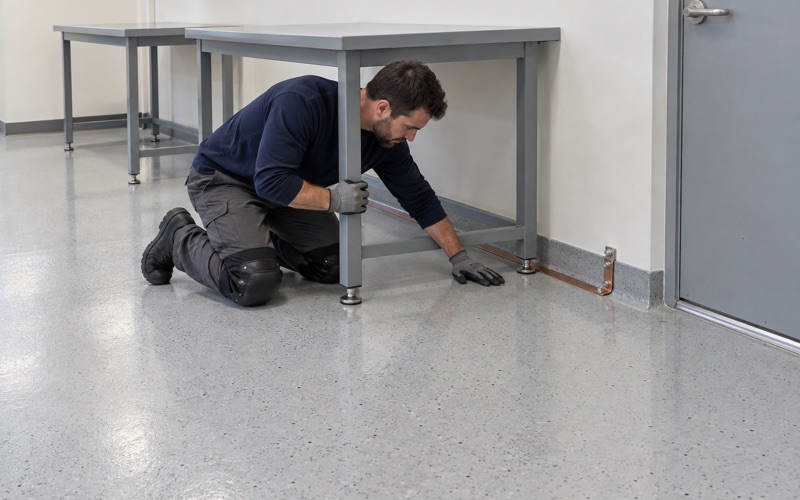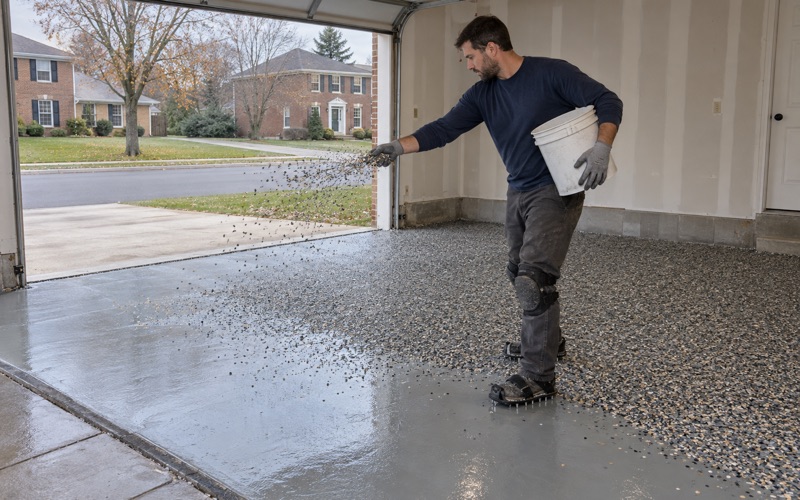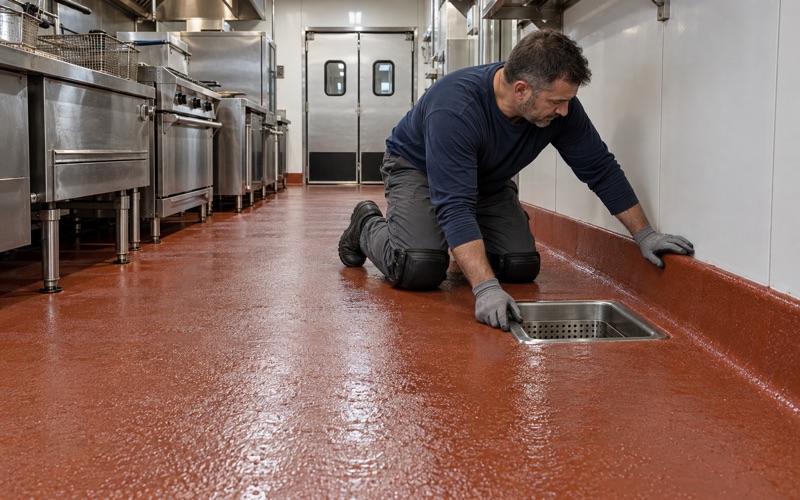
Mount Prospect Epoxy Flooring has spent more than 20 years on epoxy flooring in Round Lake and across the north suburbs, and the floors that teach us the most are the ones that stay wet for a living. A garage gets wet when snow melts off a car. A mechanical room gets wet because the equipment in it leaks, drips, sweats and gets hosed down as part of normal operation, and the floor has to be specified for that from the first coat.
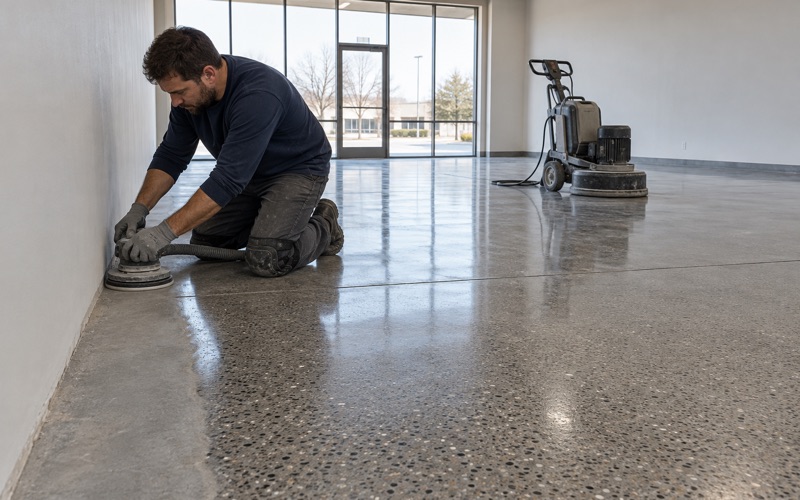
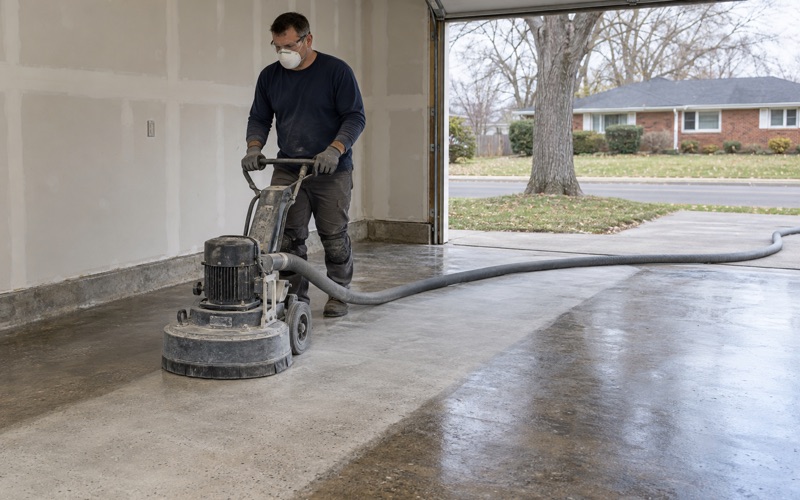
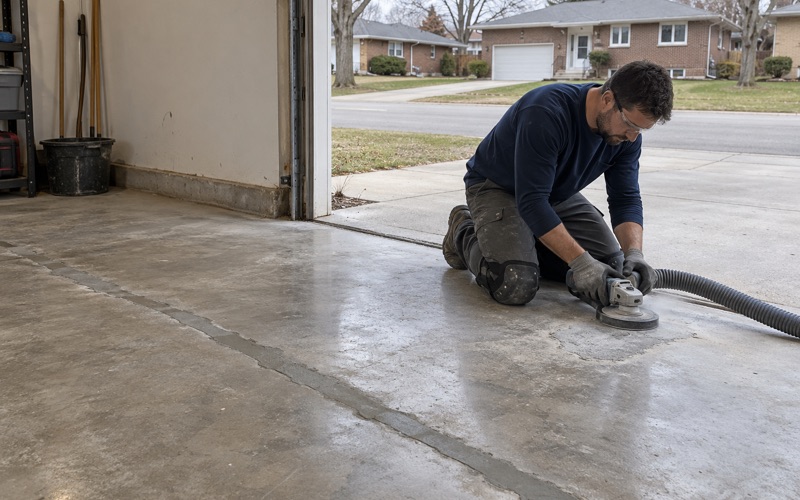
That is the kind of room this page is about: the space behind a pump, a filter or a water heater where people work in boots and the concrete rarely dries out completely. Before anything is priced we test the slab for moisture, we map every crack and spall, and we open the surface with a diamond grinder or a shot blaster rather than an acid wash. The written proposal then names the product line, the number of coats and the finished thickness, so the owner can hold the floor up against the quote.
We also say early what a coating cannot do. It will not fix a room that drains badly, it will not stop water that comes up through the slab, and its warranty does not cover moisture failures, which we explain before anyone signs.
The Pool on Hart Road and the Room That Runs It
Most people in Round Lake know the Round Lake Area Park District Aquatics Center as a summer destination. The district describes it as a pool holding over 200,000 gallons of water for summer use, plus a splash pad with a 14-foot water feature, at 860 Hart Road, which sits inside Round Lake village in Avon Township, Lake County. It is easy to confuse with its neighbors, because Round Lake Beach, Round Lake Park and Round Lake Heights are separate villages that share the name; this pool belongs to Round Lake itself.
What swimmers never see
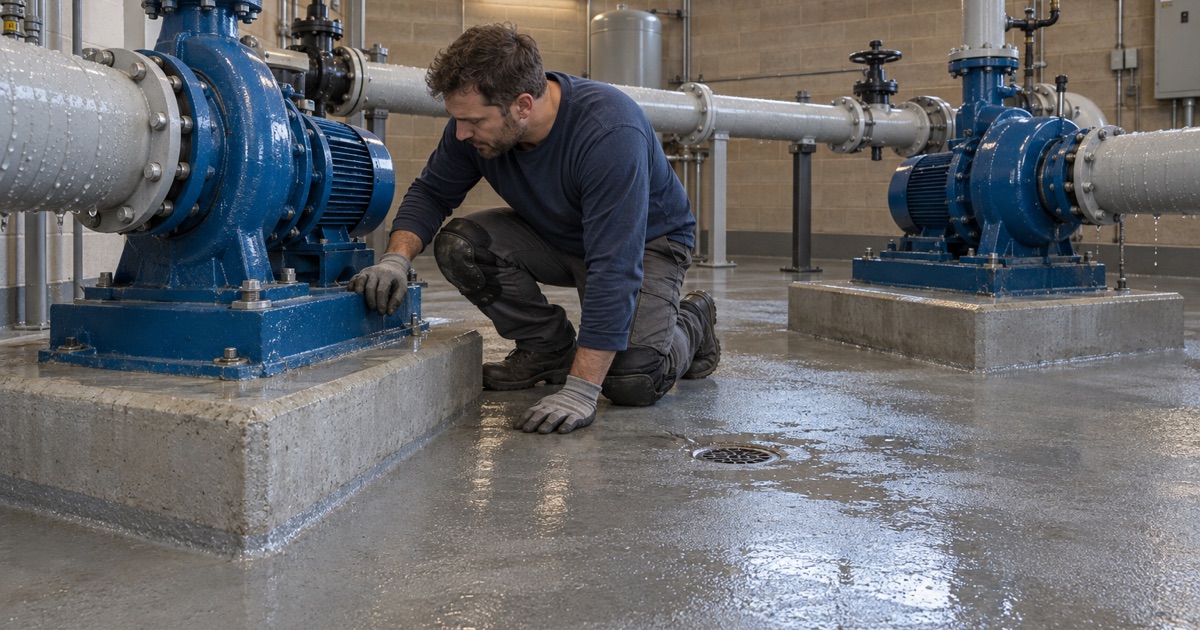
A pool that size does not run on its own. Somewhere on the property there is a room full of pumps, filters, valves and chemical feed lines turning that water over around the clock while the pool is open. Swimmers never walk into it, but maintenance staff spend real hours there, often with wet hands and wet boots.
We have not been inside that building and we have not worked for the park district. We use the Aquatics Center as an example because it is a public facility with a published state rule behind its equipment room, and that rule describes exactly the conditions any pump or filter room floor in Round Lake has to survive.
The 2026 season
The district’s own page says the Aquatics Center pool and splash pad are closed for the 2026 season. It gives no reason, and we will not guess at one. What the notice does illustrate is that outdoor pools in this part of Illinois live on a seasonal calendar, and that calendar matters a great deal to anyone planning floor work in a room like this.
Looking for epoxy-flooring closer to Warrenville? See Warrenville Epoxy-Flooring.
What the State Swimming Code Says About the Floor
Illinois regulates public pools through the swimming facility code at 77 Ill. Adm. Code 820. Section 820.200(t) covers the equipment that treats the water, and it is unusually direct about the room that holds it.
A lighted, ventilated room protected from the weather
The first requirement is that pool water treatment equipment be housed in a lighted and ventilated room that affords protection from the weather and prevents unauthorized access. For a floor contractor, ventilation and weather protection are not just code language. They decide how fast a slab can dry before coating, how humid the air will be while a coat cures, and whether the dew point at the concrete surface will stay safely below the slab temperature.
Sloped to drains, with a slip-resistant finish
The second requirement is the one we care about most. The code states that the equipment room floor shall slope toward drains and shall have a slip-resistant finish. Those are two separate jobs, and they belong to two separate trades.
Slope is built into the concrete when the slab is poured or reworked. A coating follows the surface it is applied to, so it cannot add pitch that the slab does not already have, and we tell owners that plainly. What a coating can do is deliver the second half of the sentence: a finish that stays grippy when the floor is wet. The code names no particular product, so the choice is ours to justify, not a box the regulation checks for us.
Where chemicals fit
The same section allows chemicals, tools and supplies to be stored in a separate weatherproof, access-protected space if they are not kept in the equipment room. We keep pool chemicals to a mention on this kind of job. Where they share the room, we look at what is stored there before choosing a resin, because some products tolerate splashes better than others.
Pump Seals, Filters, Backwash and Wet Boots
Water reaches an equipment room floor from several directions at once, and each source shapes the coating system differently.
Where the water comes from
Pump shaft seals weep as they wear. Filter housings get opened, and every opening puts water on the floor. Backwash cycles move large volumes through valves and lines that can drip at the fittings, and cold supply pipes sweat in humid summer air. Add a hose used to rinse things down, and the floor in a working pump room is wet more often than it is dry.
That water has to leave the room, which is why the code ties the slip-resistant finish to slope toward drains. When we prepare a floor like this, we pay close attention to the area around each drain. The coating should feather cleanly into the drain body without forming a lip that holds a puddle, and the grind has to reach the concrete right at the edge, where adhesion tends to fail first.
Building traction that lasts
Grip on a wet floor comes from texture, not from the resin alone. Our usual approach in a wet mechanical room is a 100% solids epoxy base, broadcast with quartz aggregate while it is still wet, then locked in with a topcoat. The size of the quartz and the thickness of that topcoat decide how aggressive the finished surface feels underfoot.
A finish that is too smooth becomes dangerous the first time a pump seal lets go. A finish that is too coarse is hard to squeegee and collects grime that then gets hosed toward the drain. We talk through that tradeoff with the people who actually work in the room, because they know where they stand, kneel and carry parts. Vinyl flake looks good in a garage, but in a pool room we would rather put the budget into aggregate and a thicker topcoat.
Preparing a slab that is rarely dry
Concrete that has spent years under dripping equipment can hold a surprising amount of moisture. We open it to a measured concrete surface profile on the ICRI CSP scale and test before we commit to a system. ASTM F2170 relative humidity probes and ASTM F1869 calcium chloride tests tell us what the slab is releasing, and a high reading points to a moisture-mitigation primer under the build rather than a bare epoxy.
Grinding dust in a room like this is vacuumed at the machine. Rinsing it into the floor drain sends cement fines into the very plumbing the room depends on, and we will not do it.
A Seasonal Pool and the Off-Season Window
An outdoor pool has one obvious advantage for floor work: months when the equipment is idle. Once the pool is drained and winterized, the room can be emptied, the floor can dry, and the work can happen without anyone needing to walk through it.
Timing the work to the slab, not the calendar
The off-season brings its own problem in Round Lake, though, because the idle months are the cold ones. Epoxy cure depends on the temperature of the slab and the spread between that temperature and the dew point, not on what week it is. An unheated pump building in January may simply be too cold to coat properly, and we will tell an owner to wait rather than lay a floor that cures soft or develops amine blush.
The best window is usually late spring before startup or early fall after shutdown, when the room can be warmed and ventilated for a few days. That leaves time for the slab to dry, for the moisture tests to come back, and for the coating to reach full cure before pumps start pushing water across it again.
Permits and the paperwork that comes first
Illinois does not license flooring or coating contractors, so before booking a job we check the local rules on registration, bonding and insurance ourselves. In Round Lake we ask the Village of Round Lake Building Department, at 442 N. Cedar Lake Road, whether the work needs a permit rather than assuming either answer. Because four villages share the Round Lake name, we confirm the address falls inside Round Lake village before we assume which building department applies.
Every product we specify stays inside the Illinois VOC limits for floor and industrial coatings, which matters even more in an enclosed equipment room. For any homeowner with a pool house, a backyard pump shed or a basement mechanical room, the same thinking holds: map the cracks, test the moisture, open the concrete properly, and build traction for wet feet first.
- 20+ Years on Concrete
- Moisture Tested Before Pricing
- Written Itemized Proposals