Mount Prospect Epoxy Flooring has spent more than 20 years installing epoxy flooring in Lake Forest and the north suburbs, and some of the floors that teach us the most are the ones covered in clay. A pottery studio, a home ceramics room or a school art room asks a floor to do one job above all others: come clean with water, every day, without leaving dust behind in the seams.
That changes how we specify the system. A seamless 100% solids epoxy over a properly ground slab gives a wet mop nothing to catch on, and a dense topcoat keeps slip and glaze from soaking into concrete pores where they dry and lift later. Texture, coving and the treatment around kilns and sinks are decided zone by zone rather than copied from a garage spec.
Below we walk through what a working clay studio puts on its floor, using a well-known public studio in town as the reference point, and how we plan the coating, the prep and the schedule around that. None of it describes a floor we have coated there; it describes what clay work does to concrete anywhere.
A 1929 Art Center With 16 Pottery Wheels
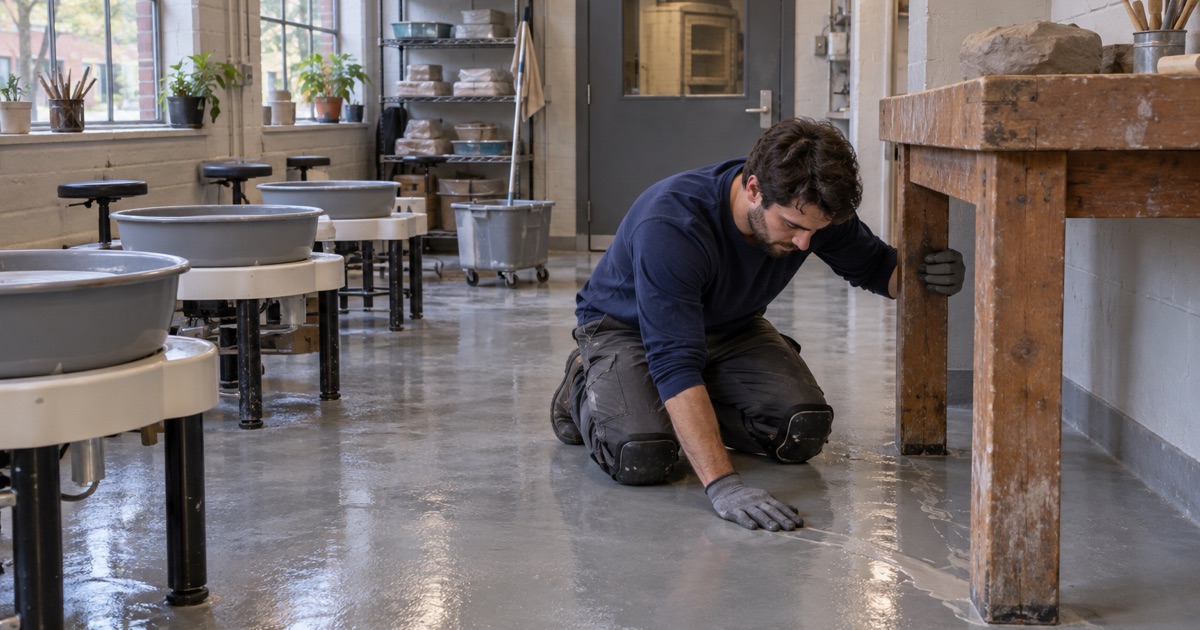
Lake Forest Parks and Recreation runs Stirling Hall Art Center at 60 E. Old Mill Road, a building constructed in 1929 to a design by North Shore architect Edwin H. Clark. The address sits inside the city in West Deerfield Township, Lake County. It is a ceramics-focused center with seven natural-light studios, 16 pottery wheels, three electric kilns, a 57-cubic-foot gas kiln, outdoor soda and raku kilns, two pit-fire circles and a professional-grade spray booth.
Classes cover wheel throwing, hand building, mosaics, sculpture, tile and painting for adults and youth, and registered students get daily open studio hours on top of that. It is a useful picture of what any serious clay room contains, whether that room is a public art center, a private teaching studio in a commercial suite, or a single wheel and a small kiln set up in a Lake Forest basement or garage.
Why dried clay is a floor problem
Wet clay on concrete looks harmless, and that is the trap. Ceramics programs warn that clay and glaze left on the floor dry into a fine, nearly invisible silica dust that circulates and stays suspended in the air. All clay bodies contain some free crystalline silica, and almost all glazes do as well.
Bare concrete makes this worse. Its open pores, saw cuts and hairline cracks trap slip, which dries in place and gets ground loose by the next pair of shoes or the next rolling cart. A floor cannot make a studio safe on its own, but a sealed, seamless surface removes the places where clay hides between cleanings.
Trimmings, splatter and the wheel ring
The ring around each wheel takes the heaviest load: trimmings, slurry flung off the wheel head, water from the splash pan, and buckets set down and dragged. Studio guidance tells students to clean up trimmings and spills promptly, with squeegees and dust pans at their own station, before the scraps have a chance to dry. We plan that ring as the part of the floor that will meet a squeegee and a mop several times in one session.
Looking for epoxy-flooring closer to Bellwood? See Bellwood Epoxy-Flooring.
Never Sweep: A Floor Built for the Wet Mop
Ceramics safety guidance is blunt about it: never sweep a clay studio. A broom lofts dried silica into the air everyone shares, so studios clean with a wet mop, a wet vacuum or a vacuum fitted with a HEPA filter instead. Those are general practices published by college ceramics programs, and they translate directly into what the floor has to tolerate.
Seamless, sealed and coved where it counts
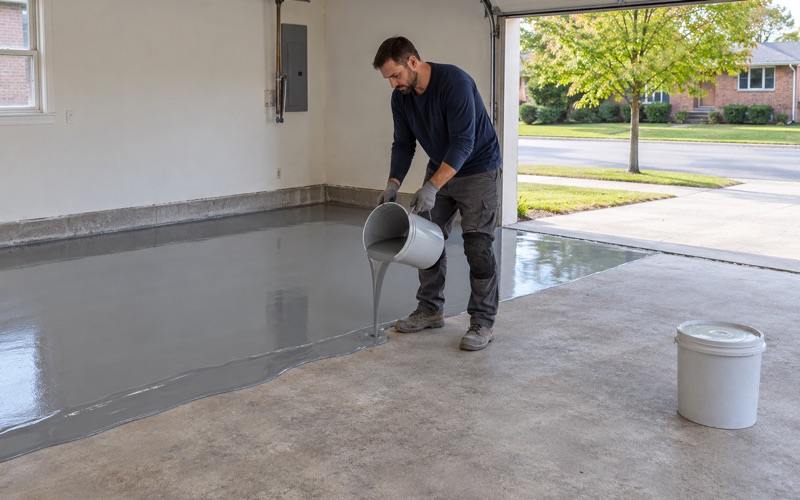
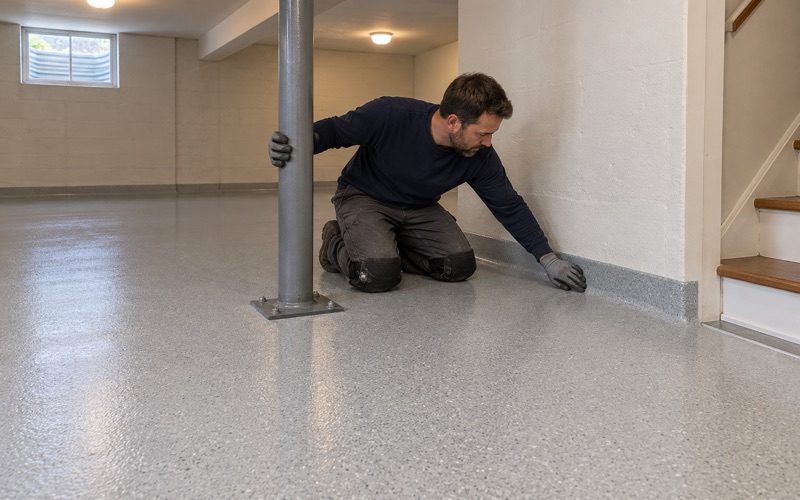
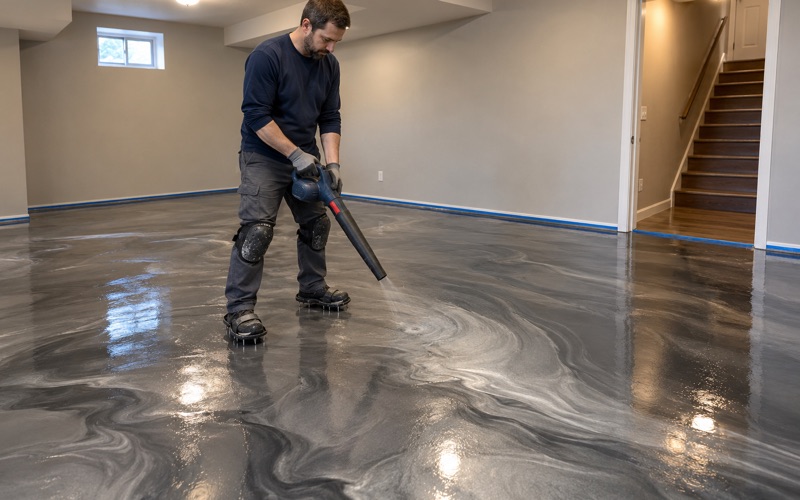
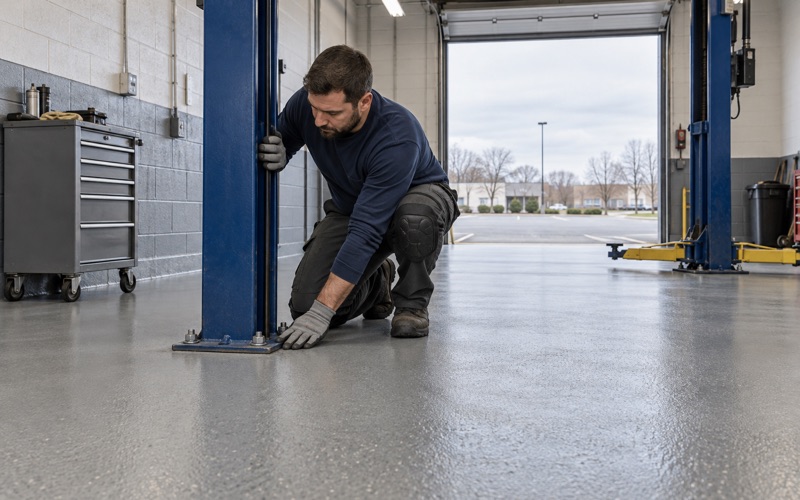
A wet-cleaned floor sees water every day, so the coating has to be continuous. We favor 100% solids epoxy under a polyaspartic or urethane topcoat, carried up into a cove at walls and casework so the mop does not leave a line of clay in the corner. Cracks, spalls and old coatings are mapped and dealt with first, and if a slab needs repair or replacement before it should be coated, we say so plainly.
Texture is a trade-off
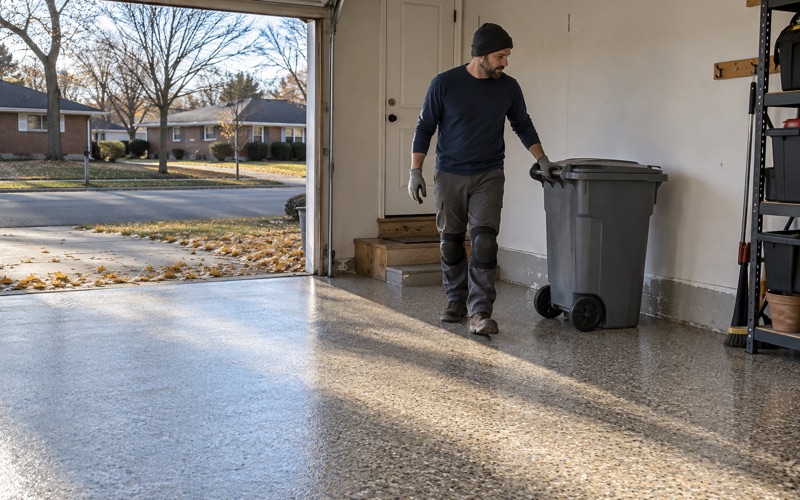
Clay slurry on a smooth, glossy floor is slick, but a heavy aggregate broadcast holds slip in its valleys and fights the mop. For a studio we usually recommend a light quartz aggregate broadcast locked under the topcoat, enough grip for wet shoes without turning the surface into a grater. A vinyl flake broadcast suits hallways and storage rooms, where looks matter more and the mop works less hard.
A topcoat that takes daily water
Daily wet cleaning wears a floor differently than a parked car does. Fine clay grit carried on shoes and cart wheels acts as a mild abrasive, so the topcoat is where the wear lands first. Polyaspartic and urethane topcoats hold up to that scuffing and keep their finish longer than bare epoxy, and after years of heavy class use a worn studio floor can usually take a fresh topcoat over a light sanding rather than a full regrind.
Prep that does not add to the dust
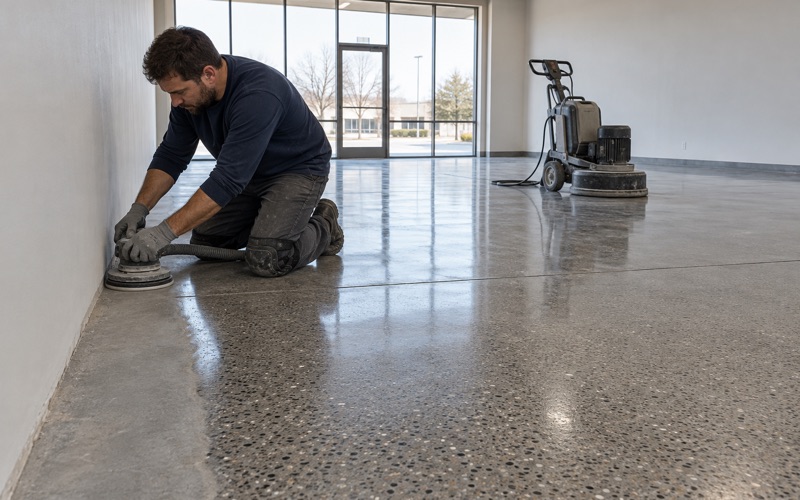
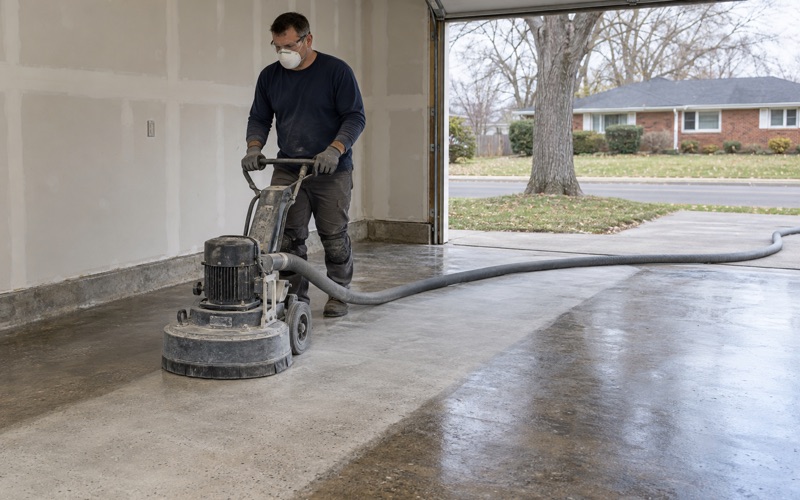
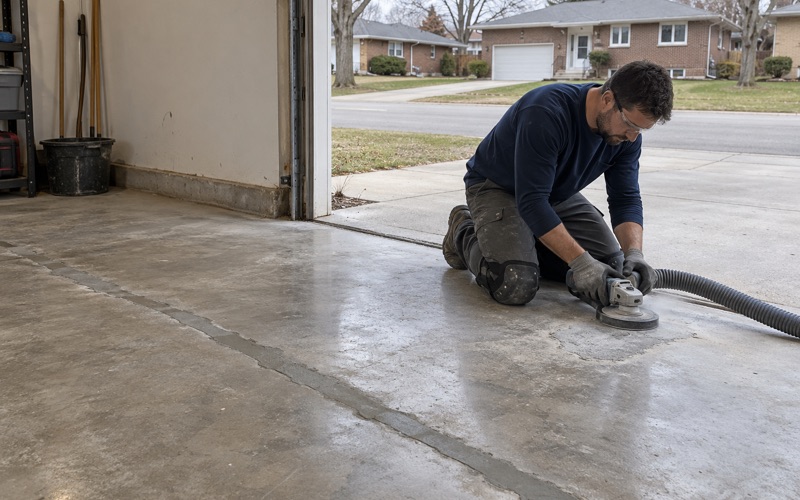
The preparation matters as much as the product. Every slab we coat is opened with a diamond grinder or a shot blaster to a measured ICRI concrete surface profile, never acid etched, and the grinding dust is captured by vacuum at the machine rather than washed toward a floor drain. Before clay residue meets the grinder, we scrape, wet-vacuum and HEPA-vacuum the room so the machine opens clean concrete instead of smearing old slip into the profile.
Moisture is tested before the price is final, with ASTM F2170 in-situ relative humidity probes or an ASTM F1869 calcium chloride test. A slab that pushes vapor will lift a coating from underneath, and a basement studio is the classic case. Where readings run high, a moisture-mitigation primer goes into the scope, and we explain that moisture is the first thing any coating warranty excludes.
Kilns, Glaze, Spray Booth and Sinks: Zones in One Studio
A clay studio is not one floor. The equipment list at a center like Stirling Hall reads as a map of zones that every studio has in some form, and each one loads the concrete differently.
The kiln area
Kilns radiate heat into the floor and air around them, and glaze drips and kiln wash collect in front of the loading doors. We have not measured floor temperatures beside any kiln, so we do not promise a heat rating for the coating. Instead we follow the kiln maker’s clearance and base requirements, and where a manufacturer calls for a noncombustible pad or bare concrete under the stand, we leave that area as specified and coat around it.
Where a studio fires outdoors, with soda, raku or pit firing, the door back inside becomes a zone of its own. Ash, grit and wet soles come through it on firing days, so we carry the textured, coved finish out to that entry instead of stopping it at the edge of the wheel room.
Glaze tables and the spray booth
Glaze areas see dipping buckets, sieving and drips that dry to powder when they are left overnight. A spray booth adds overspray that settles on the floor in front of its opening. A chemical-resistant topcoat with a smooth, lightly textured finish there lets a damp mop lift residue without scrubbing.
Sinks, slip and reclaim
Studios tell students that clay should never go down the sink, so reclaim bins and settling buckets sit beside each one. That puts the wettest, heaviest slip on the floor right there, from drips, splashes and buckets carried across the room. We treat the sink zone like a wash bay: fully coved, textured for grip, and finished without changing the existing slope, so water still moves where it already drained.
Working Around Classes and Open Studio Hours
A studio with classes most days and open hours on top of them cannot hand its floor over for a week, and the same is true of a private teaching studio with paying students on the calendar. We phase the work zone by zone, using nights and weekends when the room cannot close, so wheels and tables move to one side while the other side is ground and coated. An older building in daily class use adds its own questions about access, ventilation paths and where equipment can be staged.
Each phase follows the same order: clean and grind, prime, lay the body coat and broadcast, then topcoat. Light foot traffic generally returns before heavy loads do, so instructors can walk the new side while wheels, kilns and loaded shelving wait for the coating to reach full strength. The written schedule says when each piece can move back, which lets a studio plan its class calendar around the floor rather than guess.
Cure by slab conditions, not the calendar
Cure times follow the slab’s temperature and the dew point spread at its surface. A cold room or a humid morning slows the cure and can raise amine blush on epoxy, which has to be washed off before the next coat goes down. When a window is too cold or too damp, we tell the studio it needs to wait rather than squeezing a coat in before the next class.
Airflow is planned with the same care. Fresh coating needs ventilation to cure, but a fan pointed across a dusty room can drop clay grit onto a wet surface, so we clean the adjoining zones first and control doors and fans until the coat sets.
What goes in writing
The written proposal names the product line, the number of coats and the finished thickness, so the floor can be checked against the quote. Home jobs above the state threshold get a written contract and the Home Repair: Know Your Consumer Rights pamphlet before grinding starts. Products are chosen within the Illinois VOC limits for floor coatings, which bind us as the applicator.
Illinois has no state license for flooring or coating work, so we confirm the City of Lake Forest’s own requirements before a job is booked. We also ask the Community Development Department whether a given coating needs a permit rather than assuming the answer either way. For a new studio business, the city’s certificate of zoning compliance comes through that same department.
- 20+ Years on Concrete
- Moisture Tested Before Pricing
- Written Itemized Proposals