Mount Prospect Epoxy Flooring has handled epoxy flooring in Forest Park and the surrounding suburbs for more than 20 years, and the floors we think hardest about are the ones that get dirty for a living. Apparatus bays, gear rooms, service garages and shop floors all share one problem: whatever lands on them either washes off or works its way in. A seamless resin floor is built to make washing off the normal outcome.
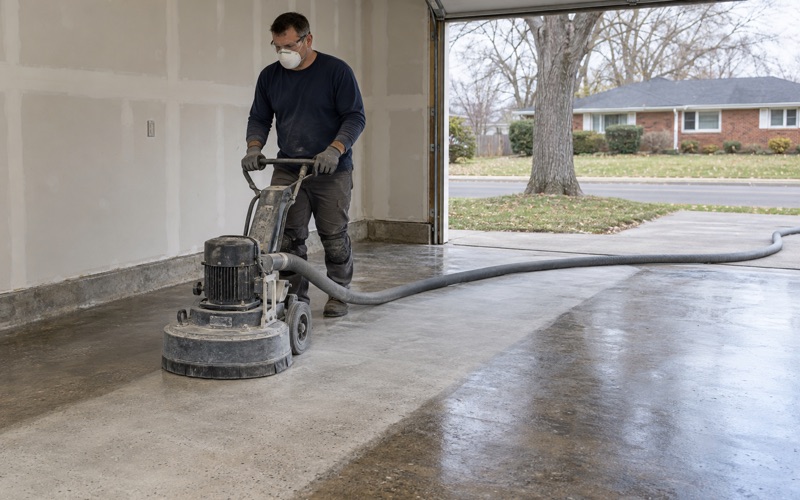
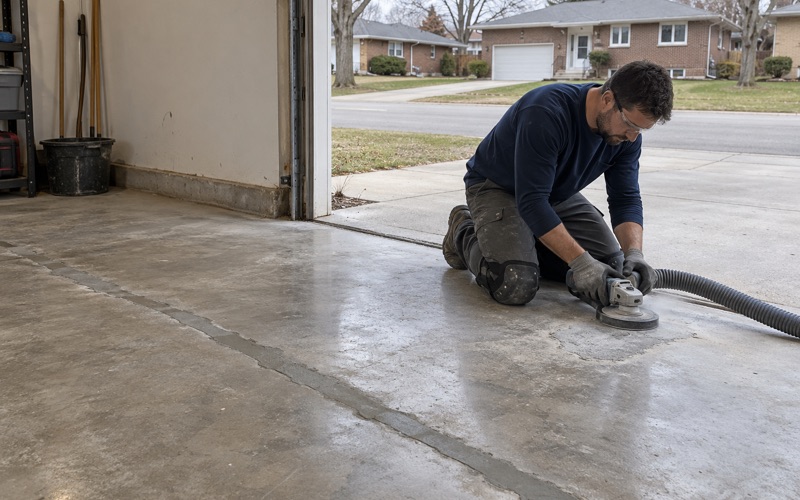
Our scope starts the same way on every slab. We open the concrete with a diamond grinder or a shot blaster instead of an acid etch, run a moisture test before the price is final, and map cracks, spalls and old coatings so we can say plainly when the slab needs repair first. The written proposal names the product line, the coat count and the finished thickness, which lets you check the finished floor against the quote.
This page works through one question that matters in any hard-working building: what a floor surface should do when the job is to keep contamination on top where it can be cleaned. One well-documented building in the village makes the case better than we could.
A Firehouse That Has Been Absorbing Its Own Exhaust
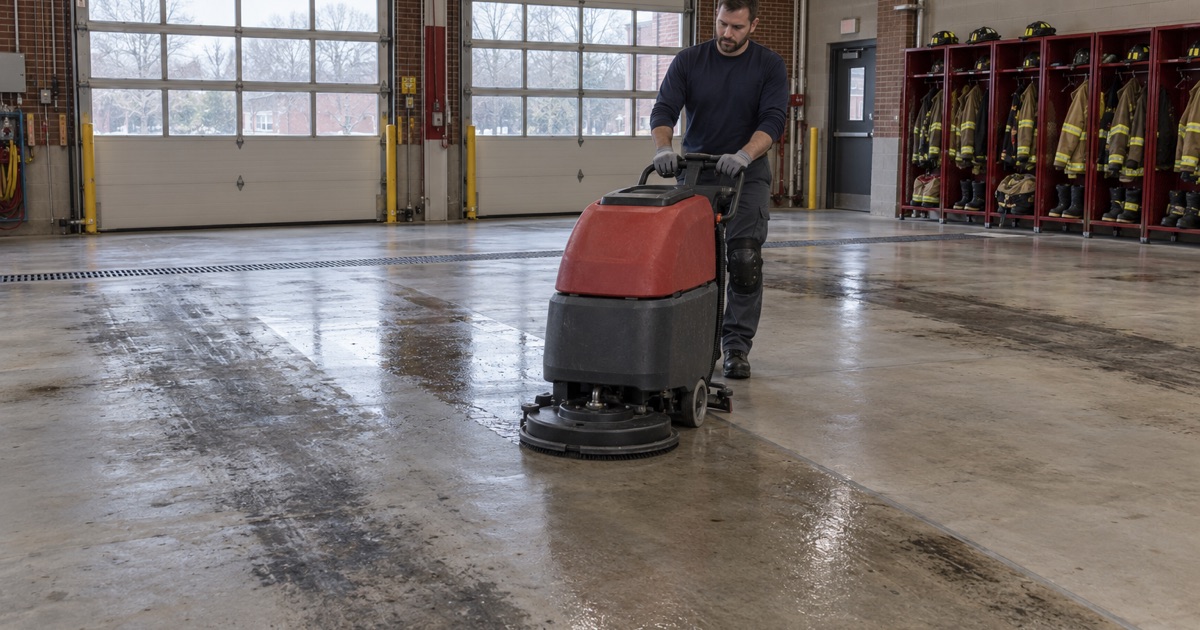
The Forest Park fire station at 7637 Wilcox Street sits beside Village Hall, and its recent public record reads like a study in what porous finishes do inside a working station. In August 2022 the village council approved a $110,749 roof repair there after a commissioner described “water spots on the ceiling, bins out there collecting water.” That contract kept the rain out, and the next conversation turned to what was already inside.
In March 2025 the Forest Park Review reported that the bunk room above the garage had not been updated since the 1970s, with a cedar finish on some walls. Fire Chief Lindsey Hankus said the first floor lacks adequate exhaust removal and that “a lot of it was absorbed into the porous wood.” The planned renovation covers bedrooms, locker rooms, electrical, windows, flooring and walls, with the old finishes replaced “in case they’re a host for carcinogens.”
We have done no work at the station, and the article neither describes the apparatus bay floor nor names its material. We point to it because the chief put the governing principle into one sentence. A porous surface keeps what lands on it.
Why porosity decides the cleaning
Raw wood, bare concrete, unsealed masonry and carpet are all open structures full of tiny voids. Diesel exhaust carries fine soot and oily residue that settles on every horizontal surface in a bay, and an open material draws that residue down into itself instead of holding it on top. Once it is in, a mop or a hose moves the surface layer around and leaves the rest where it was.
Uncoated concrete is the floor version of that cedar wall. It is strong, but it wicks oil, fuel, detergent and dissolved grime into its pores, and the stain you see is only the visible edge of what went in.
What a coating can do, and what it cannot
We are careful about this point because it is easy to oversell. A floor coating does nothing to the air in a bay, removes nothing from anyone’s lungs and is no substitute for capturing exhaust at the tailpipe, which is a ventilation decision. It is not a health product.
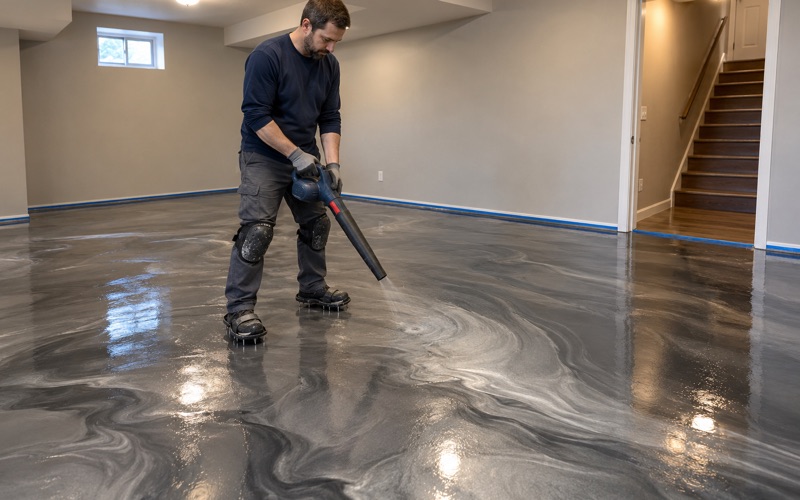
What a properly built resin floor does is give residue nowhere to go. Soot that settles on a dense, sealed surface stays on that surface, so the next wash-down actually removes it instead of pushing it deeper. That is the whole value, and it is worth having on its own terms.
Looking for epoxy-flooring closer to Westchester? See Westchester Epoxy-Flooring.
Turnout Gear and the Walk From the Bay Upstairs
A firehouse moves contamination by foot. Turnout gear comes back from a call carrying smoke residue, it is taken off and hung in or near the bay, and crews then walk from the apparatus floor toward the kitchen, the lockers and the bunks. In the Forest Park station the bunk room sits directly above the garage, which makes that line between a dirty room and a clean one very short.
Marking dirty and clean zones in the floor itself
A coating can put the boundary where everyone can see it. We can lay one color and texture across the bay and gear area, a contrasting one in the corridor and living spaces, and a clearly defined transition band where boots are brushed or washed before anyone walks on. Different rooms can also take different systems, so the bay gets the heaviest build while a hallway gets a thinner, easier-to-mop finish.
The point is not decoration. A visible line changes habits, and a floor that tells a crew where the clean side starts does part of the work that signage and memory otherwise have to do.
Cove bases, joints and corners
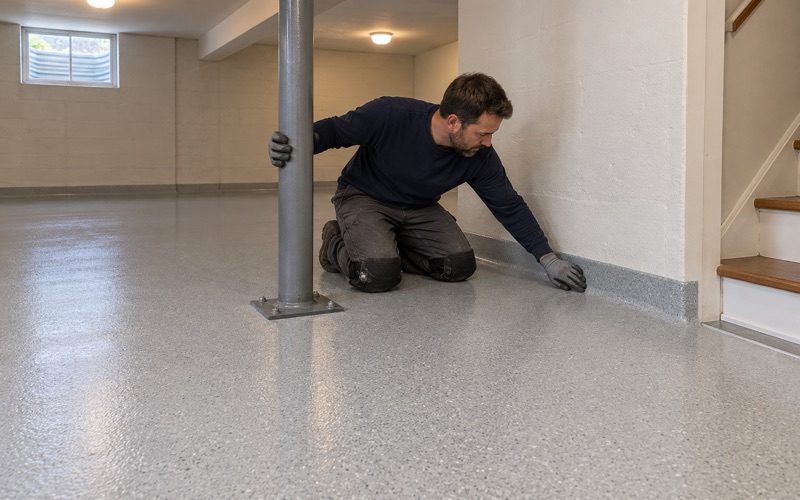
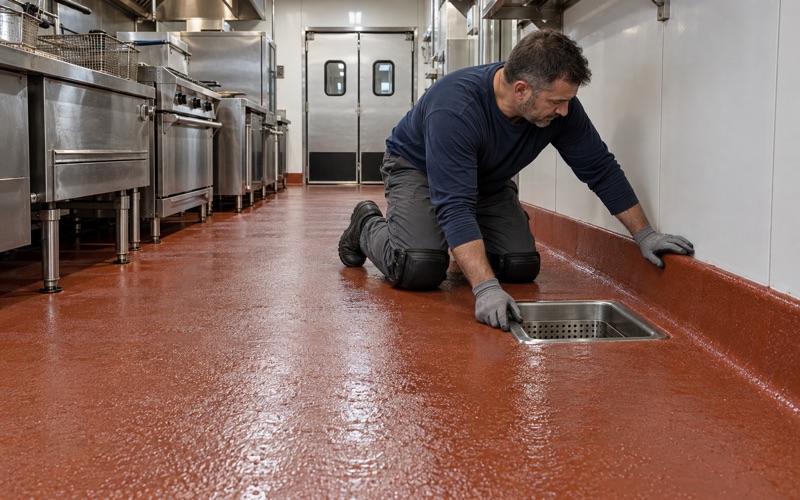
Contamination collects where the floor meets the wall and where slabs meet each other. We run a coved base a few inches up the wall so there is no right-angle seam to trap grit, the same detail the FDA Food Code asks for at floor and wall junctures in food establishments under 6-201.13. Control joints are cleaned out and filled with a semi-rigid filler so a squeegee passes over them rather than dropping debris into them.
Gear storage and wash areas
Rooms where gear is stored or washed see water, detergent and repeated scrubbing. OSHA’s bloodborne pathogens standard, 29 CFR 1910.1030(d)(4), requires that working surfaces be cleaned and decontaminated after contact with blood or other potentially infectious materials, and that applies to any employer whose crews have that exposure. A seamless floor with a coved edge is simply a surface that a disinfectant can reach completely.
A Floor You Can Hose, Squeegee and Disinfect
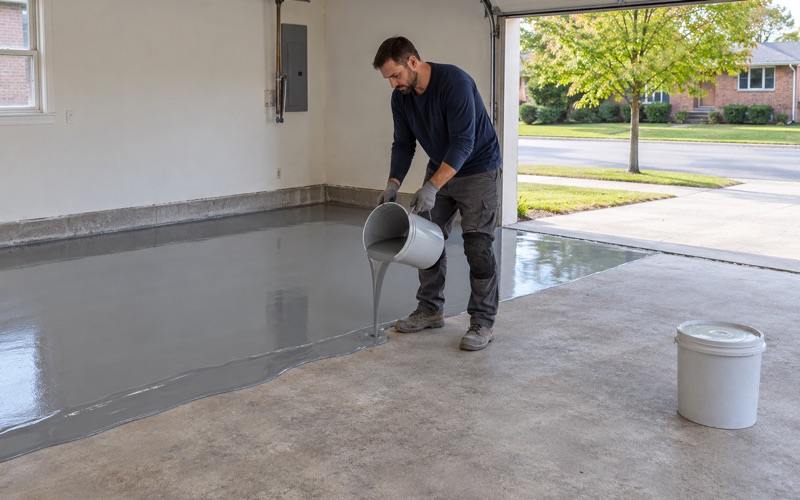
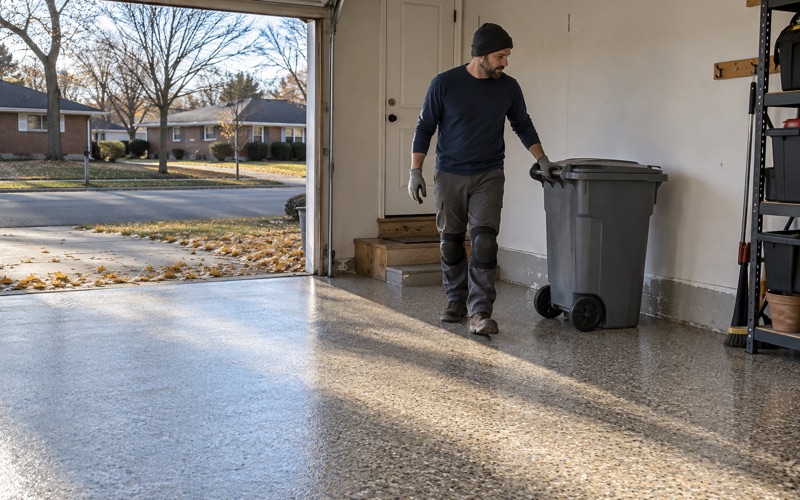
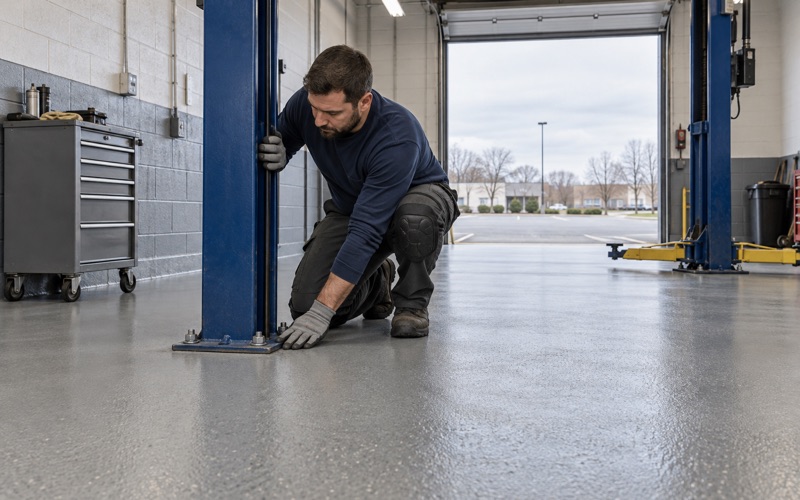
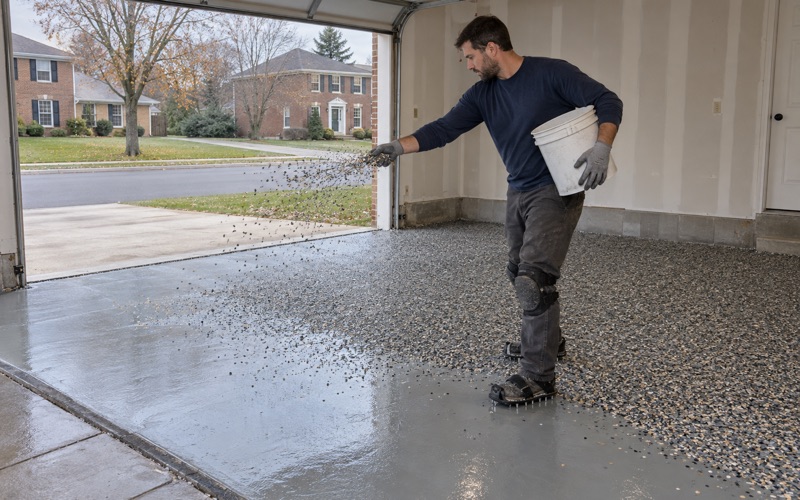
A washable bay floor is a system, not a single product. We usually build it on a 100% solids epoxy base for thickness and adhesion, broadcast quartz aggregate into it for traction on a wet surface, and lock it in with a polyaspartic or polyurea topcoat that resists chemicals and wear. Where a floor sees hot water washing and frequent thermal shock, urethane cement is often the better base, and we will tell you when it is.
Profile, moisture and adhesion come first
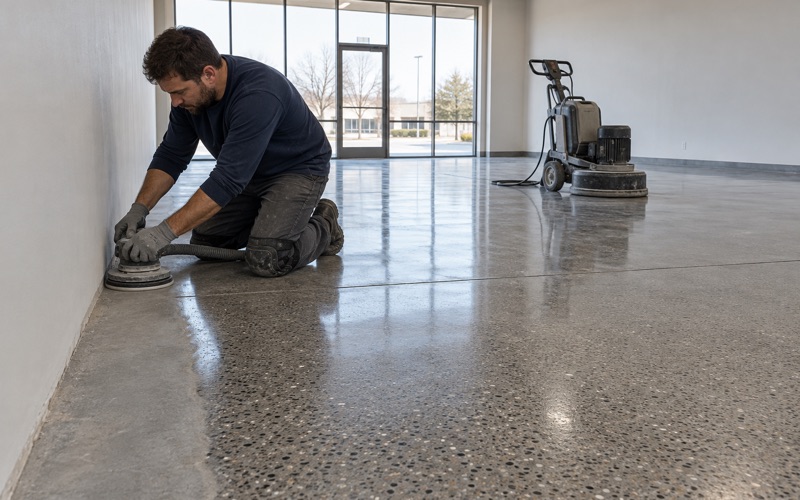
None of that holds without preparation. Grinding or shot blasting gives the slab a measured surface profile on the ICRI CSP scale, so the base coat has something to bite into. Grinding dust is vacuumed at the machine, never rinsed toward a floor drain or the street, which matters in a building whose drains are part of the wash-down plan.
A ground-level slab can also push moisture up from below, and that vapor pressure is the most common reason a coating lets go. We measure it with ASTM F2170 in-situ relative humidity probes or ASTM F1869 calcium chloride testing, and where the readings call for it we specify a moisture-mitigation primer. We also explain, before anything is sold, that moisture is the first thing a coating warranty excludes.
Hot tires, heavy wheels and chemistry
A vehicle that parks right after a run brings hot tires onto the floor, and hot tire pickup is how thin, poorly bonded coatings fail in the first year. Heavy apparatus also concentrates load at each tire and at outrigger pads, so we size the build to the weight rather than to the price. Before choosing a topcoat we ask which degreasers and disinfectants the crew actually uses, because chemical resistance varies from one product line to the next.
Drains and slope stay as they are
A coating follows the slab beneath it. It does not correct a floor that pitches away from a trench drain, so where water ponds we address the slope in the concrete before coating. At each drain the coating is terminated cleanly into the drain body so wash water leaves the floor instead of creeping under the edge.
Working Inside a Station That Never Closes
A firehouse cannot shut its doors for a week while a floor cures. Work in an in-service station is phased: half a bay at a time with apparatus moved to the open side, or one room at a time in the gear and living areas, scheduled with the shift so a response is never blocked. We use overnight and weekend windows the same way we do in any shop or warehouse that cannot stop.
Cure times that follow the slab
Return-to-service time depends on slab temperature and the dew point spread at the slab surface, not on a calendar. Polyaspartic topcoats can take foot traffic within hours, while full vehicle loads wait for the cure the product data and the conditions allow. If the slab is too cold or too close to dew point, we say so and wait, because a rushed cure produces amine blush and a weak bond.
Odor, VOCs and people sleeping upstairs
In a station where crews sleep above the bay, odor and ventilation are part of the plan. We select products within the Illinois VOC limits in 35 Ill. Adm. Code Part 223 Subpart C, which bind the applicator as well as the manufacturer, and 100% solids systems keep solvent content low. Application is timed and ventilated so the living space is not breathing a fresh coat overnight.
Door clearance, permits and paperwork
Build height can matter more than people expect. The Review reported that the Forest Park bay opening is too low for currently manufactured trucks, and that the new truck the department wants is only an inch shorter than the garage opening. In any bay with clearance that tight, a quarter-inch urethane cement build at the threshold is worth discussing before it is poured.
Before a job is booked, we ask the Village Building Department whether a coating needs a permit rather than assuming either answer. Illinois has no state flooring license, so we confirm the village’s own registration, bond and insurance requirements. A public owner usually works from a written specification, and our proposal answers it line by line with the product, coat count and thickness named.
Whether the floor belongs to a station, a shop or a private garage, the standard we hold to is the one the chief described in reverse: a surface that keeps contamination on top, where the next cleaning can take it away.
- 20+ Years on Concrete
- Moisture Tested Before Pricing
- Written Itemized Proposals