Mount Prospect Epoxy Flooring brings more than 20 years of epoxy-flooring work to Deerfield, and the floors we think hardest about here are the ones that get wiped down wet many times a day. A treatment room, an exam area or any space run on a written disinfection routine asks something specific of the floor under it. The coating has to shrug off chemical contact, stay sealed at its edges and come back into service on a schedule the building sets, not one we set.
That changes how we scope a job. Before a price is final we test the slab for moisture, we open the surface with a diamond grinder or a shot blaster rather than an acid etch, and we map every crack, spall and old coating. If the concrete needs repair before it should be coated, we say so in plain words instead of burying it under a fresh topcoat.
The proposal you get names the product line, the number of coats and the finished thickness. That gives a facilities manager something to hold the installed floor against, and it makes the conversation about chemical resistance concrete rather than a matter of brochure adjectives.
An in-center dialysis clinic on Lake-Cook Road

Fresenius Kidney Care Deerfield sits at 405 Lake Cook Road, Suite A13, and lists in-center hemodialysis and at-home hemodialysis among its services. Its posted hours are Monday, Wednesday and Friday from 4:00 a.m. to 8:30 p.m., and it is closed Tuesday, Thursday, Saturday and Sunday. We have never worked there and have not seen its floor; we use it here because it is the clearest local example of a room type whose floor demands are written down in public guidance.
Which side of the county line
The Census geocoder places 405 Lake Cook Road inside the Village of Deerfield, in Northfield Township, Cook County. That is the small Cook County part of the village south of Lake-Cook Road, which divides it from the Lake County side where most of Deerfield sits. For any commercial floor along that road, we confirm the address before assuming which offices will want to hear about the work.
Why a clinic floor is its own category
A clinic like this one is not a warehouse or a garage. Rolling chairs, carts and equipment stands move constantly, people walk in recovering from treatment, and the floor is cleaned to a protocol rather than when it looks dirty. The questions we ask are about chemistry, seams and timing more than wheel loads.
The same reasoning carries to other Deerfield rooms run on a wipe-down schedule, such as exam rooms, procedure rooms and lab support spaces. Wherever a written routine leaves liquid on the floor, the coating is selected for that routine first and for appearance second. Color, flake and sheen still matter, but they are decided after the chemistry is settled.
Looking for epoxy-flooring closer to Norridge? See Norridge Epoxy-Flooring.
Visibly wet: what a disinfection routine asks of a floor
CDC’s notes for dialysis clinical managers on environmental surface disinfection are direct about method. They call for EPA-registered hospital disinfectants, routine disinfection with no patient present, and a sufficient patient-free interval at each station between patients. They also say the procedure should allow enough disinfectant to reach the surface so that surfaces stay visibly wet.
What the guidance does and does not say
Those notes address station surfaces in general and do not name a floor material. Nothing in them requires epoxy or any other resin, and we would never tell a clinic otherwise. What they describe is a cleaning pattern, and a floor near a treatment chair lives inside that pattern whether or not the guidance mentions it.
Dwell time on a horizontal surface
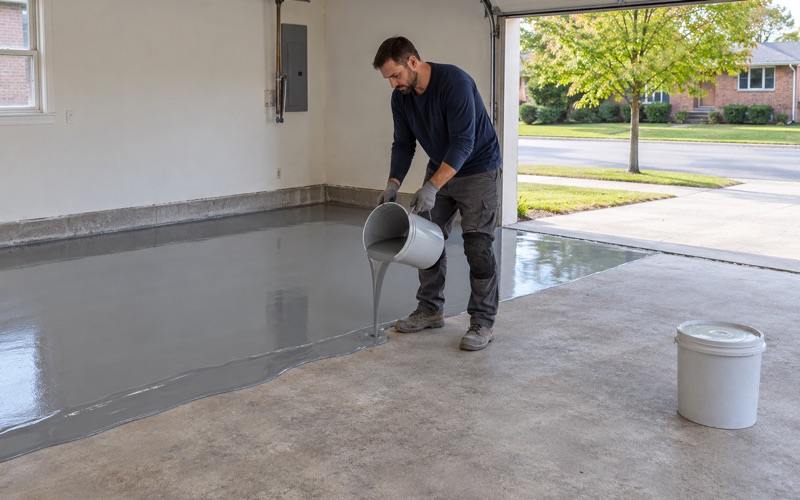
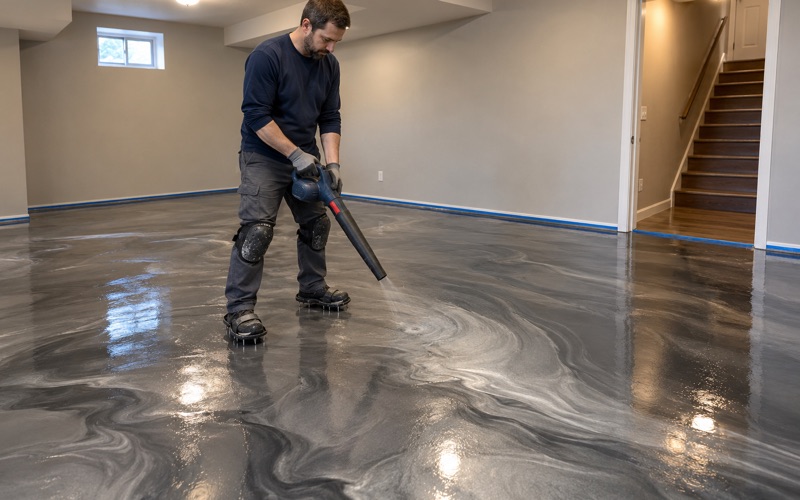
A surface kept visibly wet for a disinfectant’s full contact time means liquid sitting on the floor several times a shift, every operating day. On bare or poorly sealed concrete that liquid finds pores, and on a thin film it finds the weak spots at edges and seams. A dense, fully cured system such as a 100% solids epoxy base with a chemical-resistant polyaspartic or urethane topcoat is built for repeated wet contact, as long as the edges are closed.
Blood, bleach and tuberculocidal products at the chair
The same CDC notes say intermediate-level, tuberculocidal disinfectants must be available in a dialysis facility for surfaces visibly soiled with blood or body fluids. They also point out that bleach dilutions specified on a product label might not conform to a 1:100 or 1:10 dilution. In practice, a floor near a chair may see a quaternary product one hour and a stronger sodium hypochlorite solution the next.
We check a topcoat’s published chemical-resistance data against the actual products a facility uses, not against a generic list. Some finishes tolerate bleach and alcohol-based cleaners for years; others gloss over, soften or yellow under repeated contact. Asking the infection-control lead for the product names before we choose the system is a small step that saves a recoat.
Where a room sees heavy chemical exposure and frequent hot-water cleaning, urethane cement is another option worth pricing. It is thicker and more forgiving of thermal and chemical stress than a thin film, though it costs more and changes the look of the finished floor. We lay out both systems side by side in the proposal, with coat counts and thickness, so the choice is made on the facility’s terms.
Seams, coves and rolling chairs around a treatment station
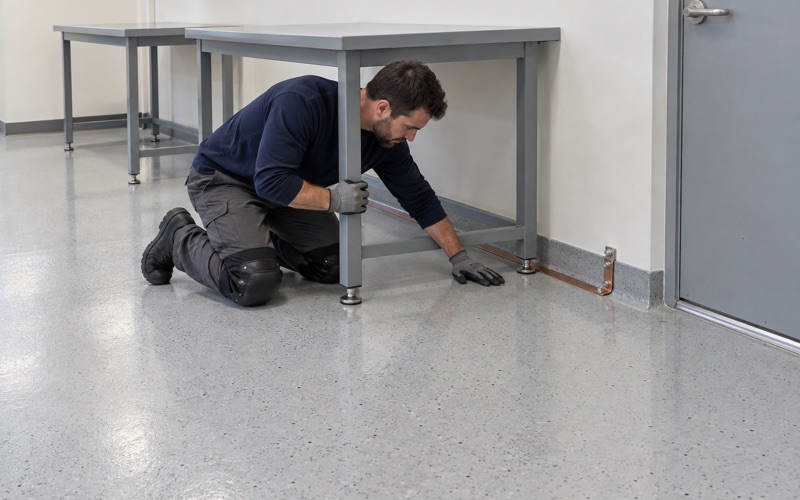
A floor that resists chemicals in the middle of the room can still fail at its edges. Liquid that gets under a coating at a wall line, a door threshold or an old patch spreads along the bond and lifts the film from below. Around a station, the details matter more than the field.
Integral cove base
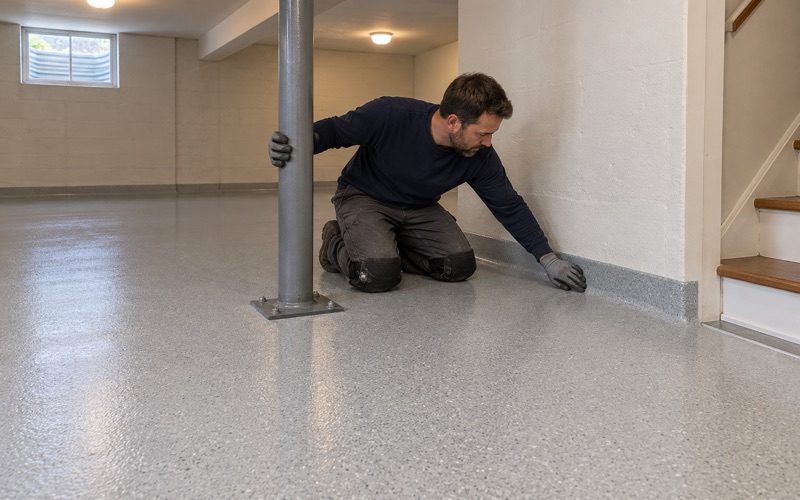
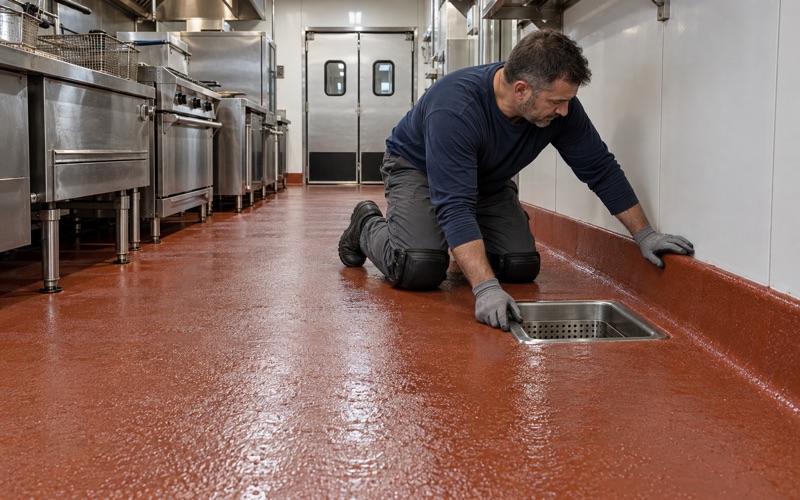
Where walls meet the floor, a resin cove carried up the wall a few inches removes the joint that a mop pushes water into. It turns the base of the wall into part of the floor system rather than a seam between two materials. We build it from the same family of products as the floor so the two expand and cure together.
Joints, cracks and old repairs
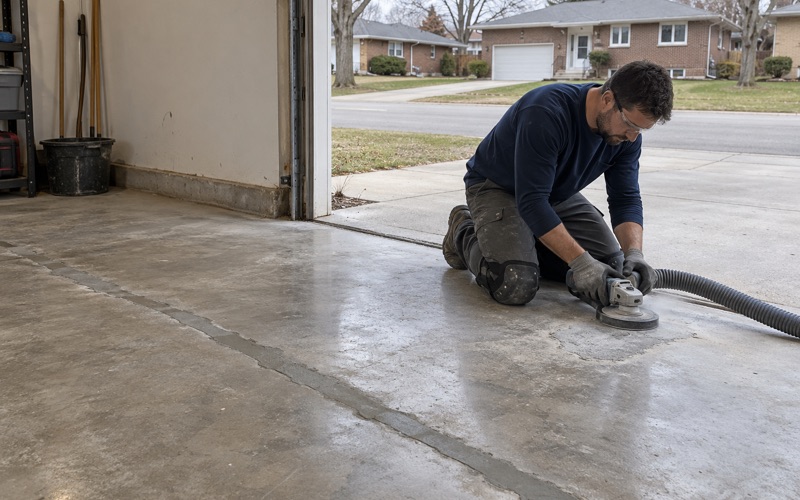
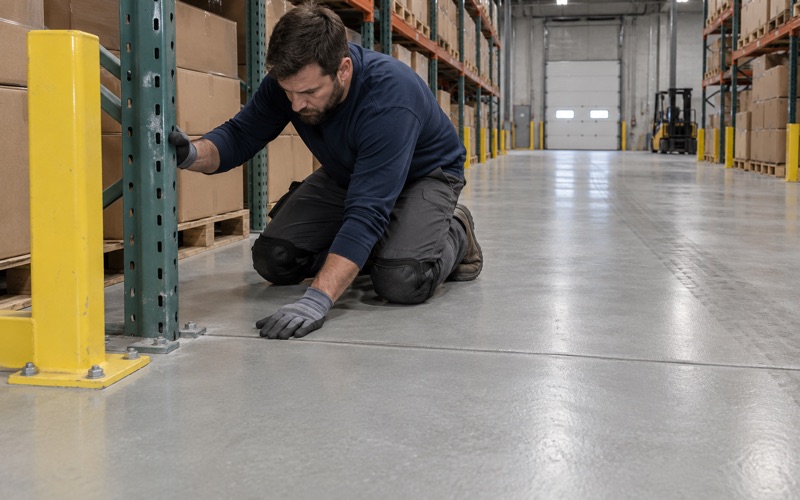
We map control joints, shrinkage cracks and earlier patches before we price anything. Static cracks can be filled and coated over, while moving joints need a flexible sealant detailed into the system so a crack does not telegraph through and open a path for wet disinfectant. If a slab has failed patches or a delaminating earlier coating, we tell you it needs repair first.
Chair wheels and texture
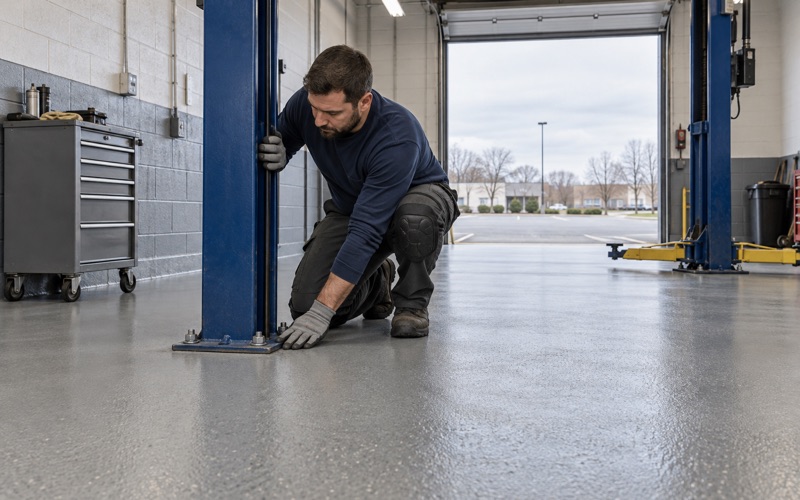
Rolling chairs, carts and treatment chairs wear a path into a soft topcoat and polish a hard one. A fine quartz aggregate broadcast or a slip-resistant additive in the topcoat gives footing when the floor is wet, but too much texture holds residue and makes the floor harder to clean. We sample textures with the facility so the balance is chosen on site rather than guessed.
Three closed days a week: the window for floor work
A clinic open Monday, Wednesday and Friday has a predictable gap: Tuesday, Thursday and the weekend. That rhythm is useful to a flooring crew because treatment rooms cannot be phased around patients the way a hallway can. Work on a treatment floor fits into the days the doors are closed, or it waits.
Grinding without dust in the room
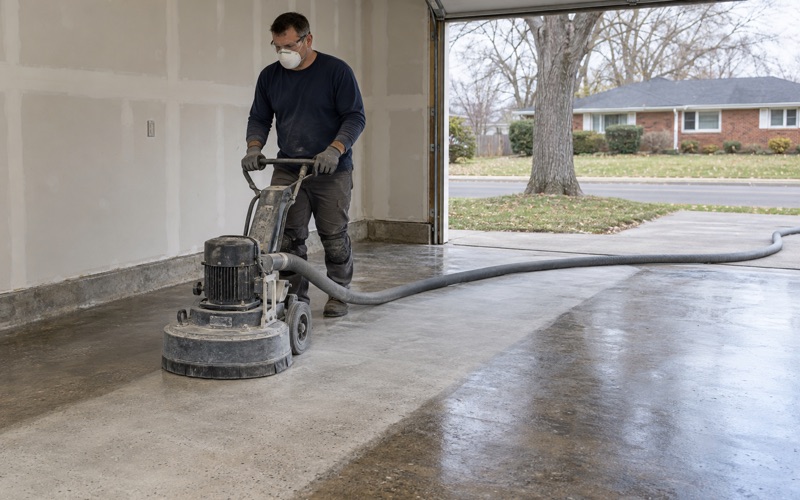
Surface preparation is the loud, dusty part of any recoat. Our grinders and shot blasters run with vacuums at the machine, so the dust is captured where it is made instead of settling on equipment or being rinsed toward a floor drain. In an occupied building, we also seal off the work area so neighboring suites are not breathing what the slab gives up.
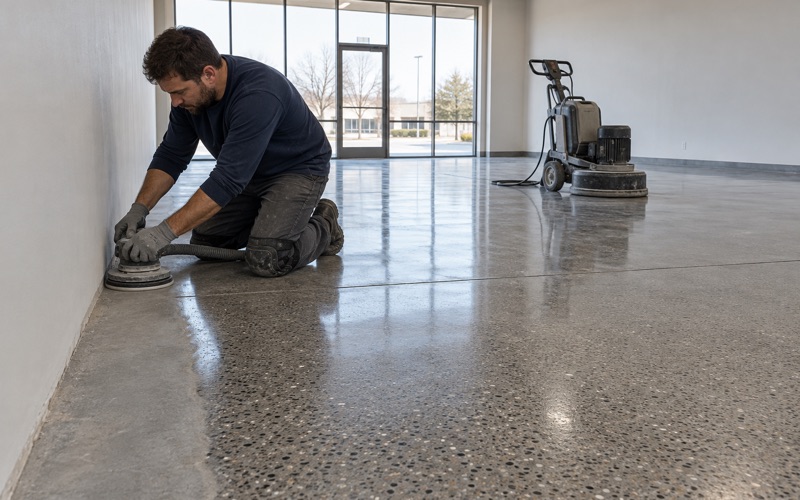
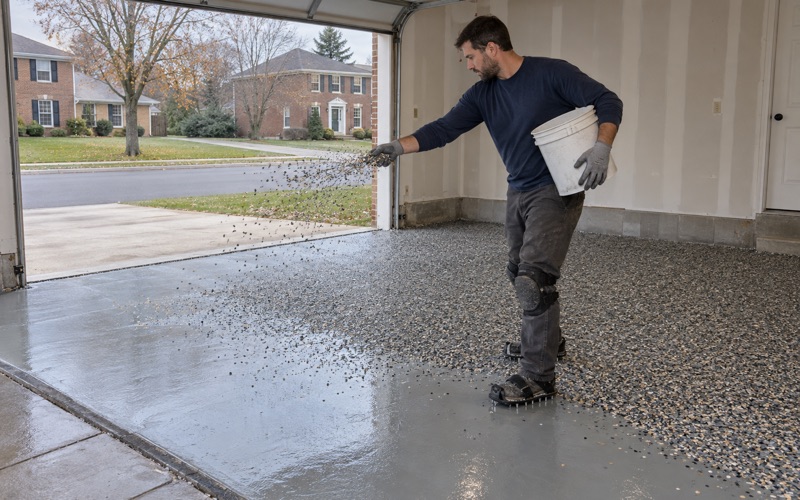
Grinding is also how we set the surface profile the coating will grip. We target a profile on the ICRI CSP scale that matches the system’s thickness, a lighter profile for a thin topcoat and a coarser one for urethane cement. An acid etch cannot produce a measurable profile, and on an older slab it leaves residue that weakens the bond, so we do not use it.
Moisture first, then cure
A slab that holds moisture will push a coating off it no matter how good the product is. We run ASTM F2170 in-situ relative humidity probes or ASTM F1869 calcium chloride testing before we commit to a system, and where readings are high we specify a moisture-mitigation primer or say plainly that the slab is not ready. The warranty’s moisture exclusions are explained before anything is signed.
Cure is the other half of the schedule. We plan around slab temperature and the dew point spread at the surface, because a coating applied too close to the dew point can develop amine blush and a weak bond. Polyaspartic topcoats return to light foot traffic far faster than most epoxies, which can make a closed-day window workable where a slower system would run into the next opening day.
We write the sequence out before the first day of work: grind and repair on the first closed day, base and broadcast after that, topcoat with enough cure time left before patients return. If the slab’s readings or the temperature in the suite will not support that timeline, we say so and split the job across more than one closed stretch rather than rushing a coat into a cold or damp room.
Who we check with before booking
Illinois has no state license for flooring or coatings work, so we look up the Village of Deerfield’s own registration, bond and insurance requirements before we book. We also ask the village building department whether the scope needs a permit rather than assuming the answer. Products are chosen inside the Illinois VOC limits for floor and industrial coatings, which matters in a building where the work happens a door away from an occupied office.
On a floor that is disinfected wet every operating day, the coating is a piece of the cleaning plan. We treat it that way: test the slab, ask what goes on the floor, close every edge and finish inside the days the room is empty.
- 20+ Years on Concrete
- Moisture Tested Before Pricing
- Written Itemized Proposals