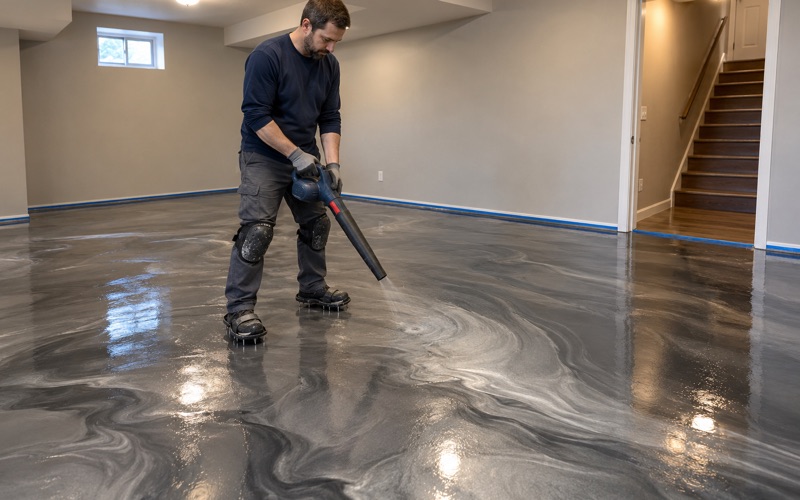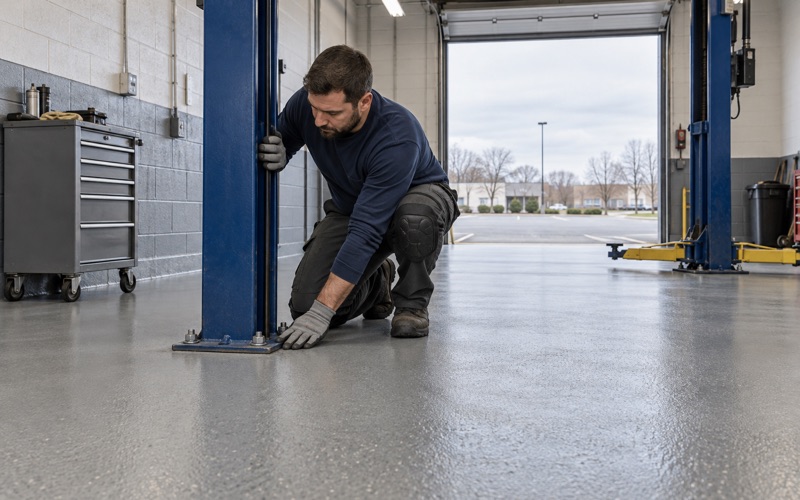
Mount Prospect Epoxy Flooring has spent more than 20 years putting down epoxy flooring in Bensenville and across the northwest suburbs, and the floors we think hardest about here are the wet ones. A process room that is hosed down every shift, a wash bay that never fully dries, a corridor where grit gets tracked from one end to the other: those floors fail in ways a showroom floor never will.
This page is about that kind of room. We cover what lands on the floor when a building handles grit, screenings and sludge, why routine washdown changes the coating system we recommend, and how we scope a job so the floor can be checked against the quote when we leave.
If your floor sits in a utility, process or sanitation space, the questions below are the ones we ask before we price anything. They apply whether the slab is a few hundred square feet behind a loading door or a full production bay.
The Jefferson Street plant and what its headworks send to the floor
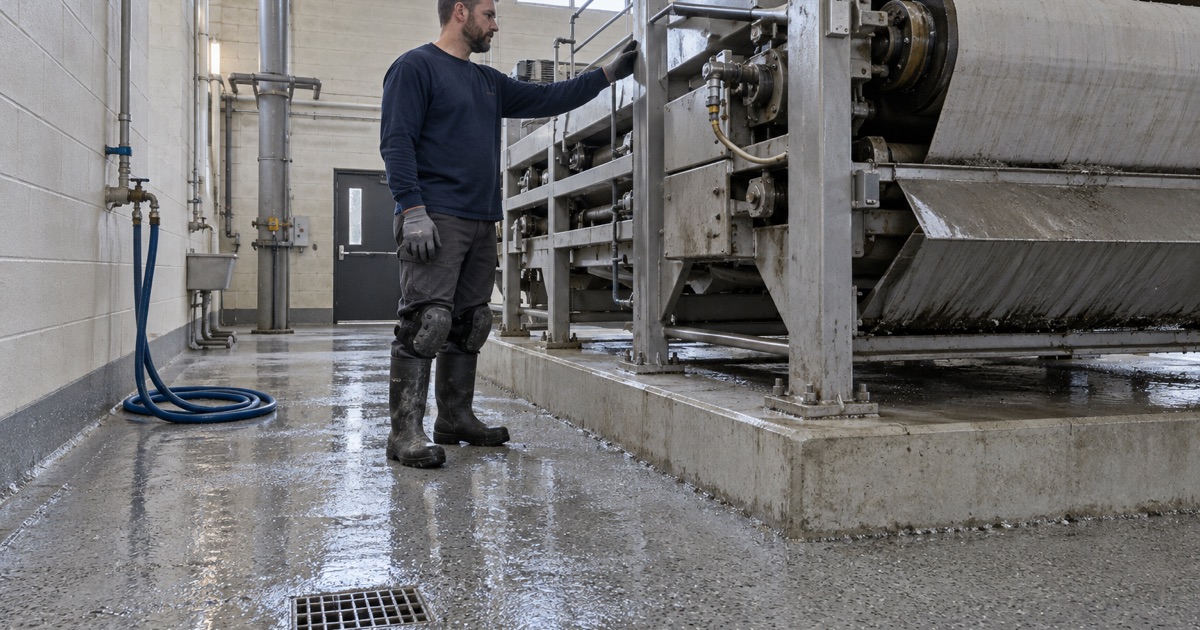
The clearest local picture of a hard-working wet room is the village’s own Wastewater Treatment Plant at 711 E. Jefferson Street, in the DuPage County, Addison Township part of Bensenville. The village calls its $30 million Wastewater Treatment Facility Upgrade the largest utility project it has ever completed. A 2012 Facilities Plan assessed a plant that had gone through numerous upgrades over its 70-year life, ground was broken on June 19, 2014, and the ribbon was cut on October 27, 2016.
We have not worked at the plant and we have not seen its floors. What we know comes from the village’s own open-house brochure, which walks through the process step by step, and that description is a useful map of the conditions any wet process room puts on a slab.
The upgrade, designed by Strand Associates, streamlined the plant to eight major treatment steps and one digestion process, and the village opened it to the public on July 8, 2017. For anyone who runs a smaller wet room in town, those steps read like a checklist of what a floor can be asked to tolerate in a single building.
Screens and wash presses
Incoming wastewater reaches the headworks and flows to one of two mechanical fine screens, where coarse solids the operators call rags are pulled out. Each screen discharges to a wash press that rinses and squeezes the screenings before they leave the building. Equipment like that typically drips, splashes and gets cleaned with a hose, so the floor around it usually spends much of its life wet with dirty water.
The grit washer
Next comes a vortex grit tank with a grit pump and a grit washer, whose auger carries washed grit out to a dumpster. Grit is sand and fine stone by another name. Any of it that escapes a chute or a container ends up underfoot, where boots and cart wheels grind it into the surface like sandpaper. That is the single biggest reason a thin, glossy coating does not belong in a room like this.
Looking for epoxy-flooring closer to Schiller Park? See Epoxy-Flooring in Schiller Park.
Belt press rooms and biosolids: wet, heavy and hosed every day
Further along, the brochure describes the plant’s solids side. Biosolids are thickened on a gravity belt thickener, stabilized by aerobic digestion and dewatered on a belt filter press before going to a biosolids storage building, where the material is stacked and looks like potting soil. The upgraded plant also handles a wet-weather flow of 12 million gallons a day, removes roughly 500 pounds of phosphorus a week through biological nutrient removal and sends its treated water by gravity into Addison Creek.
What a dewatering room asks of a floor
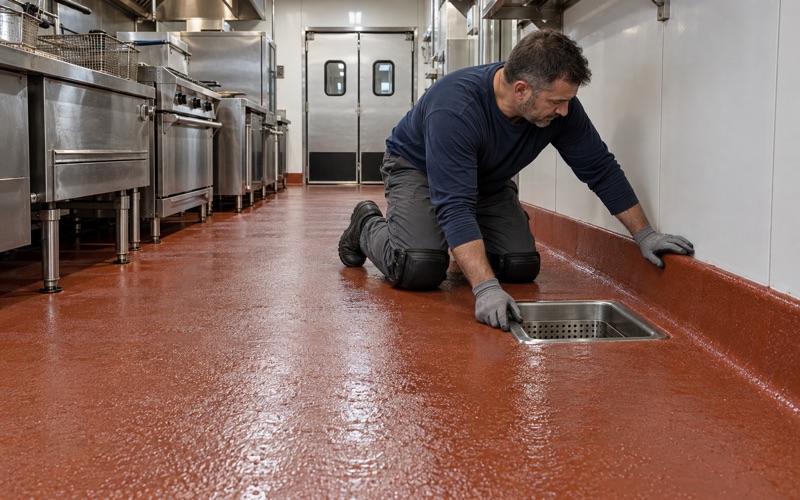
A belt filter press room is a textbook industrial wet room. Wash water runs off the belts, sludge spills at transfer points, and the whole area is hosed toward floor drains as routine housekeeping. The floor has to shed water, stay grippy under a film of slick solids and survive scraping from shovels and squeegees. We describe these conditions as general treatment-plant practice; the village’s own finishes and cleaning products were not part of what we read.
Weight, edges and drains
Dewatering and handling rooms also carry heavy equipment on small footprints, along with carts and the occasional skid steer. The weak points on a coated floor are rarely the open field. They are the edges at drains, trench grates, equipment pads and the base of walls, where water sits longest and a coating that was never keyed into the concrete starts to lift. We map those transitions on every walk-through and price them as their own line items.
Hose water, hot water and temperature swings
Daily washdown is not only a volume of water. Hot-water hoses and pressure washers drive heat into the top of a cool slab, and the coating expands and contracts at a different rate from the concrete beneath it. A rigid, thin film can craze and let water in at the cracks, while a thicker system bonded into a ground profile moves with the slab. We ask how hot the cleaning water runs and how often before we choose a resin.
Abrasion, texture and washdown: specifying a wet-room floor
Specifying a floor for grit, sludge and daily hoses is a different exercise from choosing a garage color. Here is how we approach it on any wet process space in the village, whether that is a municipal-style room or a private plant’s washdown area.
Profile first, then resin
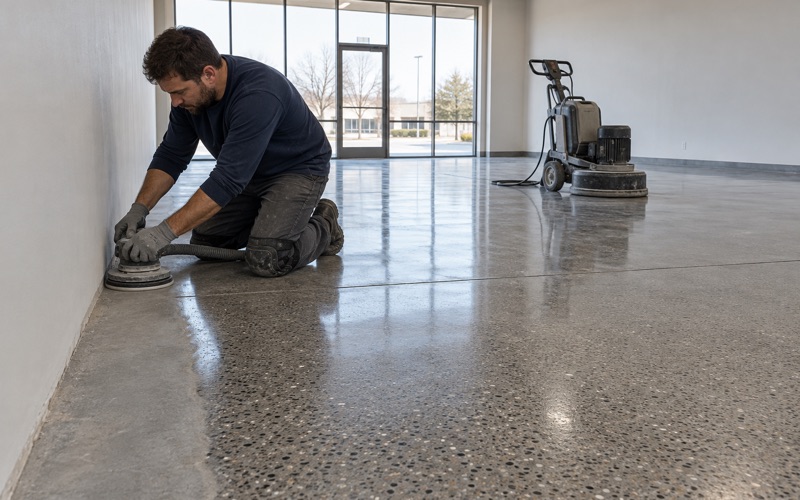
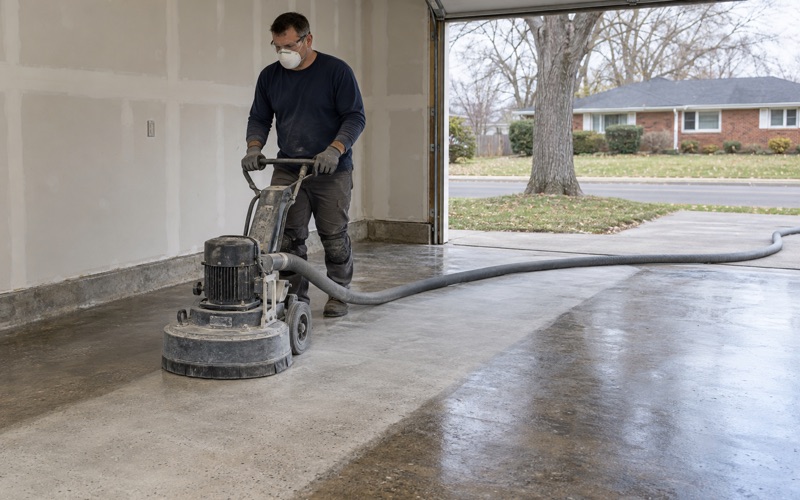
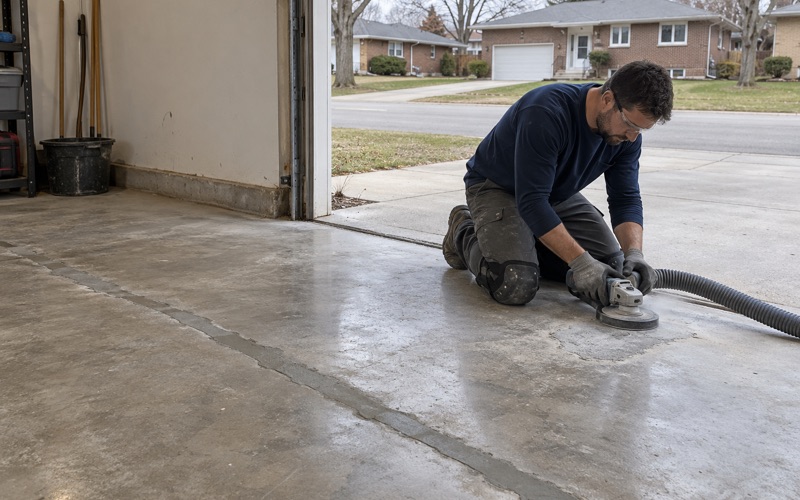
Coatings in wet rooms come off when water gets under them, and water gets under a coating that is sitting on a smooth slab. We open every floor with a diamond grinder or a shot blaster to an ICRI concrete surface profile suited to the system, and we never rely on an acid etch. Before the price is final we test the slab for moisture with ASTM F2170 in-situ relative humidity probes or ASTM F1869 calcium chloride tests, because a wet-room slab often carries more moisture than its surface suggests.
Systems built for grit and constant water
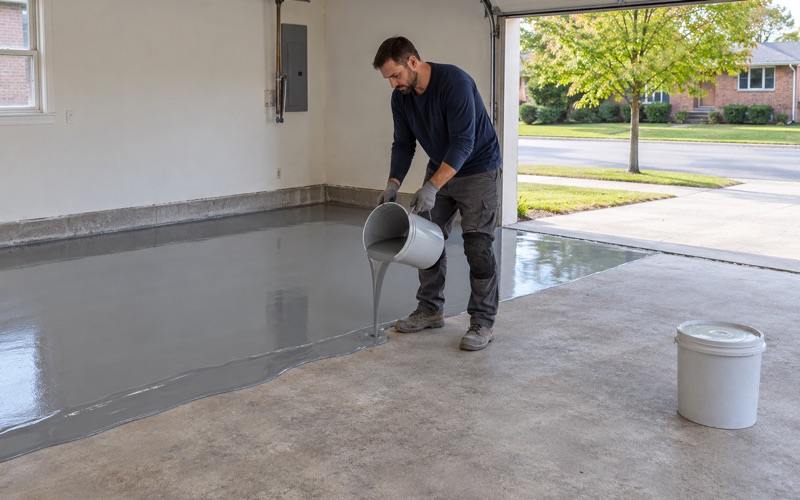
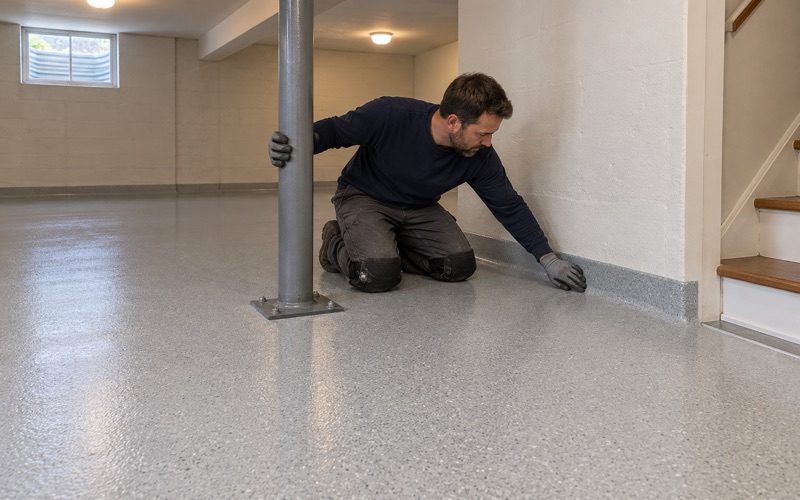
For heavy abrasion and repeated washdown we usually look at urethane cement, which tolerates wet slabs, hot water and thermal shock better than a standard epoxy. Where the room is less punishing, a 100% solids epoxy body coat with a quartz aggregate broadcast and a tough topcoat gives real thickness to wear through. Integral coves carried up the wall keep hose water out of the joint between floor and wall, a detail that matters as much as anything in the field of the floor.
Topcoats and amine blush
The topcoat takes the wear first. Polyaspartic and polyurea topcoats cure fast and resist abrasion and staining well, which helps when a room can only be shut for one night. In a cool, damp room an epoxy coat can also develop amine blush, a waxy film that keeps the next coat from bonding, so we check the surface and remove any blush before recoating rather than hoping it will hold.
Slip texture you can still clean
Texture is a trade-off. Too little and a film of sludge or soapy water turns the floor into a skating surface; too much and a squeegee cannot clear the low spots, so dirt lives in the floor. We set the aggregate size and the number of topcoats with the person who mops and hoses the room, not only the person who signs the order. Food-handling wet rooms add their own rules, and the FDA Food Code’s provisions on antislip floors and coved junctures are part of that conversation.
What goes in writing
Our written proposal names the product line, the number of coats and the finished thickness, so a facilities manager can hold the finished floor up against the quote. We also note cracks, spalls and old coatings we find, and if a section of slab is too far gone to coat, we say so plainly. The warranty exclusions, moisture first among them, are explained before anyone signs.
The same rules for wash bays and wet rooms in Bensenville’s industrial park
The village borders the southwest corner of O’Hare International Airport, is home to more than 1,500 businesses and has one of the largest industrial parks in Illinois. Plenty of buildings in that park have a room that behaves like a smaller version of the treatment plant: a truck or equipment wash bay, a parts-washing station, a sanitation room or a process area that is rinsed down at the end of every shift.
Working around a building that cannot stop
Most of those floors sit inside operations that run nearly around the clock. We phase the work around shifts and take overnight and weekend windows when a room cannot be shut down, and we sequence coats so a bay is back in service as soon as the system can take traffic and water. Cure times follow slab temperature and the dew point spread at the slab surface, not the calendar, which matters in a room that stays cool and damp.
Keeping grinding dust out of the drains
A wet room always has a drain, which is exactly where grinding dust must not go. Our grinders and blasters run with vacuum collection at the machine, and we clean up dry instead of rinsing slurry toward a floor drain or out the door. Products are chosen inside the Illinois VOC limits for floor and industrial coatings, which bind whoever applies them.
Food-handling wet rooms and the county line
Bensenville spans two counties, with most of the village in DuPage County and a portion in Cook County. If your wet room handles food, the health desk that reviews it depends on the parcel: the DuPage County Health Department on one side, the Cook County Department of Public Health on the other. We confirm which applies by address before we talk cove heights and floor texture with you.
Paperwork before the first pass
Illinois has no state flooring license, so we check the Village of Bensenville’s own registration, bond and insurance requirements before a job is booked. We ask the village building department whether a given coating job needs a permit rather than assuming the answer either way. Non-residential buildings here also see annual inspections from the Bensenville Fire Protection District, and a floor that drains well and stays clean is easier to show off when the inspector walks through.
If you manage a wash bay, a process room or any floor that gets hosed every day in Bensenville, we will walk the space, test the slab and give you a written scope that says exactly what goes down and how thick it will be.
- 20+ Years on Concrete
- Moisture Tested Before Pricing
- Written Itemized Proposals