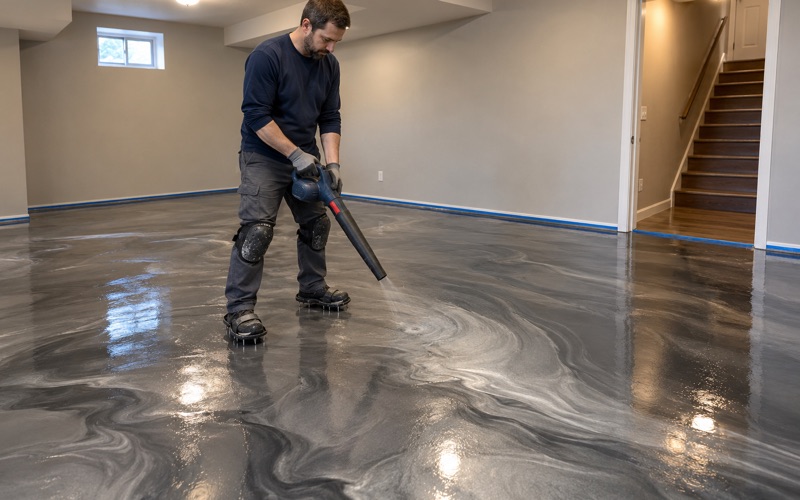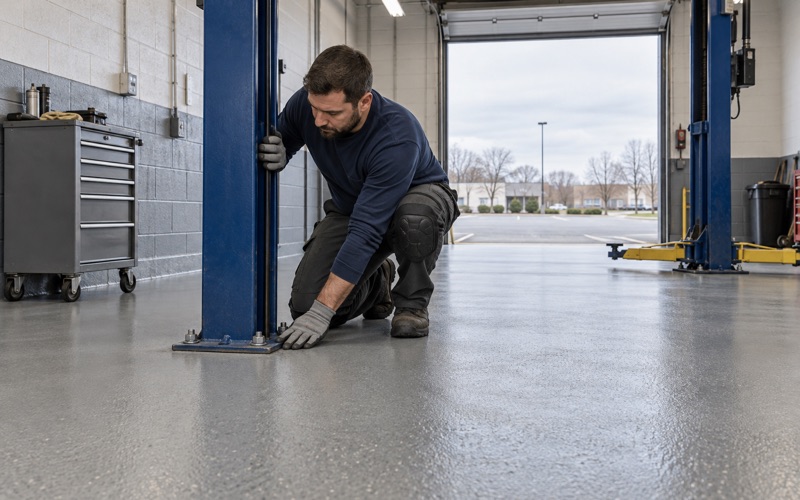
Mount Prospect Epoxy Flooring has spent more than 20 years on epoxy flooring in Barrington and the villages around our home base, and the floors we think hardest about are the ones that take abrasion from outside. A coating on that kind of floor has to be chosen for what crosses it every day, not for how it looks the afternoon it cures. That decision starts with how the slab is opened, what the moisture reading says, and how thick the finished system really is.
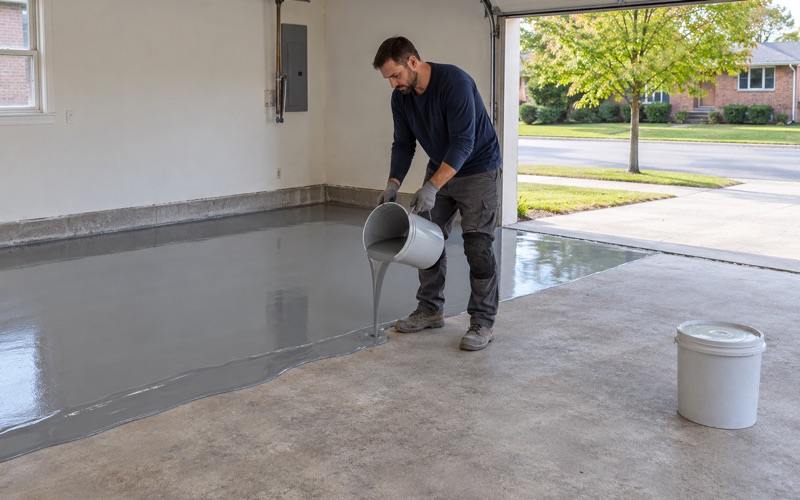
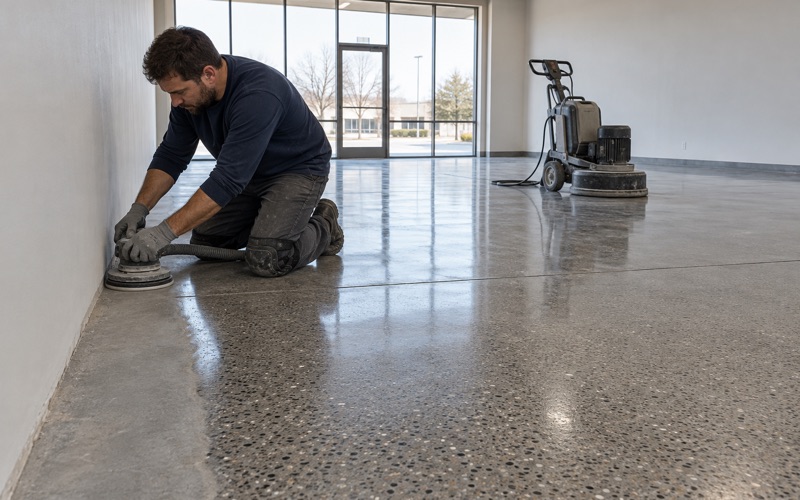
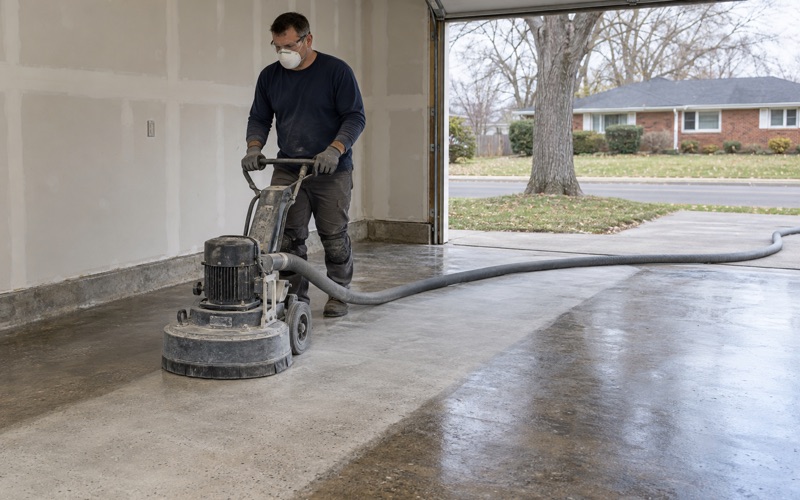
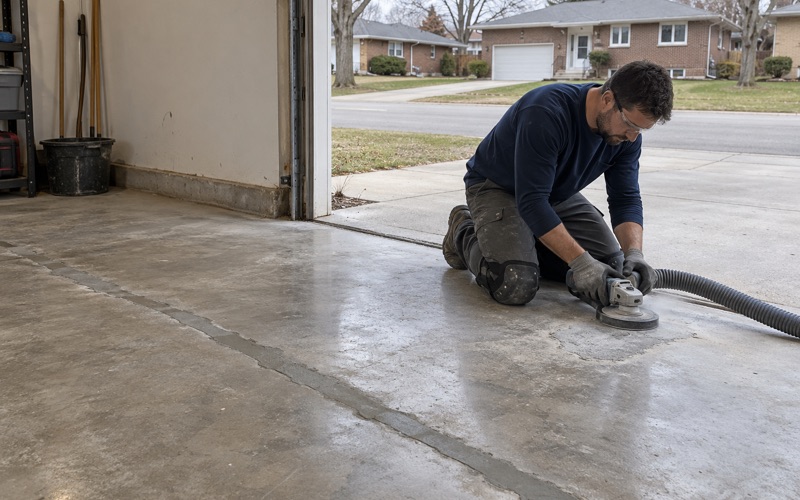
Our written proposals name the product line, the number of coats and the finished thickness, so an owner can check the floor against the paper once we leave. We open concrete with a diamond grinder or a shot blaster, never an acid etch, because a coating needs a real profile to bite into. Cracks, spalls and old coatings are mapped before price comes up, and when a slab needs repair or replacement first, we say so plainly.
This page follows one floor that the village’s own park facilities make easy to picture: a room beside an outdoor court, where players come in off a gritted deck with snow on their shoes. The reasoning carries over to any entry floor that takes grit and water on the soles of the people walking in.
Platform Tennis at Langendorf Park, All Winter

Courts approved by ordinance and finished in 2025
Village of Barrington Ordinance No. 2024-4376, adopted March 18, 2024, amended the planned development for Langendorf Park at 235 Lions Drive to permit new pickleball and platform tennis courts, along with pool work, new shelters and a bath house addition. The ordinance says it responds to a recently approved park district referendum. The architects list the finished project, including a pickleball and paddle tennis complex with a warming shelter, as completed in July 2025.
The park sits on the Lake County side of the village, in Cuba Township. That matters less for a floor than for paperwork, but it is the kind of detail we confirm before a job is booked rather than after.
A warming hut rented by the hour
The Barrington Park District rents the outdoor paddle courts by the hour, and its 2025 rental sheet prices the Courtside Cottage separately at $75 or $100 per hour, or bundled with a court. Court rentals carry a two-hour maximum, while the cottage has no time limit. A group can treat it as home base for a whole evening of play.
Only one platform tennis court and up to three pickleball courts may be rented at a time, so traffic through the cottage comes in waves. A district post has advertised new heated courts for platform tennis, and the restrooms sit on the west side of the cottage. Every player who wants to warm up, change shoes or use the restroom ends up on the same floor.
Looking for epoxy-flooring closer to Lake Zurich? See Epoxy-Flooring in Lake Zurich.
A Deck Painted With Grit, and the Shoes That Walk Off It
How a platform tennis surface works
Platform tennis is the cold-weather racquet game, played on a raised deck. Hinged flaps along the perimeter let snow be shoveled off, and heaters underneath melt what is left. Other park districts describe the playing surface as a gritty, sand-filled paint over an aluminum deck.
The grit is there on purpose: it gives players traction on a surface that is often damp. It also causes significant wear on shoes, which says a good deal about what it does to anything else it rubs against. Some of that grit leaves the court in the tread of every pair of shoes.
Grit plus meltwater on a warm floor
Picture loose grit under a shoe that pivots, steps and drags: that is abrasive wear in its plainest form. A dry lobby collects dust, but a room next to a gritted deck collects hard particles that get pressed into the surface with every step. A floor in that position behaves more like a floor under sandpaper than a hallway.
Snow carried in on shoes melts once it hits a heated room, and meltwater changes the problem twice. It floats grit out of the entry and spreads it across the room, and it turns a smooth, glossy coating slick. A system for this kind of room has to answer both conditions at once.
Where the wear shows first
On any entry floor that takes grit, wear concentrates in predictable places: the first few feet inside the door, the turn toward the benches and the path to the restrooms. A thin, roll-on coating shows those paths first, as dull lanes through an otherwise glossy floor. That pattern is useful, because it tells an owner where the next maintenance coat belongs.
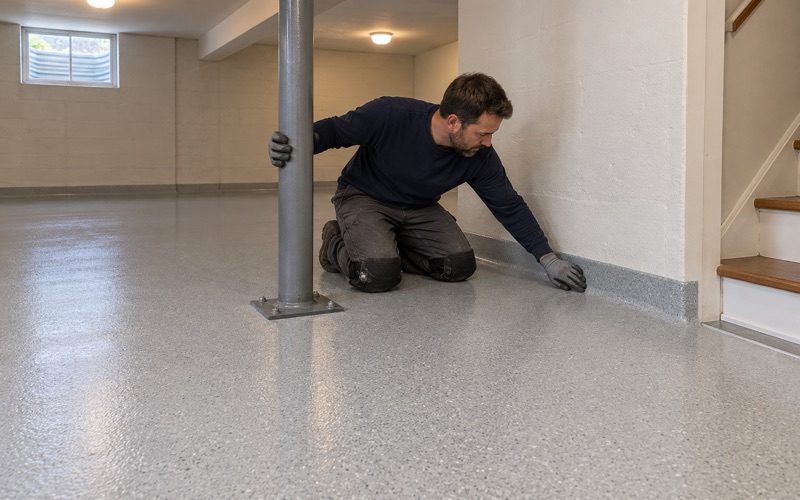
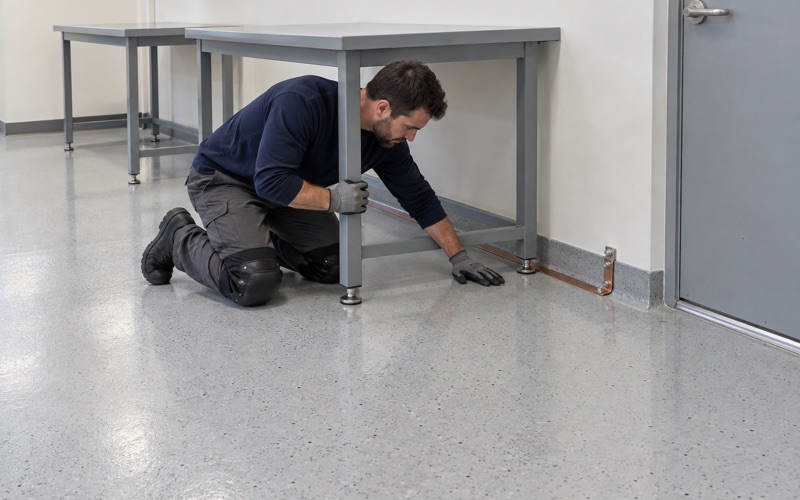
Grit also works on edges people rarely look at: the threshold where the coating meets the door frame, the floor under benches, and the base of each wall where a mop pushes dirty water. A coating cut cleanly at the door and turned up slightly at the wall base keeps grit and meltwater from working under its edges.
We have not been inside the Courtside Cottage and do not know what its floor is. What we can describe is how we would approach a room with that traffic, and what we would want to know about the slab before quoting it.
Texture, Topcoat and the Mat at the Door
Testing the slab before choosing a system
A slab on grade beside an outdoor court sees water from above and possibly from below, so moisture comes first. We read the slab with ASTM F2170 in-situ relative humidity probes or an ASTM F1869 calcium chloride test, and we compare the result with the limits the coating maker publishes. A newer slab is not automatically a dry one.
A taped plastic sheet test under ASTM D4263 is a useful first look in a small room, but we treat it as a screen, not a number to quote against. When it shows condensation under the sheet, the probe or the calcium chloride test settles how serious the problem is.
If the numbers run high, a moisture-mitigation primer goes under the system, or the job waits. We also explain, before anything is signed, that moisture is the first thing a coating warranty excludes. An owner should hear that from us at the proposal, not from the manufacturer after a failure.
Building thickness where the grit lands
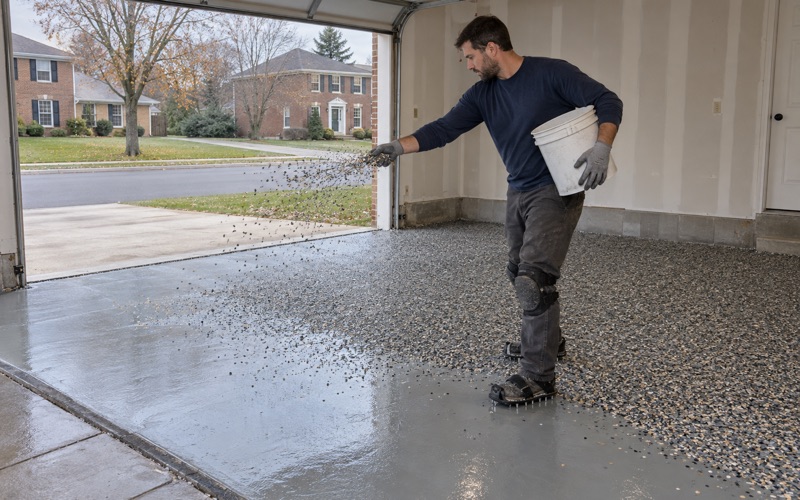
For abrasive foot traffic, thickness does more work than color. A 100% solids epoxy base over a ground profile in the ICRI CSP range the primer calls for gives the coating something to hold, and a quartz aggregate broadcast builds a hard, textured layer through the body of the floor. Vinyl flake broadcast is attractive and adds some texture, but the flake itself is softer than quartz.
The topcoat takes the first contact with grit. Polyaspartic and polyurea topcoats hold up well to abrasion and stay clear without yellowing, and a worn lane can usually be scuffed and recoated without starting over. Where a room also takes hot water or heavy wash-down, urethane cement is worth discussing as the base. On a floor like this we would rather install a heavier system once than a thin one that needs full replacement in a few seasons.
Texture that still cleans
Broadcast texture keeps a wet floor walkable, but deeper texture also holds more grit and takes more effort to clean. We set the texture by sample, so an owner can feel both the wet grip and how a broom drags across it. The right answer for a warming hut is usually a middle grade, not the most aggressive one.
Why the mat stays
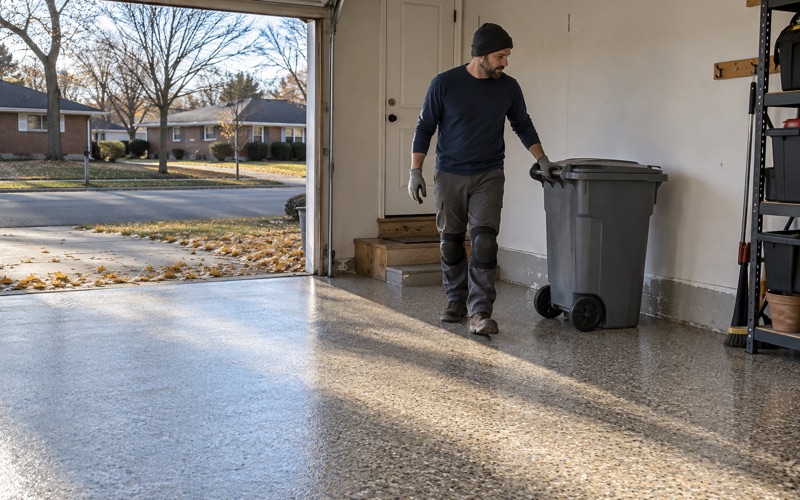
A coating slows abrasive wear; it does not stop it, and it does not replace entry mats. A good walk-off mat inside the door catches most of the grit before it reaches the coated floor, and the coating handles what gets past. We plan the mat location with the floor layout, so the heaviest wear lands on something that is cheap to replace.
Routine care is simple: sweep or vacuum the grit before mopping, so a wet mop does not drag sand across the topcoat. When dull lanes appear near the door, a scuff-and-recoat of the topcoat restores them long before the base coat is exposed.
Scheduling Floor Work Around Court Rentals
Picking the window
A room that is busiest in winter is best coated outside that season, when it can be closed without canceling play. Even then, cure times follow slab temperature and the dew point spread at the slab surface, not the calendar. A cold, damp slab can leave amine blush on an epoxy coat, which spoils adhesion for the next one.
An unheated room in January is told to wait. A heated room can be coated in colder months if the slab, the air and the dew point all cooperate, and we take those readings on the day rather than trusting the forecast.
Downtime, phasing and dust
A space that rents by the hour needs its booking calendar blocked for the full job, from grinding through cure, not just the day the topcoat goes down. Walk-on time and full cure are different numbers, and we give both in writing. Where a building cannot close, we phase the work around its hours, with overnight and weekend windows.
Benches, lockers and anything else on the floor come out before grinding, and the room is closed off from the rest of the building so dust and odor stay where the work is. Before the room reopens, we walk the finished floor with the owner against the coat count and thickness in the proposal.
Grinding dust is vacuumed at the machine, not washed toward a floor drain or out the door. Products are selected inside the Illinois VOC limits in 35 Ill. Adm. Code Part 223 Subpart C, which bind whoever applies the coating.
Permits and village paperwork
Illinois has no state flooring license, so we check the Village of Barrington’s own registration, bond and insurance requirements before a job is booked. We ask Development Services whether an interior coating needs a permit rather than assuming the answer either way.
The same reasoning applies at home, in a mudroom or garage where family members walk in from the courts. Home jobs over the state threshold get a written contract and the Home Repair: Know Your Consumer Rights pamphlet before any grinding starts.
- 20+ Years on Concrete
- Moisture Tested Before Pricing
- Written Itemized Proposals